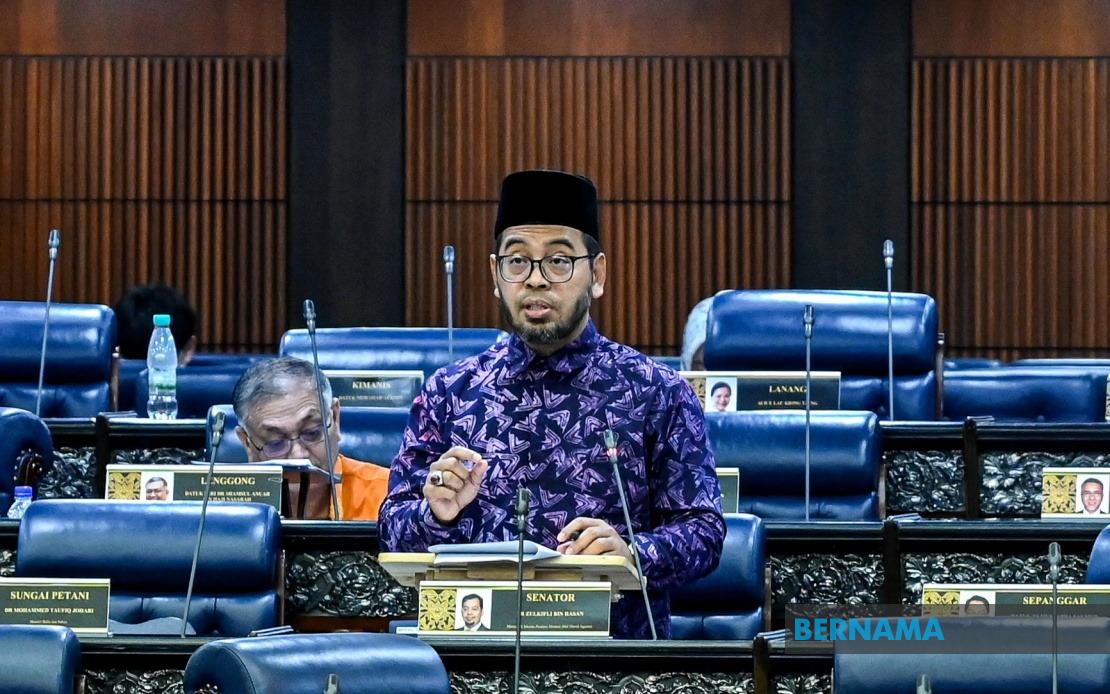
Malaysia's religious authorities are tightening oversight of unorthodox Islamic teachings as they migrate increasingly to digital channels, reflecting a broader challenge facing governments across Southeast Asia in policing religious content in borderless online spaces. The Department of Islamic Development Malaysia (JAKIM) and related federal agencies are now working in concert to identify and counter what the government classifies as deviant doctrines that diverge from the mainstream Ahli Sunnah Wal Jamaah school of thought, according to statements made by Minister in the Prime Minister's Department (Religious Affairs) Dr Zulkifli Hasan in Parliament this week.
The enforcement environment has fundamentally shifted, according to government officials, as groups promoting heterodox teachings have abandoned traditional clandestine gatherings in favour of more diffuse, harder-to-track distribution methods. These new conduits include encrypted messaging applications, social media platforms, and closed online communities, often wrapped in commercially appealing packaging such as self-improvement seminars, humanitarian work, alternative wellness practices, and informal religious instruction. This structural transformation in how such teachings circulate poses distinct difficulties for regulators accustomed to monitoring physical spaces and traceable organisational hierarchies.
Authorities have identified a deliberate strategy among these groups to leverage contemporary persuasion techniques. Dr Zulkifli highlighted how organisers employ motivational speakers, spiritual influencers, psychological manipulation tactics, conspiratorial narratives, and appeals to established religious figures to attract adherents. The combination of emotional resonance and intellectual framing creates a persuasive package that may appeal particularly to individuals seeking community belonging or spiritual meaning outside mainstream religious structures, especially younger Malaysians navigating complex identity questions in an increasingly digital society.
The government's response has crystallised around what officials describe as a comprehensive, whole-of-government coordination mechanism involving JAKIM, state-level Islamic authorities, the Royal Police Force, the Malaysian Communications and Multimedia Commission (MCMC), the National Security Council, municipal administrations, immigration authorities, and the National Registration Department. This multi-institutional approach reflects recognition that no single agency possesses the technical capacity, legal authority, or informational advantage to monitor the full spectrum of online religious content distribution. Recent enforcement operations provide concrete examples of this coordinated capability.
In May, authorities detained 288 followers of the Ahmadiyya Qadiani sect in Sabah, representing one of the larger coordinated operations against a specific religious group in recent years. Separately, a raid targeting a Syiah centre located in Petaling Jaya, the commercial and administrative heart of the Klang Valley, resulted in the apprehension of 226 foreign nationals. These actions signal that authorities are not merely responding to complaints but actively conducting intelligence-led operations, suggesting investment in monitoring infrastructure and informant networks capable of identifying locations and participants.
Beyond enforcement, the government has articulated a comprehensive intervention framework acknowledging that detention and prosecution alone cannot address the underlying appeal of these teachings. Authorities are implementing targeted counselling sessions for individuals who have engaged with heterodox groups, utilising both religious scholars and psychological professionals. Those convicted through Syariah courts face mandatory placement in faith rehabilitation centres where residents receive intensive instruction in orthodox Islamic theology and practice under direct supervision of state religious authorities. These facilities represent a significant resource commitment, suggesting the scale of the perceived challenge.
A newly established National Steering Committee to Address Threats to Faith serves as the coordination apex for preventive initiatives aimed at fortifying religious resilience, particularly among youth demographics most vulnerable to recruitment by unorthodox movements. The committee incorporates representation from the Ministry of Education, Ministry of Higher Education, Ministry of Home Affairs, JAKIM, and other agencies, creating institutional pathways for translating religious security concerns into educational policy. This reflects growing international recognition that counter-extremism strategies incorporating education, community engagement, and opportunity provision often prove more sustainable than enforcement-focused approaches alone.
Multiple educational and community programmes now operate under this coordinated framework. The Institut Pemantapan dan Perkaderan Akidah Malaysia (IPHAM) delivers specialised religious instruction, while the My Insaniah Programme and Rakan Masjid Programme operate through partnerships with the Ministry of Youth and Sports, embedding religious and community resilience messaging within youth-oriented initiatives that may enjoy greater acceptance than purely governmental channels. Simultaneously, authorities have upgraded the KAFA 2.0 curriculum for younger learners, enhancing instruction in Quranic studies and foundational Islamic obligations with deliberate emphasis on fostering robust religious identity and enhanced capacity to resist heterodox influences.
The Malaysian approach carries broader implications for the region, where multiple nations confront similar challenges as religious movements increasingly exploit digital distribution channels to transcend traditional geographic and administrative boundaries. Unlike securitised counter-terrorism frameworks, Malaysia's strategy balances enforcement with rehabilitation and prevention, suggesting that long-term effectiveness may depend upon simultaneously constraining recruitment pathways while offering individuals within problematic movements alternatives for spiritual expression and community participation. The intensity of efforts demonstrates official concern about the durability and scale of the challenge.
Yet significant questions remain about the efficacy of these initiatives in a genuinely borderless digital environment where teachings can be distributed from anywhere to anywhere with minimal detection risk. The involvement of foreign nationals in some detained groups suggests that monitoring operates within Malaysia's territorial boundaries, potentially creating gaps as recruitment and indoctrination occur across borders. Whether JAKIM and partner agencies possess sufficient technical expertise in digital forensics, encrypted communication analysis, and online community infiltration to keep pace with increasingly sophisticated propagation methods remains unclear from publicly available information.
The detention figures and enforcement operations indicate authorities perceive the challenge as substantial and growing, justifying significant resource allocation and institutional reorganisation. However, the underlying appeal that unorthodox teachings apparently exert on Malaysian Muslims—whether grounded in theological disagreement, social alienation, search for community, or intellectual curiosity—suggests that enforcement and even education initiatives may address symptoms rather than root causes of attraction to heterodox movements. Malaysian policymakers appear increasingly aware that sustainable solutions require understanding not merely how such teachings spread, but why particular individuals find them compelling.

