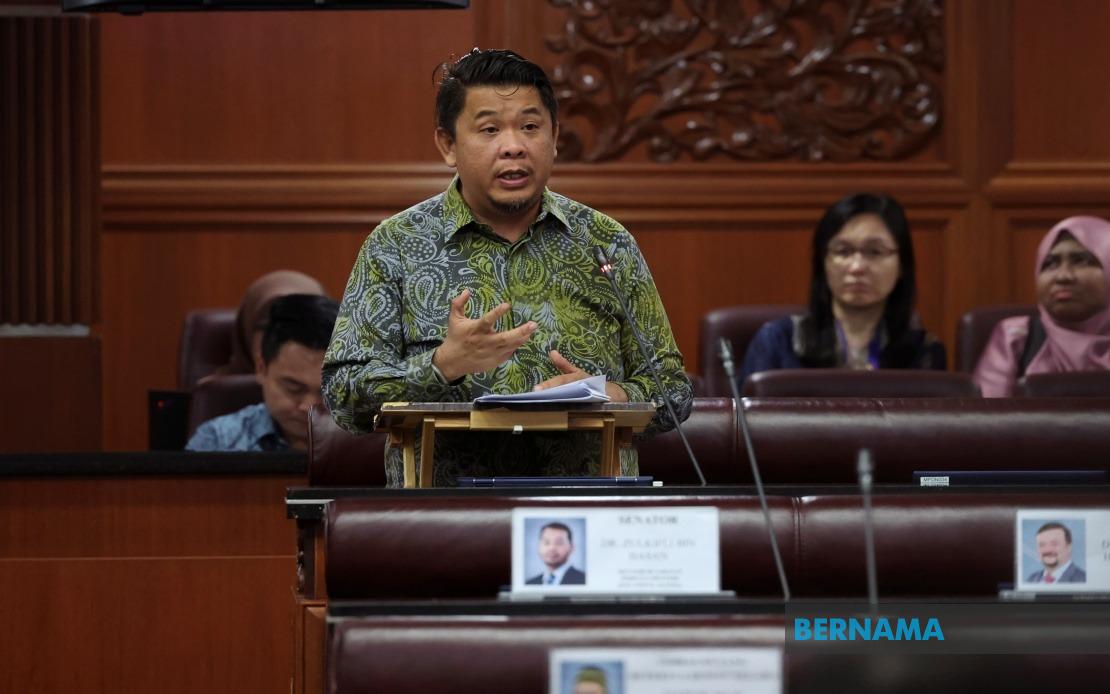
Malaysia has instructed the United Nations High Commissioner for Refugees to suspend all new registrations as the government transitions to a domestically-controlled refugee management framework. Deputy Foreign Minister Datuk Lukanisman Awang Sauni announced the Cabinet-approved decision on July 23, signalling a significant shift in how the nation handles its refugee population and addresses the longstanding humanitarian challenge posed by stateless persons and undocumented arrivals across its borders.
The strategic restructuring centres on implementation of the Refugee Registration Document, or DPP programme, which will consolidate refugee data management entirely under government purview. This represents a fundamental departure from the current system where UNHCR, a UN agency without enforcement powers in Malaysia, maintains independent registration records. Lukanisman emphasised that the transition enables Malaysian authorities to establish comprehensive data coordination, verify identities systematically, monitor movements effectively, and enforce regulations without depending on international organisation records—a concern that reflects broader questions about national sovereignty over immigration matters.
The registration pause reflects Malaysia's complex position as a major refugee-hosting nation that has not ratified the 1951 Refugee Convention. This legal non-commitment has long underpinned Malaysian policy, allowing the government to treat refugee matters as immigration and security concerns rather than humanitarian obligations. By centralising registration under the DPP, authorities gain direct control over who receives documentation, potentially influencing access to employment, healthcare, and services that registered refugees typically enjoy under UNHCR auspices. The move also signals concern about illegal immigration and security screening, as Lukanisman noted that the strict registration process will involve multiple enforcement agencies to verify eligibility and prevent exploitation by unqualified applicants.
The Rohingya crisis forms the backdrop for this policy shift. Myanmar's persecution of the Rohingya minority has left hundreds of thousands stateless, with over 180,000 residing in Malaysia according to UNHCR estimates. Many possess no documents from their country of origin and lack recognition from Myanmar's government, creating a legal vacuum that international and Malaysian frameworks struggle to address. Senator Hussin Ismail's parliamentary question specifically raised this documentation challenge, prompting Lukanisman's response about the DPP's capacity to establish clearer identity verification processes. The implicit concern is that UNHCR registration, while internationally recognised, does not resolve the fundamental absence of national documentation.
Beyond the registration suspension, Malaysia is pursuing repatriation efforts that underscore its preference for returning displaced populations rather than permanent settlement. Approximately 5,000 Myanmar nationals currently held in immigration detention facilities are slated for repatriation as Myanmar's government signals readiness to receive them. Lukanisman indicated these transfers will proceed via naval vessels subject to resolution of procedural matters—a logistically significant operation that reflects both diplomatic coordination with Myanmar and Malaysia's determination to reduce its detention population. This initiative parallels regional patterns where Southeast Asian nations prioritise repatriation over integration, though Myanmar's internal instability since the 2021 military coup has complicated such arrangements.
The DPP programme represents an assertion of administrative capacity that carries implications beyond refugee management. By consolidating registration authority domestically, Malaysia can theoretically enforce stricter criteria regarding who qualifies as a refugee versus an undocumented migrant requiring deportation. The distinction matters considerably—refugees gain limited protections and access to services, while irregular migrants face detention and removal. A government-controlled system risks conflating these categories or tightening standards in ways that reduce the refugee population's formal status. Conversely, proponents argue that centralised management improves coordination between security agencies, reduces fraud, and prevents exploitation of refugees by smugglers or criminal networks.
Regionally, Malaysia's approach reflects broader Southeast Asian scepticism toward international refugee frameworks. Thailand, Indonesia, and Bangladesh similarly manage refugee populations outside comprehensive formal systems, citing development challenges, resource constraints, and security concerns. Malaysia's move to establish a parallel domestic system rather than strengthen UNHCR collaboration suggests that regional governments increasingly view UN agencies as supplementary rather than authoritative in refugee matters. This preference for national control resonates with ASEAN's emphasis on non-interference and state sovereignty, even as humanitarian crises demand coordinated responses.
The announcement also carries domestic political dimensions. Malaysian public discourse frequently expresses concerns about refugee impacts on employment, housing, and public services, particularly in urban areas where refugee populations concentrate. By establishing visible government control through the DPP, authorities demonstrate responsiveness to citizen anxieties about unmanaged immigration. The registration suspension signals that ad hoc growth of the refugee population will halt pending systematic review—a message designed to reassure constituencies worried about demographic and economic pressures from displacement.
Lukanisman's emphasis on multilateral engagement with Myanmar and ASEAN partners suggests that Malaysia recognises sustainable solutions require regional cooperation rather than unilateral burden-bearing. The government has consistently argued that it bears disproportionate responsibility for Rohingya displacement while wealthier nations contribute minimally to hosting or resettlement efforts. Malaysia hosts the second-largest Rohingya population globally after Bangladesh, yet receives limited international assistance commensurate with the burden. The DPP initiative may partly reflect frustration with this inequitable distribution, though whether domestic management alone can address such systemic disparities remains unclear.
The practical timeline for implementing the DPP and resuming registrations remains unspecified. Temporary measures frequently become indefinite in refugee contexts, and the suspension could effectively limit new registrations for extended periods. Humanitarian organisations monitoring the situation will likely scrutinise whether the new system genuinely improves refugee access to documentation and services or instead restricts it under stricter government criteria. International actors, particularly UNHCR, face a delicate negotiation with Malaysian authorities over their institutional role—whether they become subordinate data providers within the DPP framework or maintain independent monitoring functions.
For the refugee population itself, the transition introduces uncertainty about documentation validity, access to services, and protection status. Individuals holding UNHCR-issued documents may encounter complications if authorities refuse recognition of non-governmental registration credentials. The repatriation programme adds pressure, as Myanmar nationals face potential removal regardless of their vulnerability or the country's capacity to reabsorb displaced populations. These considerations raise humanitarian concerns that Malaysian officials must address as they implement the new system.

