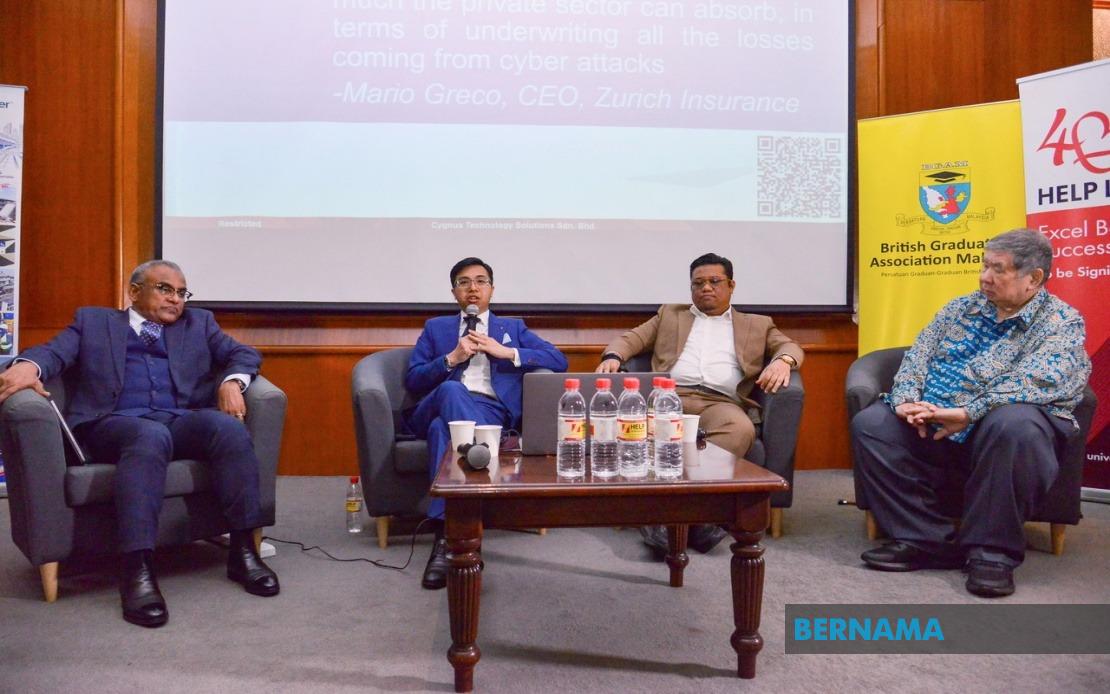
Malaysia's scam crisis has reached alarming proportions, with more than 66,000 reported cases last year inflicting financial damage exceeding RM2.97 billion on individuals, families and businesses across the country. Crime prevention experts warn that what once appeared as isolated incidents have crystallised into a pervasive national challenge requiring urgent systemic intervention, as sophisticated criminal syndicates leverage artificial intelligence, psychological manipulation and digital platforms to orchestrate increasingly complex fraud schemes.
The scale and sophistication of the problem extends far beyond Malaysia's borders, positioning Southeast Asia as the world's leading hub for commercial crime operations. According to security analysts, the region's scam losses are projected to reach between USD88 billion and USD114 billion in 2025 alone. Heavily fortified criminal compounds operating across Myanmar, Cambodia, Laos and the Philippines generate approximately USD40 billion annually through meticulously coordinated operations, drawing trafficked labourers from more than 80 countries and deploying cutting-edge technology including AI-generated deepfakes and cryptocurrency laundering networks.
The evolution of scam tactics reflects fundamental shifts in how criminals exploit vulnerabilities. Rather than relying solely on technical hacking methods, modern scam syndicates have developed sophisticated social engineering capabilities that target human psychology with precision. Security experts emphasise that contemporary scammers operate by manipulating emotions, exploiting trust and bypassing rational decision-making processes—techniques that prove remarkably effective regardless of victims' technical literacy or educational background. This psychological dimension fundamentally distinguishes contemporary fraud from earlier generations of cybercrime and demands entirely different prevention approaches.
Government and security leaders stress that technological solutions alone cannot address this multifaceted challenge. Malaysia has implemented legislative frameworks including the Cybersecurity Act 2024 and strengthened compliance with international Financial Action Task Force standards while establishing the National Scam Response Centre for improved inter-agency coordination. Yet despite these institutional responses, criminal networks continue adapting faster than regulatory systems can respond, suggesting that enforcement-focused strategies require substantial supplementation with educational initiatives and community mobilisation.
The fundamental argument advanced by senior officials and academics is that prevention through public awareness and digital literacy represents the most efficient and scalable defence mechanism available. An informed citizenry capable of recognising manipulation tactics, verifying information sources and maintaining critical scepticism creates a hostile environment for scammers whose operations depend on exploiting information asymmetries and psychological vulnerabilities. Universities and educational institutions therefore carry responsibility for developing graduates who understand both the technical and psychological dimensions of contemporary fraud, preparing them to contribute meaningfully to policy development and criminal justice reform.
Integrity and ethical decision-making emerge as foundational concerns underlying both corruption and scam prevention efforts. Security analysts argue that criminal activity begins when personal and institutional integrity deteriorates, creating environments where unethical behaviour flourishes. This perspective reframes scam prevention as fundamentally connected to broader questions about cultural values, institutional accountability and civic responsibility—suggesting that genuine progress requires addressing root causes rather than merely responding to symptoms through enforcement mechanisms.
The involvement of major government figures underscores official recognition of scams as existential threats to public confidence in Malaysia's digital ecosystem and economic institutions. Former Home Minister Tan Sri Dr Syed Hamid Albar, serving as Asia e University chancellor and former chairman of the Malaysia Crime Prevention Foundation, emphasised that sustained educational investment represents the most cost-effective prevention strategy available to policymakers. By building informed populations capable of recognising and resisting scam tactics, governments can create cascading protective effects that benefit entire communities rather than relying on reactive enforcement targeting individual perpetrators after financial damage has occurred.
Regional cooperation frameworks remain underdeveloped despite the transnational nature of contemporary scam operations. Criminal networks exploit jurisdictional fragmentation and inconsistent regulatory standards across Southeast Asian countries, establishing operations in permissive environments while targeting victims across multiple nations. Malaysia's experience suggests that unilateral actions, however comprehensive, cannot adequately address regional challenges requiring coordinated law enforcement, shared intelligence platforms and harmonised legal frameworks across affected countries. The emergence of substantial criminal compounds generating billions in annual revenue demonstrates the inadequacy of existing regional coordination mechanisms.
The role of financial institutions, technology providers and media organisations has become increasingly critical to scam prevention effectiveness. These entities occupy strategic positions within information flows and transaction systems, enabling them to implement early detection mechanisms, educate customers about emerging threats and amplify public awareness campaigns. However, their cooperation remains inconsistent and reactive rather than systematic and forward-looking. Greater formalisation of these partnerships, including mandatory information sharing about emerging fraud patterns and coordinated public education initiatives, could significantly enhance Malaysia's defensive capabilities.
Cybersecurity professionals and law enforcement specialists highlight that scam syndicates employ increasingly sophisticated technical capabilities including AI-generated deepfakes that convincingly replicate legitimate identities and cryptocurrency laundering networks that obscure asset flows across jurisdictional boundaries. These technological dimensions demand corresponding expertise within Malaysian enforcement and regulatory agencies, yet evidence suggests significant capability gaps remain. Investment in recruiting, training and retaining cybersecurity specialists capable of operating at syndicate-level sophistication represents a prerequisite for meaningful enforcement progress.
The pathway forward demands simultaneous action across multiple domains including legislative reform, resource allocation to law enforcement and cybersecurity functions, educational curriculum development emphasising digital literacy and critical thinking, institutional coordination mechanisms cutting across sectoral boundaries, and genuine public engagement grounded in understanding rather than fear. Single-sector responses inevitably prove insufficient given the complexity of contemporary scam operations and their deep integration into legitimate financial and digital systems. Malaysia's experience demonstrates that societies facing comparable challenges must embrace comprehensive whole-of-society approaches recognising scam prevention as a shared responsibility rather than a specialised enforcement function.

