Malaysia's push to cultivate national pride during the coming National Month and Malaysia Day celebrations will unfold through a deliberately restrained yet activity-rich approach, departing from previous years' larger-scale productions. The Department of Information (JAPEN) has organised interactive community programmes across the nation to mark the HKHM2026 festivities, with the official launch ceremony scheduled for tomorrow in Ipoh, where Prime Minister Datuk Seri Anwar Ibrahim will preside over proceedings that are expected to draw approximately 3,000 attendees.
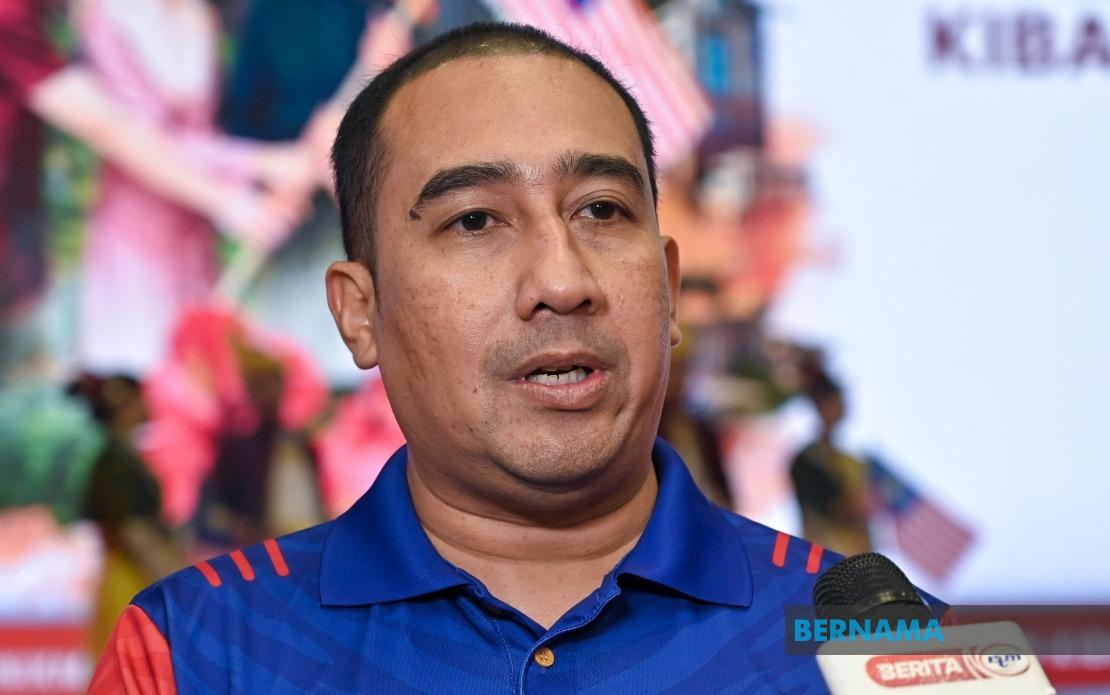
The strategic pivot toward a moderate concept reflects a contemporary approach to civic engagement. According to Muhammad Najmi Mustapha, the director of JAPEN's Communication Services and Community Development Division, the scaled-back framework does not diminish the richness of activities on offer. Rather, it represents a deliberate choice to concentrate resources and messaging while maintaining robust community participation. Speaking after observing rehearsals for the launch at the Sultan Azlan Shah Ministry of Health Training Institute in Tanjung Rambutan, near Ipoh, Muhammad Najmi indicated that mobile units from JAPEN will traverse the country, setting up at designated checkpoints that encompass religious institutions, sporting facilities, and other community nodes.
A significant expansion to the 1 House 1 Jalur Gemilang (1R1JG) campaign marks this year's evolution in civic messaging. Previously confined to seven operational clusters—industry, education, security, health, government agencies, higher education, and community organisations—the initiative now incorporates places of worship and sports venues as two additional focal points. This broadening recognises the social influence wielded by religious spaces and sporting communities in shaping public sentiment and collective identity. The expansion underscores JAPEN's recognition that patriotic messaging reaches greatest efficacy when distributed through trusted community anchors rather than through top-down governmental channels alone.
The practical mechanics of the outreach involve distributing Jalur Gemilang flag kits to households and community spaces, coupled with invitations for public participation in flag-hoisting ceremonies. At religious institutions specifically, JAPEN will offer financial contributions alongside opportunities for congregations to engage in flag-flying activities, thereby intertwining national symbols with spaces of spiritual gathering. This calculated integration seeks to normalise patriotic expression within the quotidian rhythms of Malaysian social life, whether experienced in prayer halls, mosques, temples, churches, or sports clubs where citizens regularly congregate.
The ceremonial centrepiece of the campaign unfolds tomorrow morning, beginning with a Merdeka Patriot Run that will energise participants before the official launch begins at 10 am. A particularly symbolic element involves the resumption of Jalur Gemilang hoisting by security forces—a practice that had lapsed for two years prior to this year's revival. This interruption and restoration carry implicit messaging about continuity, renewal, and the state's commitment to ceremonial reinvigoration. The deliberate reintroduction suggests that organisers view the practice not merely as procedural but as meaningful cultural expression warranting restoration to public consciousness.
The launch ceremony will receive comprehensive multimedia distribution, with live streaming scheduled across Radio Televisyen Malaysia (RTM), the Malaysian National News Agency (Bernama), Merdeka360 Facebook Live, the Ministry of Communications, and JAPEN's own digital platforms. This multimedia saturation ensures that Malaysians unable to attend in person can participate virtually, extending the reach of patriotic messaging into homes and workplaces nationwide. The prominence afforded to digital distribution reflects contemporary realities of how national narratives are consumed and shared, particularly among younger demographics who engage with news and cultural content predominantly through social media channels.
The HKHM2026 theme song's debut during the launch ceremony adds a cultural dimension to what might otherwise remain purely institutional messaging. Music functions as a particularly potent vehicle for emotional resonance and memory formation, enabling patriotic sentiment to permeate public consciousness through melody and lyric rather than through explicit exhortation. The decision to premiere the theme song during the launch ceremony positions it as a centrepiece of the celebration, likely anticipating that it will receive repeated airplay throughout the month across commercial and public broadcasting platforms.
For Malaysian readers, the shift toward a moderate-scale celebration carries implications worth noting. The previous years' larger productions may have reflected different budgetary priorities or public health considerations, whereas this year's recalibration suggests a confidence in delivering impactful messaging through targeted community engagement rather than monumental public spectacles. This approach potentially fosters more intimate and participatory connections between citizens and national symbols, as opposed to spectatorial experiences where audiences observe from distance.
The deliberate expansion to places of worship represents particularly significant symbolic territory in Malaysia's plural society. By integrating religious institutions into the 1R1JG campaign rather than maintaining separation between secular and spiritual domains, JAPEN implicitly advances a narrative of national identity that transcends denominational boundaries. For a nation comprising Muslim, Christian, Buddhist, Hindu, and Sikh communities, this inclusive approach to patriotic expression carries subtle but meaningful messaging about whose Malaysia the National Month celebrates—one presumed to encompass all faith traditions united in national pride.
Sports venues similarly merit examination as deliberate outreach sites. Athletic spaces represent environments where Malaysians of diverse backgrounds gather around shared competitive interests and communal enthusiasm. The decision to incorporate sporting communities into the patriotic messaging campaign reflects recognition that national sentiment formation occurs not merely through formal channels but through informal social spaces where collective identity naturally coalesces. A football match watched by thousands, or a badminton tournament drawing regional participation, becomes an occasion for flag displays and patriotic expression that feels organic rather than imposed.
For Southeast Asia writ large, Malaysia's approach to managing national commemorations carries subtle relevance. As regional peers navigate similar questions about how to foster patriotic sentiment amid competing allegiances and diverse populations, Malaysia's pragmatic blend of scale reduction with targeted expansion offers a case study in calibrating civic messaging. The move away from grand pageantry toward distributed community engagement may reflect broader reassessment across the region about which strategies for national pride-building prove most effective and durable.
The orchestration of HKHM2026 ultimately reflects governmental sophistication about the mechanics of patriotism in contemporary Malaysia. Rather than defaulting to larger budgets or more elaborate productions, JAPEN's architects have opted for strategic distribution through trusted community institutions, multimedia amplification, and cultural elements like music that work on emotional registers beyond rational persuasion. Whether this recalibrated approach ultimately strengthens national sentiment more effectively than previous years' initiatives will become apparent through the month ahead.

