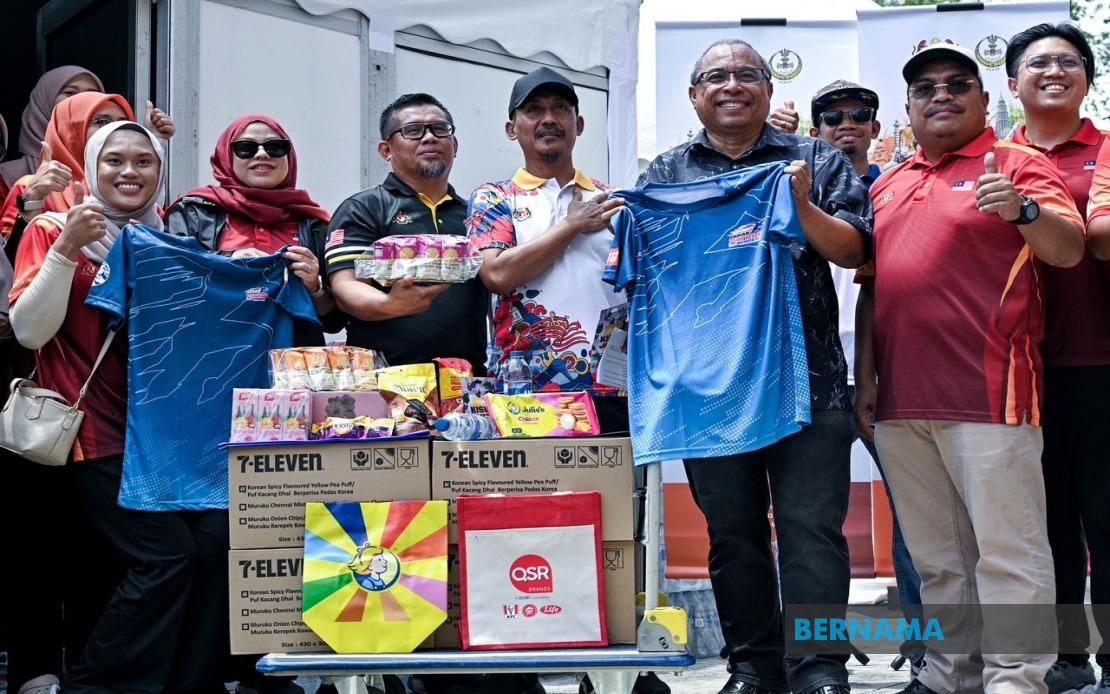
The Malaysian government is marshalling resources for an ambitious slate of commemorative activities centred on the 2026 National Month celebrations, signalling a renewed commitment to sustaining public engagement with national observances through carefully curated programming. The initiative was unveiled in Ipoh following a full-scale rehearsal of the launching ceremony, which will be officiated by Prime Minister Datuk Seri Anwar Ibrahim tomorrow, setting the tone for what organisers promise will be a year-long festival of patriotic expression across the nation.
According to Datuk Aminurrahim Mohamed, Senior Undersecretary at the Communications Ministry and working secretary of the HKHM 2026 Main Committee, the celebrations represent a deliberate effort to refresh how Malaysians engage with their national identity. Rather than rely on established traditions alone, planners have constructed a multi-layered approach incorporating both continuation of popular elements and experimental new dimensions designed to capture contemporary audiences. This blended strategy reflects broader recognition within government circles that sustaining patriotic sentiment requires constant innovation alongside respect for established customs.
Two programmes occupy central positions in the countdown phase. Kembara Bahasa HKHM 2026 appears designed to reinforce linguistic national identity, while RIUH Merdeka focuses on broader celebratory mobilisation. These initiatives sit alongside continuation of the Qur'an Hour programme, reflecting Malaysia's approach to national identity as encompassing religious and secular expressions simultaneously. The deliberate withholding of complete programme details suggests organisers are banking on anticipation and surprise to maintain public interest throughout the extended celebration period.
The Communications Ministry has adopted a strategic approach to narrative framing, emphasising both the spiritual and civic dimensions of national observance. Officials have specifically encouraged Malaysians to begin flying the Jalur Gemilang and broadcasting patriotic music from the outset of the month, creating a visible and audible national landscape of commemoration. This grassroots mobilisation strategy, if successful, would transform Malaysia's public spaces into articulations of collective identity, moving beyond formal ceremonies to embed patriotic expression within daily life.
Corporate sector participation has emerged as crucial infrastructure supporting the scale of planned activities. Fifteen companies have already committed as sponsors for the Ipoh component alone, including established retailers and food service operators such as 7-Eleven, ZUS Coffee, and QSR Brands, alongside logistics provider J&T. This corporate involvement extends beyond token support; Aminurrahim indicated that sponsorship levels have already matched or exceeded the previous year's contributions, suggesting business confidence in the national celebration framework and willingness to align commercial operations with patriotic narratives.
The primary launching ceremony scheduled for tomorrow morning will feature multiple performance elements designed to appeal across demographic segments. The Patriot Merdeka Run introduces physical participation alongside spectacle, engaging health-conscious citizens in patriotic expression. Critically, the official theme song premiere by a prominent Malaysian male singer provides a cultural touchstone—a sonic marker that will likely saturate media platforms throughout the year, becoming almost impossible for Malaysian audiences to avoid.
Broad-based media coverage amplifies the reach of ceremonial events beyond physical attendees. Transmission across Radio Televisyen Malaysia and the Malaysian National News Agency ensures traditional broadcast audiences access the proceedings, while simultaneous Facebook Live streaming through Merdeka360, the Communications Ministry, and the Information Department captures digital audiences who increasingly consume national programming through social platforms. This multi-channel distribution strategy acknowledges generational differences in media consumption while ensuring no segment lacks access to official narratives.
The estimated three thousand guests attending the Ipoh launch represent both a logistical undertaking and a carefully curated audience reflecting Malaysia's institutional and corporate hierarchies. The presence of such a gathered crowd signals governmental commitment to visible, substantial celebration while the broadcast infrastructure ensures this in-person gathering functions simultaneously as media event—the physical spectacle transformed into digital content disseminated across networks. This dual purpose reflects how modern national celebrations operate as performances for both immediate and remote audiences.
Malaysia's approach to its 2026 National Month celebrations reflects broader Southeast Asian dynamics around sustaining national consciousness in diverse, increasingly digital societies. For a multi-ethnic, multi-religious nation navigating regional integration and global economic forces, the deliberate cultivation of shared patriotic expression serves functions beyond ceremonial pageantry. These programmes represent institutional efforts to forge common ground among citizens who may hold divergent political allegiances, regional identifications, or religious observances. The emphasis on inclusivity—combining secular patriotic expression with religious observance, incorporating both traditional and contemporary cultural forms—suggests organisers recognise that national identity in Malaysia requires constant reinforcement and careful calibration.
The corporate sponsorship dimension warrants particular attention for understanding how modern nationalism operates within capitalist frameworks. Companies aligning themselves with national celebration messaging gain marketing exposure and cultural legitimacy, while the government benefits from private sector resources enabling grander public spectacles than state budgets alone might provide. This symbiosis between commercial and national interests has become standard across developed and developing nations, yet it merits scrutiny regarding whose vision of national identity receives amplification through corporate-backed platforms.
Political implications of expanded national celebrations extend to Malaysia's regional positioning and internal cohesion. Grand commemorations of independence and national days serve partly as affirmations of sovereignty and territorial integrity, statements particularly relevant given ongoing maritime disputes and regional great-power competition in Southeast Asia. Internally, heightened celebration intensity may reflect government calculations that enhanced patriotic engagement strengthens social cohesion amid periodic communal tensions or political polarisation. Whether such programming substantively shifts public sentiment or merely provides temporary affective experiences remains an empirical question.
The deliberate strategy of maintaining programme mystery while inviting public anticipation reveals sophisticated understanding of attention economics. By withholding details, organisers sustain extended periods of speculation and media coverage extending far beyond single ceremonial events. This calculated approach to information release ensures the National Month celebrations maintain cultural salience across multiple news cycles, transforming a defined observance into an extended narrative arc spanning months.

