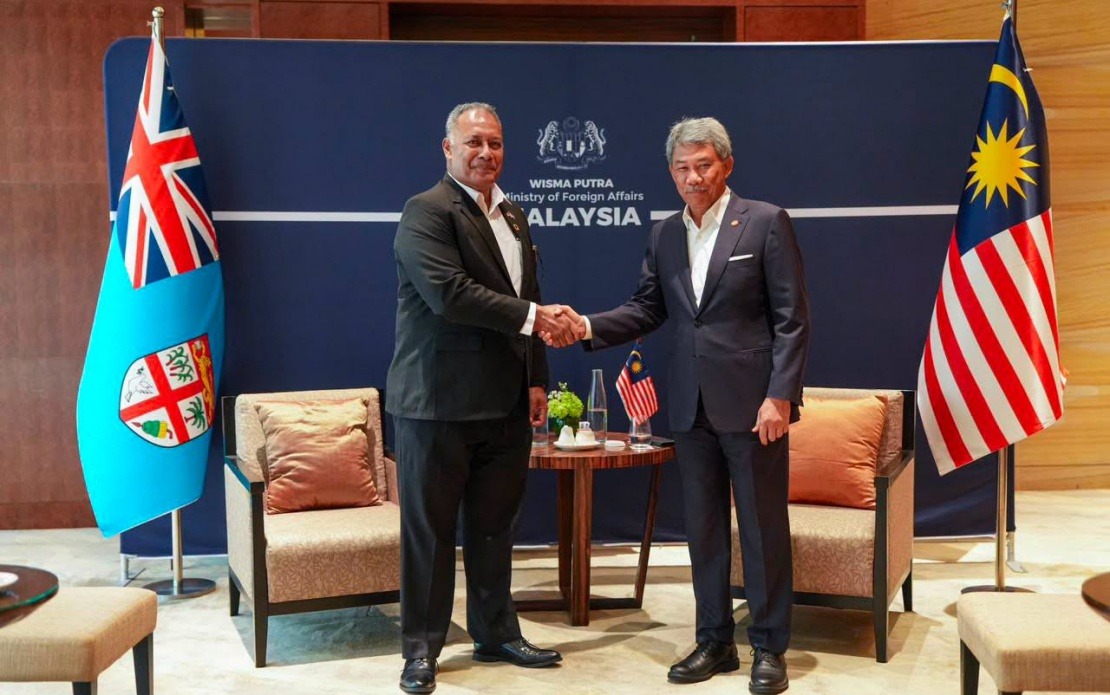
Malaysia and Fiji are charting a course toward deeper engagement across multiple sectors, with Foreign Minister Datuk Seri Mohamad Hasan and his Fijian counterpart Sakiasi Raisevu Ditoka identifying fresh avenues for partnership during talks in Kuala Lumpur this week. The two countries are targeting expansion in trade and investment alongside collaboration in human capital development, forestry management, renewable energy initiatives, and cultural exchange—a broad framework that reflects both nations' commitment to strengthening ties across the Indo-Pacific region.
Ditoka's presence in Malaysia from August 9 to 12 marks a significant milestone for bilateral relations, particularly given the symbolic reopening of Fiji's High Commission in Kuala Lumpur on Monday, a move that underscores both countries' dedication to sustained diplomatic engagement. The formal working visit and subsequent lunch hosted by Mohamad provided the platform for substantive dialogue on matters of mutual interest, with both ministers also taking the opportunity to canvass their perspectives on broader regional and global developments affecting the Pacific.
The economic dimension of the Malaysia-Fiji relationship, while modest compared to some trading partnerships, demonstrates room for meaningful growth. Official figures show total bilateral trade reached RM880.01 million (US$206.2 million) in 2025, with Malaysian exports dominating the relationship at RM867.92 million (US$203.41 million), while Fiji's shipments to Malaysia totalled RM12.09 million (US$2.80 million). This imbalance suggests untapped potential for Fijian products in the Malaysian market and opportunities for Malaysian investors seeking footholds in Pacific markets.
Renewable energy emerged as a particular focus of the discussions, reflecting global trends toward decarbonisation and the acute energy security challenges facing Pacific island nations. Fiji, like many island economies, faces substantial exposure to energy price volatility and climate-related vulnerabilities, making partnerships with technologically advanced nations like Malaysia strategically important. Malaysian expertise in palm oil-based biofuels, hydroelectric development, and solar technology could address Fiji's energy infrastructure needs while creating commercial opportunities for Malaysian enterprises.
The emphasis on human capital development suggests both nations recognise the value of people-to-people connections and skills transfer. Malaysia's established education sector and technical training programmes could attract Fijian students and professionals, while exchanges in this sphere build long-term goodwill and create networks that facilitate future cooperation. Such initiatives also align with ASEAN's broader engagement strategies toward Pacific partners, positioning Malaysia as a knowledge hub for island economies grappling with development challenges.
Fji's repositioning in global affairs has gained momentum as larger powers compete for influence across the Indo-Pacific, a region increasingly recognised as pivotal to twenty-first century geopolitics. Malaysia's outreach to Fiji and other Pacific nations reflects Kuala Lumpur's strategy to expand diplomatic presence and economic reach beyond traditional Southeast Asian confines, diversifying partnerships and reducing dependence on any single regional alliance. For Fiji, engagement with Malaysia offers an alternative development pathway and partnership option amid complex great-power dynamics in the region.
Forestry cooperation holds particular resonance given both nations' biodiversity assets and shared interests in sustainable land management. Malaysia's experience managing tropical forests, though contested on environmental grounds, encompasses techniques and policies that island economies may find relevant. Conversely, Fiji's unique ecosystems and conservation challenges could benefit from Malaysian technical expertise, creating opportunities for knowledge exchange on biodiversity protection and sustainable resource extraction.
The reopening of Fiji's High Commission represents more than symbolic diplomacy; it signals institutional commitment to managing and expanding the bilateral relationship. A permanent diplomatic presence allows for regular engagement, faster communication channels, and better coordination on issues affecting both nations. For Malaysia, the presence of another Pacific nation's diplomatic mission enhances Kuala Lumpur's credentials as a regional hub and demonstrates the country's growing relevance to island economies seeking stable partners.
Cultural collaboration, the final pillar of the envisioned partnership, offers softer dimensions to statecraft. Exchange of artists, cultural festivals, and educational programmes foster understanding and create constituencies within each nation invested in the bilateral relationship. Such initiatives prove particularly valuable in sustaining momentum during periods when higher-level political engagement may be constrained by competing priorities or diplomatic calendars.
The timing of this engagement also reflects Malaysia's broader strategic recalibration toward the Pacific, an area where China and smaller Western powers have invested considerable diplomatic capital. By cultivating relationships with Pacific island nations now, Malaysia positions itself as a reliable, non-coercive partner and expands its voice in international forums where Pacific nations collectively wield voting influence. For Fiji, Malaysia's attention offers validation of its importance and options in navigating relationships with larger powers.
Looking forward, concrete outcomes from these high-level discussions will likely include sectoral working groups, trade facilitation agreements, and possibly student scholarship programmes. The real test of these partnerships, however, lies in implementation—converting ministerial declarations into sustained cooperation that delivers tangible benefits to businesses, workers, and citizens of both nations. The successful reopening of Fiji's diplomatic mission suggests seriousness about the endeavour, but deepening engagement will require follow-up mechanisms and continuous attention from both governments.

