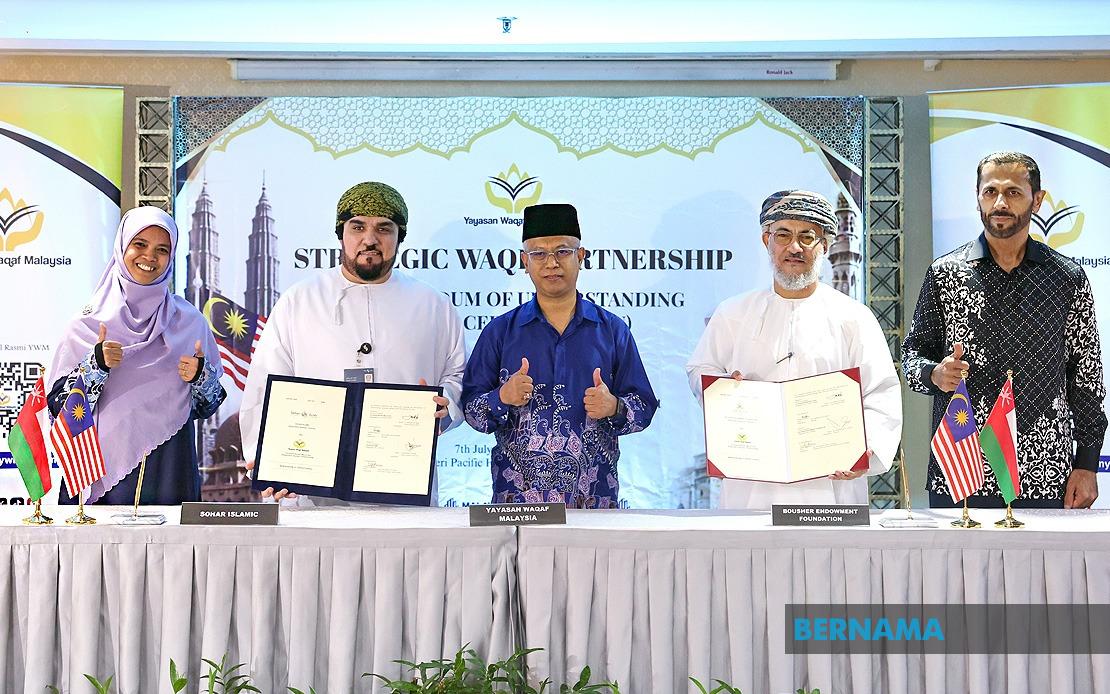
Malaysia has moved to solidify its standing as a centre of expertise in waqf governance by signing a memorandum of understanding with Sohar Islamic and the Boushar Endowment Foundation from the Sultanate of Oman. The agreement, executed in Kuala Lumpur on July 7, reflects the growing international demand for Malaysia's capabilities in developing a robust and innovation-driven waqf ecosystem that extends far beyond domestic borders.
The partnership represents a significant milestone in how Malaysian institutions are increasingly positioned as knowledge exporters rather than importers of Islamic finance practices. Deputy Minister Marhamah Rosli emphasized this shift during the signing ceremony, noting that Malaysia typically sought foreign expertise but is now introducing its own sophisticated waqf frameworks to other Muslim-majority nations. This transition signals a maturation of Malaysia's Islamic finance sector and its evolution into a thought leader within the Islamic world.
The Malaysian Waqf Foundation, led by Chief Executive Dr Ridzwan Bakar, will collaborate with its Omani partners on knowledge sharing, technological advancement, and the dissemination of best practices in waqf governance. The scope extends beyond theoretical discussion, encompassing practical mechanisms for managing endowment assets and establishing sustainable revenue streams that can benefit wider communities. Ridzwan's concurrent appointment as a Waqf Adviser to the Sultanate of Oman by both institutions underscores the confidence placed in Malaysia's institutional expertise.
The deliberate nature of this engagement reveals a strategic approach adopted by YWM over several years. Ridzwan disclosed that groundwork for the collaboration began through exploratory missions in 2023 and 2024, during which Malaysian officials identified receptive partners in Oman. Rather than passively waiting for international interest, YWM proactively approached potential collaborators, a stance that paid dividends when Omani institutions recognized the value of Malaysian experience. This initiative-driven approach contrasts with conventional diplomatic partnerships and demonstrates how Malaysian institutions are taking ownership of regional Islamic finance development.
Beyond Oman, YWM is actively cultivating an international waqf network that includes partnerships with Kuwait, Qatar, and the United Arab Emirates. This multi-country engagement positions Malaysia within a strategic bloc of Gulf and Middle Eastern nations, creating pathways for knowledge exchange while simultaneously opening doors for Malaysian Islamic finance products to gain traction in wealthier markets. The diversification of partnerships reduces dependency on any single bilateral relationship and strengthens Malaysia's overall positioning within the Islamic finance ecosystem.
Central to the collaboration's appeal is the development of productive waqf assets that can generate investment returns. Ridzwan highlighted the potential to attract strategic capital from Arab nations, which hold substantial sovereign wealth reserves seeking meaningful opportunities aligned with Islamic principles. Through this partnership, Malaysia seeks to establish itself as an intermediary and repository for Islamic endowment capital, channelling international funds into domestic and regional investments while maintaining adherence to Shariah requirements.
The Malaysian Waqf Foundation currently operates three investment products through Kenanga Investors, creating institutional vehicles designed to capture international investment flows. These products serve a dual purpose: they provide local investors with access to professionally managed waqf-compliant portfolios while simultaneously offering sophisticated international investors exposure to structured Islamic finance mechanisms. The existence of these infrastructure components differentiates Malaysia from competitors and provides concrete mechanisms through which the Oman partnership can generate tangible economic activity.
The economic philosophy underpinning this collaboration extends beyond immediate charitable outcomes. Ridzwan articulated a vision whereby waqf asset development operates as an engine for long-term economic strengthening, with social benefits accruing only after substantial wealth accumulation occurs. This approach acknowledges that waqf institutions must function as investment entities capable of generating surplus capital before widespread distribution becomes viable. The emphasis on economic sustainability over immediate subsidy represents a evolution in how Islamic social finance is conceptualized in Malaysian policy discourse.
The projected beneficiaries of enhanced waqf productivity extend well beyond traditional categories of recipients, or asnaf. Ridzwan specifically mentioned potential assistance for segments within the B40 and M40 income categories, broadening the social safety net that waqf assets can support. This inclusive framing suggests that Malaysian policymakers view waqf institutions not merely as charitable mechanisms serving the poorest populations but as instruments capable of addressing middle-income vulnerabilities and economic insecurity across broader swaths of society.
For Malaysian readers, this partnership carries significance beyond symbolic prestige. The establishment of Malaysia as an Islamic finance knowledge hub generates employment opportunities for Malaysian professionals, creates consulting revenue streams, and elevates the country's soft power within the Islamic world. Financial services professionals, Islamic scholars, technology specialists, and governance experts all benefit from expanded demand for Malaysian expertise. Furthermore, the partnership may accelerate domestic innovation in waqf management as local institutions respond to international scrutiny and adopt global best practices.
The collaboration also reflects Malaysia's strategic recognition that Islamic finance represents an avenue for deeper integration with Gulf Cooperation Council countries and broader Middle Eastern economies. By positioning waqf expertise as a key offering, Malaysia differentiates itself from other Southeast Asian competitors and carves a distinctive niche within global Islamic finance markets. This positioning becomes increasingly valuable as oil-dependent economies diversify their investment portfolios and seek new vehicles for capital deployment aligned with religious principles.
The implications for Southeast Asia are equally noteworthy. Malaysia's success in exporting waqf expertise may inspire similar institutions across the region to develop comparable international partnerships, potentially elevating the region's collective standing in Islamic finance. Additionally, successful waqf asset development models pioneered through the Oman collaboration could be adapted to address social welfare challenges within Malaysia and neighbouring countries facing similar economic pressures and demographic shifts.

