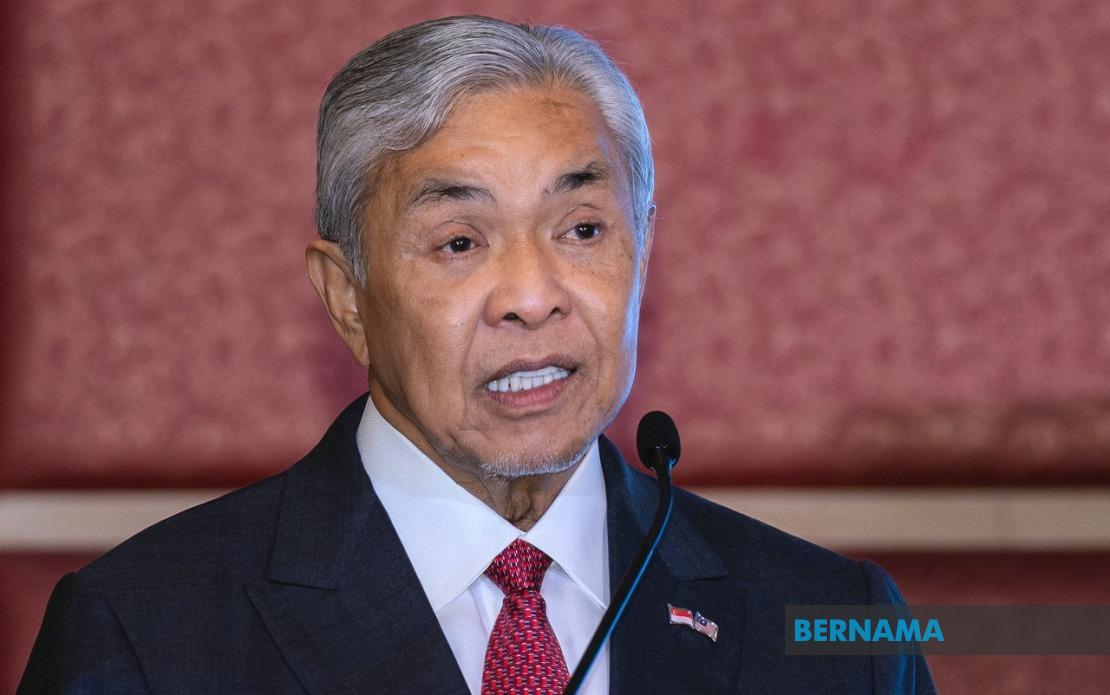
Malaysia is moving forward with plans to establish a dedicated national mechanism for managing its refugee and asylum seeker populations, representing a significant shift toward self-reliant governance of migration issues. Deputy Prime Minister Datuk Seri Dr Ahmad Zahid Hamidi outlined the framework during a parliamentary reply on July 16, emphasising that the country would no longer depend on international bodies to administer refugee affairs. This approach reflects growing confidence in Malaysia's institutional capacity to handle one of Southeast Asia's most pressing humanitarian challenges, particularly given the country's substantial refugee population.
The foundation for this initiative rests on National Security Council Directive No. 23, a comprehensive policy document revised in 2023 and signed by Prime Minister Datuk Seri Anwar Ibrahim on June 14, 2023. Rather than treating refugee management as an isolated administrative function, the directive positions it as a coordinated effort spanning multiple government ministries and agencies under the Prime Minister's Department's oversight. This whole-of-government approach acknowledges that managing vulnerable populations requires integrated solutions encompassing law enforcement, social welfare, healthcare provision, and economic coordination. The NSC directive explicitly outlines the functions and responsibilities of each participating ministry, eliminating ambiguity about institutional roles and accountability.
At its core, the mechanism prioritises efficiency in both management and enforcement operations. Ahmad Zahid stressed that the framework seeks to streamline administrative processes while maintaining rigorous adherence to Malaysian laws and regulations. This dual emphasis reflects a recognition that effective refugee governance requires simultaneous commitment to orderly administration and strict boundary-setting around national rules. The mechanism aims to process asylum claims systematically, verify the legitimacy of refugee status claims, and ensure that those granted protection comply with regulations governing their residence and conduct within Malaysian territory.
Beyond enforcement, the framework commits Malaysia to providing eligible refugees with access to essential services. Healthcare access represents a critical component, recognising that vulnerable populations often arrive in poor health conditions and require immediate medical attention. Educational opportunities for refugee children address long-term integration needs and prevent social marginalisation of younger generations in camps or informal settlements. Employment pathways represent another crucial dimension, as work access reduces dependency on government resources while enabling refugees to achieve greater self-sufficiency and dignity. These provisions demonstrate that Malaysian policy balances security imperatives with humanitarian obligations, treating refugees as individuals with legitimate needs rather than exclusively as security threats.
The policy framework also encompasses welfare and social services coordination, ensuring that multiple government agencies deliver complementary rather than duplicative assistance. By mapping which agencies provide what services, and establishing clear referral mechanisms between them, Malaysia aims to reduce administrative gaps that vulnerable populations might otherwise exploit or struggle to navigate. This coordination extends to ensuring that assistance reaches intended beneficiaries and that resources are allocated according to actual needs rather than political considerations. Social responsibility represents an explicit element of this balance, acknowledging that communities hosting refugee populations bear genuine costs and deserve acknowledgment and support.
A particularly significant dimension of Ahmad Zahid's commentary concerns the identification of obstacles to effective implementation. He highlighted what he termed "enablers among local residents" who prioritise personal financial gain over national interests. These individuals, motivated by rental profits from housing refugee populations or attraction to cheap labour sources, actively undermine government enforcement efforts. This candid acknowledgment suggests that Malaysia recognises that refugee management failures frequently stem not from policy inadequacy but from deliberate circumvention by residents profiting from irregular migrant populations. Addressing this requires public education campaigns, stronger penalties for landlords and employers violating regulations, and community engagement initiatives emphasising collective security interests.
The context for this framework announcement involves Malaysia's role as a significant host nation for displaced populations. With more than 126,000 registered Rohingya refugees, Malaysia confronts demographic realities that demand sophisticated management approaches. The Rohingya population represents one of the world's most protracted displacement crises, with individuals having spent years or decades in camp conditions without permanent resettlement prospects. This long-term presence creates complex integration challenges, as refugee populations become semi-permanent fixtures within Malaysian society rather than temporary transients awaiting resettlement elsewhere. The NSC directive reflects understanding that Malaysia's refugee situation requires long-term strategic thinking rather than short-term containment measures.
The introduction of the Refugee Registration Document (DPP) represents a practical implementation mechanism supporting this broader framework. Mentioned in parliamentary questioning, the DPP provides documented recognition of refugee status, enabling bearers to access services and navigate interactions with authorities more effectively. Documentation represents a fundamental prerequisite for refugees to access healthcare, education, and employment, as institutions require proof of identity and legal status. By systematising documentation through the DPP, Malaysia creates the administrative infrastructure necessary to deliver promised services while simultaneously maintaining security oversight through a trackable registration system. This combines humanitarian and administrative objectives within a single mechanism.
The NSC directive's emphasis on policy coordination across ministries reflects lessons learned from previous approaches. Earlier ad-hoc refugee management often saw different agencies pursuing contradictory objectives, with immigration enforcement officers at odds with labour ministry standards or health agencies struggling to integrate refugee populations into disease surveillance systems. By establishing the NSC directive as binding guidance for all ministries, Malaysia's approach ensures that refugee policy derives from integrated government deliberation rather than departmental turf wars or conflicting priorities. This coordination mechanism acknowledges that refugee policy intersects with national security, public health, labour market management, and social cohesion simultaneously.
From a regional perspective, Malaysia's initiative to develop independent refugee management capacity carries significance for Southeast Asia's broader response to displacement crises. As one of the region's most developed economies and most significant refugee hosts, Malaysia's approach influences how neighbouring countries conceive their responsibilities toward displaced populations. By demonstrating that a middle-income Southeast Asian nation can establish sophisticated, coordinated frameworks for refugee management, Malaysia potentially reduces regional dependence on Western countries or international organisations to define appropriate responses to displacement. This assertion of regional agency in addressing humanitarian challenges reflects broader movements within ASEAN toward autonomous decision-making rather than deference to external actors.
Implementation challenges will likely emerge despite the comprehensive framework. The identified problem of local enablers suggests that enforcement will require sustained political will and community support. Securing adequate budgets for healthcare, education, and employment support to refugee populations may prove contested during periods of fiscal constraint. Housing refugee populations in urban areas while maintaining security oversight presents ongoing operational complexities. Balancing legitimate security concerns with humanitarian obligations requires constant calibration and public communication to maintain political consensus. Nevertheless, Malaysia's explicit commitment to developing its own mechanism rather than defaulting to international arrangements represents a significant policy evolution, signalling that the country views refugee management as a national strategic issue requiring integrated, long-term institutional investment.

