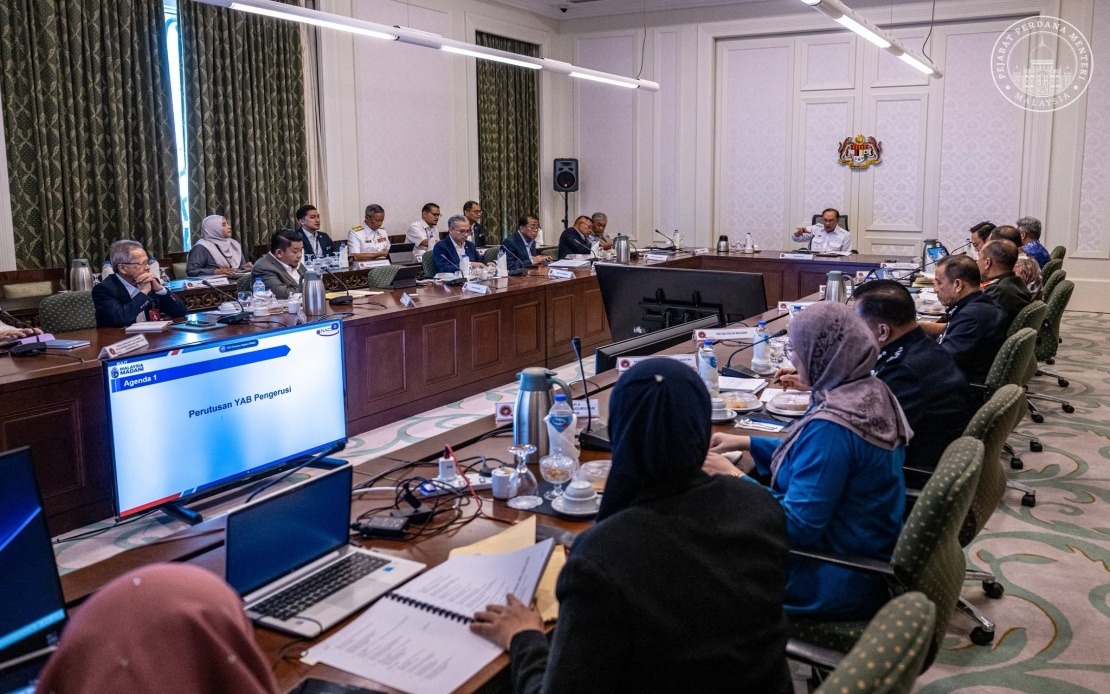
Prime Minister Datuk Seri Anwar Ibrahim has launched the Malaysia Digital 2030 (MD2030) Action Plan, positioning it as a transformative roadmap for the nation's digital future. The comprehensive initiative, unveiled at a meeting of the National Digital Economy and Fourth Industrial Revolution Council (MED4IRN), represents a deliberate pivot toward domestic technological capability and positions Malaysia to navigate the accelerating global shift toward artificial intelligence and automation. Rather than remaining dependent on imported solutions, the nation will pursue development of home-grown innovation and digital expertise across both public and private sectors.
The five-year action plan, covering 2026 to 2030, addresses one of Southeast Asia's most pressing strategic challenges: how to harness transformative technologies while maintaining economic competitiveness and protecting national interests. Anwar emphasized that success requires structured execution and disciplined implementation, with each initiative carefully calibrated to deliver measurable benefits to citizens, enhance business productivity, and position Malaysia as what he termed an "inclusive AI nation" by 2030. This framing acknowledges both the economic imperative of digital transformation and the government's commitment to ensuring the gains are broadly distributed rather than concentrated among elite tech firms or foreign multinational corporations.
Data security and sovereignty form the philosophical bedrock of MD2030. The plan mandates that government digital services be developed internally rather than outsourced to international vendors, with coordination through the Digital Ministry and the National Digital Department. This approach directly addresses vulnerabilities that many Southeast Asian nations face when critical infrastructure and citizen data are managed by foreign technology companies subject to different regulatory regimes. By building domestic capacity, Malaysia aims to reduce dependency on external parties and insulate sensitive government operations from potential disruption or surveillance risks inherent in globalized technology supply chains.
The geopolitical context underpinning MD2030 cannot be overlooked. Anwar explicitly linked the action plan to Malaysia's need for resilience against global uncertainty and intensifying competition within the digital economy. As great power tensions reshape technology supply chains and countries increasingly weaponize digital access, nations that control their own technological infrastructure gain strategic autonomy. For Malaysia, positioned at a crucial juncture in Southeast Asian geopolitics and engaged in complex relationships with multiple global powers, developing domestic AI and digital capabilities serves both economic and strategic interests.
Transitioning from technology consumer to technology producer represents a fundamental reorientation of Malaysia's economic model. Historically, the nation has excelled in assembling and adopting foreign technology, but MD2030 signals ambition to move up the value chain toward innovation and intellectual property creation. This transition carries significant implications for workforce development, educational curriculum redesign, and research infrastructure investment. Building an ecosystem capable of generating globally competitive AI solutions and digital innovations requires not merely government policy but sustained commitment to attracting and retaining talent, fostering entrepreneurship, and creating conditions where digital startups can flourish.
The emphasis on developing digital expertise within the public sector reflects recognition that government itself must modernize to compete effectively. Many Southeast Asian governments lag private sector counterparts in digital sophistication, creating inefficiencies in service delivery and limiting the state's capacity to regulate rapidly evolving technology sectors effectively. By building stronger internal capabilities, the Digital Ministry and National Digital Department position themselves to design more intelligent policy, deploy digital services more effectively, and maintain genuine oversight over technology adoption rather than simply rubber-stamping vendor proposals.
Malaysia's MD2030 initiative arrives amid broader regional competition for technological leadership. Singapore has long dominated Southeast Asia's digital economy, while Indonesia is leveraging scale to build technology sectors. Thailand and Vietnam pursue their own digital transformation agendas. For Malaysia, the window to establish credible positions in emerging technologies like artificial intelligence narrows as competitors advance. MD2030 represents an attempt to accelerate Malaysia's trajectory before competitive advantages consolidate elsewhere in the region.
The action plan's focus on creating an "inclusive AI nation" contains particular significance for social cohesion. Technology-driven economic transformation often exacerbates inequality if benefits accrue only to highly skilled workers and established enterprises. By emphasizing inclusivity, Anwar's framing suggests MD2030 intends to extend digital opportunity across geographic regions, demographic groups, and business sizes rather than concentrating advancement in Kuala Lumpur's tech hubs. This inclusive dimension addresses legitimate public concerns that rapid digital change leaves behind lower-skilled workers and underdeveloped areas, a concern especially acute in Malaysia given the nation's diverse economic geography.
Implementation will ultimately determine MD2030's success or failure. Ambitious technological initiatives require sustained political will, adequate funding, skilled personnel, and effective coordination across government agencies. Malaysia's government has launched numerous strategic plans in recent years; execution gaps between announcement and delivery remain a persistent challenge. The MADANI administration's commitment to structured and disciplined approach suggests awareness of past shortcomings, but translating ambitious rhetoric into concrete technological achievements demands unwavering focus amid competing budget pressures and the inevitable bureaucratic obstacles that emerge during implementation.
The MD2030 launch also signals that digital transformation has become a centrepiece of Anwar's broader economic agenda. As Malaysia navigates post-pandemic recovery and faces mounting structural challenges including an aging workforce and shifting global supply chains, digital innovation and AI adoption represent potential levers for productivity improvement and economic rejuvenation. By elevating MD2030 to the level of national agenda and securing cabinet-level coordination through MED4IRN, the government indicates it views digital capability not as a sectoral concern for the Technology Ministry but as fundamental to national competitiveness and prosperity.

