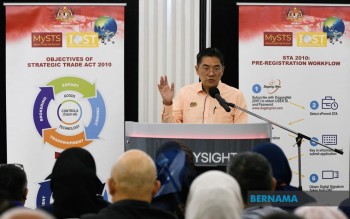
The Malaysian government is doubling down on its commitment to strengthen the electrical and electronics sector, recognising it as a cornerstone of national economic strategy and a cornerstone of the country's standing within intricate global manufacturing networks. Deputy Investment, Trade and Industry Minister Sim Tze Tzin underscored this priority while addressing industry stakeholders in the northern zone, emphasising that sustained government backing is essential to maintaining Malaysia's foothold in an increasingly competitive international technology landscape. The sector encompasses critical manufacturing domains ranging from semiconductor assembly and testing to advanced sensor production and telecommunications equipment, all of which command significant value in worldwide trade flows.
Penang and the broader Northern Region have emerged as particularly vital nodes in this ecosystem, hosting a formidable concentration of multinational technology corporations and ancillary suppliers. The clustering of world-class manufacturers in these areas has created distinct competitive advantages, including specialised workforce capabilities, established supply networks, and institutional knowledge accumulated over decades of continuous operation. This geographic concentration positions these zones as irreplaceable components of global production strategies, a reality that government officials recognise must be actively defended against competing manufacturing jurisdictions seeking to attract similar investments. The strategic importance of preserving this status cannot be overstated, as it directly correlates with employment opportunities, skills development, and upstream economic multiplier effects throughout the region.
The semiconductor industry warrants particular attention within this broader industrial ecosystem, as it represents the most technologically sophisticated and economically consequential segment of Malaysia's E&E portfolio. Malaysia's participation in semiconductor value chains—specifically in assembly, testing, and packaging operations—positions the nation as an indispensable intermediary between design centres and end-product manufacturers. These activities, while labour-intensive by some measures, generate substantial value capture and support highly skilled employment categories. The fragmentation of semiconductor production across multiple geographies, driven by supply chain resilience imperatives and geopolitical considerations, has reinforced demand for Southeast Asian manufacturing capacity, a dynamic that favours Malaysia's existing industrial infrastructure and regulatory stability.
Beyond direct manufacturing capabilities, the government is simultaneously prioritising export control compliance frameworks to ensure that Malaysia's technology sector operates within internationally agreed parameters. This dual focus—simultaneously promoting sector growth whilst enforcing stringent regulatory oversight—reflects sophisticated understanding of the interconnected nature of modern technology trade. Nations that fail to implement credible compliance regimes risk international sanctions or exclusion from sensitive supply chains, outcomes that would severely compromise the long-term viability of local industry. The Strategic Trade Act machinery, supported through dedicated clinics and advisory services, represents the institutional scaffolding through which this compliance culture is embedded within industry practice.
Recent macroeconomic performance has created a propitious moment for sectoral consolidation and improvement. Malaysia's robust trade outcomes during the first half of the year have generated profit streams within technology companies that exceed historical norms, providing genuine financial capacity for workforce development and compensation enhancement. The Deputy Minister's appeal for companies to translate export-driven gains into measurable improvements in worker welfare reflects recognition that sustainable industrial growth depends upon retaining skilled personnel and maintaining social cohesion within manufacturing communities. Salary increases and performance bonuses, far from representing mere redistributive gestures, function as essential mechanisms for skill preservation and productivity enhancement within complex manufacturing environments.
The Northern Region STA Clinic programme, which convened 86 industry participants, demonstrates MITI's commitment to translating policy objectives into practical advisory services accessible to frontline operators. Participants benefited from direct technical guidance on product classification protocols, licensing procedures, and internal compliance audit methodologies—precisely the granular regulatory knowledge that can determine whether companies operate efficiently or encounter costly administrative delays. This engagement model, replicated annually, creates sustained channels of communication between government technocrats and industry practitioners, reducing information asymmetries that might otherwise constrain compliance or discourage participation in regulated supply chains.
The relationship between government industrial policy and private sector performance in the E&E domain reflects a broader pattern within Malaysian economic strategy. Rather than pursuing distant protectionist models, policymakers have chosen to operate as facilitators and enablers of private investment, providing regulatory clarity, infrastructure support, and targeted technical assistance. This approach has proven particularly effective in attracting multinational manufacturers seeking stable, predictable operating environments. Competitors in Thailand, Vietnam, and Indonesia have attempted to replicate certain elements of this model, but Malaysia's accumulated advantages—including established skill bases, existing manufacturing ecosystems, and institutional continuity—remain difficult to replicate within realistic timeframes.
The semiconductor and advanced electronics sectors operate within a globalised context characterised by rapid technological change and intensifying competition for market share. Malaysia's historical strength in assembly and testing activities faces incipient pressure from automation technologies that progressively reduce labour cost advantages. To sustain competitive positioning, the sector must gradually migrate toward higher-value activities including sophisticated testing regimes, specialised packaging solutions, and potentially participation in semiconductor design and intellectual property development. This transition requires sustained investment in workforce training, educational partnerships with tertiary institutions, and research facilities capable of advancing frontier technological capabilities.
Looking forward, the durability of Malaysia's position within global E&E supply chains will depend upon continued strategic coherence between government policy frameworks and industry capability development. The geopolitical fragmentation affecting semiconductor markets—including export controls on advanced manufacturing equipment and design tools—creates both risks and opportunities for Malaysian participants. Companies positioned as reliable, compliant partners in regulated supply chains may benefit from deliberate diversification away from concentrated manufacturing hubs, whilst those lacking robust compliance cultures face progressive marginalisation. MITI's multifaceted approach to sector strengthening, combining promotional activities with rigorous regulatory oversight, reflects understanding of these complex dynamics.

