Malaysia is positioning itself as a regional leader in digital governance by convening the International Regulatory Conference (IRC) 2026, a major two-day gathering designed to address the complex regulatory challenges emerging from rapid technological change, artificial intelligence proliferation, and growing threats to online safety. Organised by the Malaysian Communications and Multimedia Commission (MCMC) and held in Kuala Lumpur, the conference brings together senior government officials, international experts, industry executives, and policymakers from more than seven countries to deliberate on frameworks that will shape the digital ecosystem across Southeast Asia and beyond.
The timing of IRC 2026 reflects Malaysia's proactive stance in a region grappling with the dual imperative of fostering innovation while protecting citizens from digital harms. Communications Minister Datuk Seri Fahmi Fadzil is scheduled to officiate the opening ceremony, underscoring the government's commitment to these issues at the highest political level. The conference theme, 'Shaping the Next Digital Era: Regulation, Resilience and Trust,' encapsulates the tension that regulators worldwide must navigate: how to create an environment where technology thrives without compromising public safety, citizen privacy, or national interests.
A primary focus of the inaugural day centres on child protection and platform accountability in the digital age, a subject of mounting concern across Southeast Asia where youth engagement with online platforms continues to accelerate. The high-level dialogue titled 'Online Safety by Design: Platform Accountability and Child Protection in an Age of User Vulnerability' will bring together the Human Rights Commission of Malaysia (SUHAKAM), represented by children's commissioner Dr Farah Nini Dusuki, alongside international child protection specialists including UNICEF Malaysia's chief of child protection Saskia Blume. Australian High Commissioner to Malaysia Danielle Heinecke will also participate, reflecting the international dimension of child safety challenges. These conversations carry particular significance for Malaysia, where regulatory frameworks governing platform behaviour and content moderation have traditionally lagged behind rapid changes in user demographics and online behaviour patterns.
Data sovereignty and privacy protection emerge as equally critical themes, particularly as Malaysia aspires to become a digital economy powerhouse while maintaining control over citizen data and national information assets. The session 'Sovereign Data, Empowered Citizens: Building Trust, Privacy and Consumer Rights in Malaysia's Digital Future' will examine how nations can establish protective frameworks without isolating themselves from global digital commerce and innovation. This discussion carries strategic weight for Malaysian policymakers cognisant of geopolitical tensions over data flows and the emergence of competing regulatory blocs, each attempting to establish hegemony over digital governance standards. Industry participants including Maxis, T&G Digital, and Ericsson will contribute practical perspectives on implementing these principles without stifling business growth.
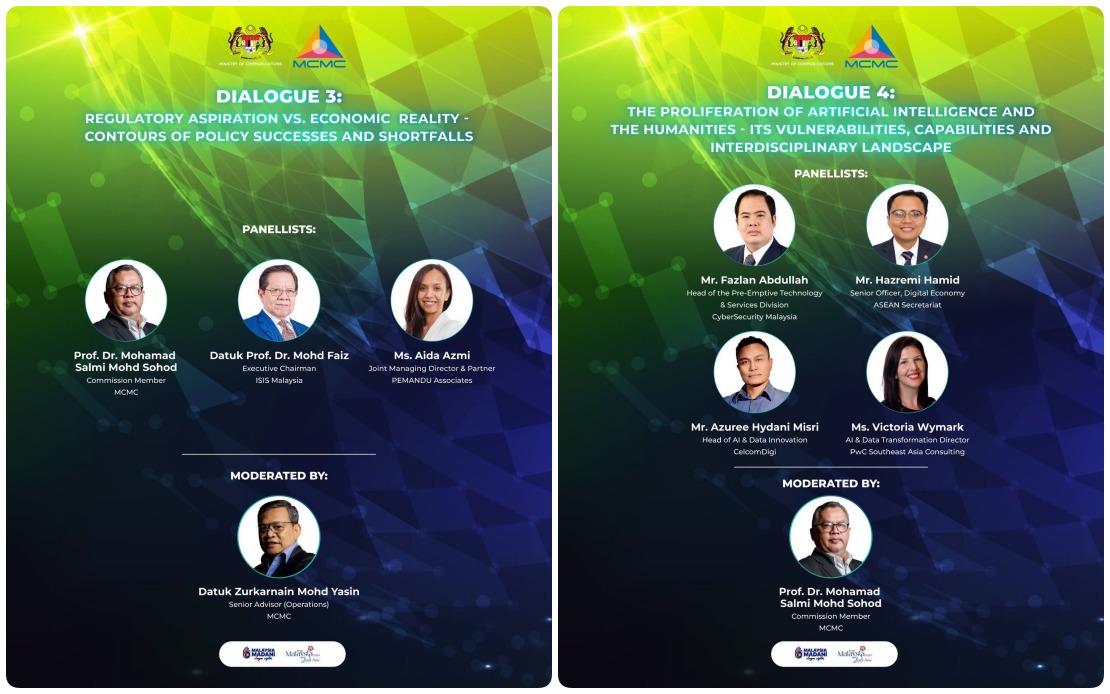
The conference also confronts the perpetual regulatory dilemma of balancing innovation incentives against protective oversight. A dedicated session titled 'Regulatory Aspiration vs Economic Reality: Contours of Policy Successes and Shortfalls' will dissect this tension, drawing on expertise from the Institute of Strategic & International Studies (ISIS) Malaysia and PEMANDU Associates. This dialogue is particularly relevant for Malaysian stakeholders, as the nation attempts to attract technology investment and talent while simultaneously implementing stronger regulatory guardrails. The discussion will likely examine cases where regulatory overreach has inadvertently dampened innovation or, conversely, where insufficient oversight has enabled harmful practices.
The inclusion of artificial intelligence governance within a broader humanities framework signals Malaysia's understanding that AI regulation cannot be purely technical or economical in orientation. The session 'AI and the Humanities: Its Vulnerabilities, Capabilities and Interdisciplinary Landscape' brings together participants from the ASEAN Secretariat, academic institutions including Universiti Kebangsaan Malaysia (UKM), consulting firms, and cybersecurity organisations. This multidisciplinary approach acknowledges that AI's impact extends far beyond algorithmic performance metrics, affecting employment, social cohesion, knowledge production, and cultural expression across the region. For Malaysia, fostering this conversation at a regional level positions the nation as a thoughtful actor in AI governance rather than a passive recipient of globally imposed standards.
The conference's second day pivots toward emerging technologies that will define the next generation of digital infrastructure and capabilities. Quantum technology, robotics automation, and autonomous systems feature prominently, with Malaysia bringing together academic leaders from Universiti Teknologi Malaysia (UTM), Universiti Malaya (UM), and UKM alongside international technology leaders including IBM's Quantum division. These sessions acknowledge that regulatory frameworks must anticipate technological trajectories rather than merely responding to current problems. For Malaysia, building domestic expertise and establishing early positions on quantum and autonomous systems governance could yield competitive advantages as these technologies mature and become commercially significant.
IRC 2026 represents the third iteration of this regulatory platform since its inception in 2024, demonstrating Malaysia's commitment to establishing a regular forum for digital governance discourse. This institutional regularity contrasts with ad-hoc international conferences and suggests the MCMC's vision of IRC as a permanent fixture in the global regulatory calendar. The conference's expansion from its inaugural gathering indicates growing recognition among international regulators and industry participants that Malaysia's regulatory direction has meaningful implications for the broader region and global digital ecosystem.
The conference occurs against the backdrop of Malaysia's implementation of the Online Safety Act 2025 (ONSA), which entered into force on January 1 this year. This legislation represents the government's most comprehensive attempt to establish a coherent framework for managing digital content, platform conduct, and user protection. IRC 2026 provides an opportunity for the MCMC and Malaysian policymakers to present ONSA internationally, gather feedback from peers and stakeholders, and refine implementation approaches based on comparative regulatory experiences. The success of ONSA will substantially influence Malaysia's regulatory credibility and the effectiveness of frameworks subsequently adopted across Southeast Asia.
The inclusion of diverse stakeholder perspectives—from human rights advocates to security experts, from telecommunications incumbents to technology innovators—reflects sophisticated regulatory practice. Rather than imposing top-down standards, Malaysia is creating a deliberative space where competing interests and perspectives can be articulated and balanced. This approach may prove more sustainable than purely prescriptive regulation, as stakeholders with genuine involvement in framework development are more likely to implement them effectively. For Malaysian industry participants, the conference offers direct engagement with policymakers at a formative stage of regulatory design, potentially enabling businesses to shape rules rather than merely comply with predetermined requirements.
The thematic focus on resilience and trust throughout the conference programme acknowledges that digital governance ultimately concerns public confidence in technology ecosystems. Citizens must trust that platforms protect their data, that children encounter age-appropriate content, that artificial intelligence operates within ethical boundaries, and that government stewardship serves the public interest rather than narrow commercial or political agendas. For Malaysia, building these trust foundations is essential as digital services increasingly mediate economic, social, and civic activity. The conference's deliberative approach, bringing together multiple perspectives and acknowledging tensions between values, may itself contribute to broader trust by demonstrating government willingness to engage substantively with complex tradeoffs.
Looking beyond IRC 2026, the conference likely signals Malaysia's intention to influence regional regulatory harmonisation. As individual Southeast Asian nations develop digital governance frameworks, pressure will mount for alignment to facilitate cross-border commerce and reduce compliance fragmentation. Malaysia's positioning as host and convener of this international platform potentially enables the nation to shape these conversations, advocating for standards reflecting Malaysian interests, values, and development priorities. Deputy Communications Minister Teo Nie Ching will formally conclude the conference tomorrow afternoon, providing another opportunity for government messaging about regulatory direction and international cooperation on digital governance challenges.

