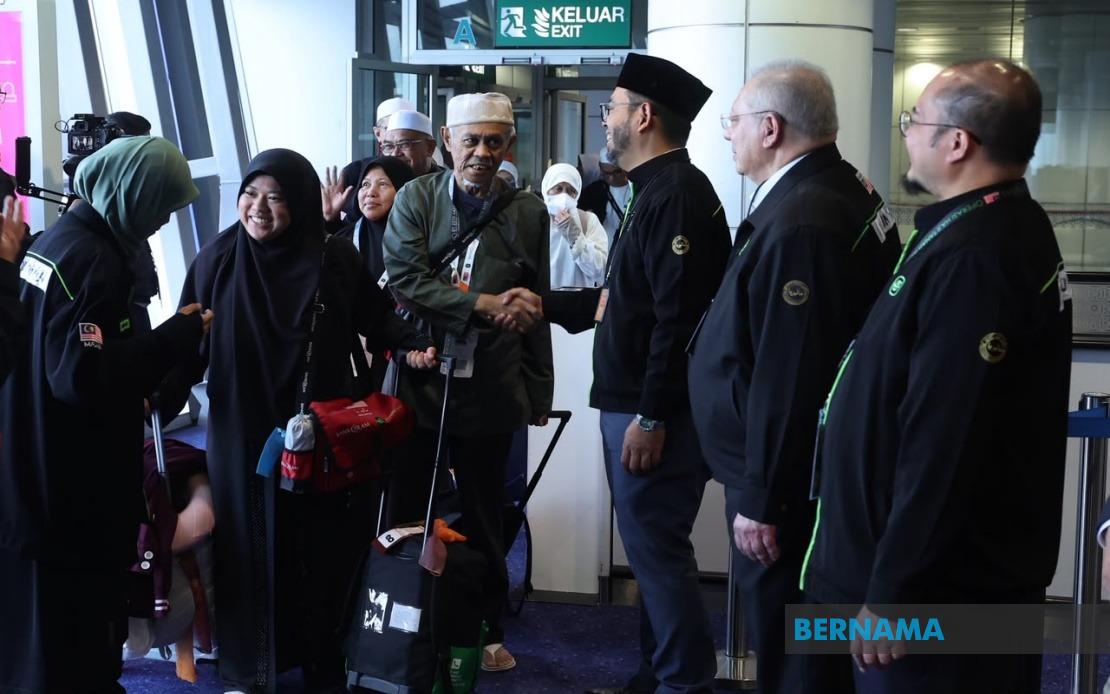
The conclusion of Malaysia's 2026 haj pilgrimage season arrived symbolically on Tuesday when the final contingent of 258 worshippers touched down at Kuala Lumpur International Airport, marking the completion of a logistical undertaking that transported nearly 30,000 Malaysian Muslims to the holy sites in Saudi Arabia. The Malaysia Airlines flight MH 8385 landed at 12.10 pm local time, having departed Madinah the previous evening, representing not merely the end of a religious journey for those individuals but the capstone of an extensive national programme that unfolded across several months despite significant geopolitical turbulence in the wider Middle Eastern region.
Dr Zulkifli Hasan, the Minister in the Prime Minister's Department overseeing religious affairs, presided over the ceremonial welcome, framing the moment as a vindication of meticulous planning and institutional resilience. His remarks underscored that every pilgrim returned in sound health, a statistic of particular significance given the demanding physical and climatic conditions associated with the hajj experience, especially when undertaken during the summer months when temperatures in the Arabian Peninsula reach extreme levels. The minister's emphasis on this outcome reflected broader governmental responsibility for citizen welfare abroad, a concern that resonates across Southeast Asia's Muslim-majority nations grappling with similar pastoral obligations.
Perhaps more consequential than the safe return itself was Malaysia's receipt of the Labbaikum Diamond Award, Saudi Arabia's pinnacle recognition for haj management excellence. This honour, bestowed by the kingdom's Ministry of Haj and Umrah, represents international validation of Malaysian systems and protocols that distinguish the country's approach within the competitive landscape of global haj coordination. The accolade carries particular resonance for a nation whose hajj management frameworks have historically served as regional benchmarks, positioning Malaysia as a custodian of organisational standards that other Muslim-majority countries monitor closely.
The successful navigation of this season's operations assumed heightened complexity given the ongoing conflict in West Asia, which necessitated heightened security protocols, contingency planning for potential disruptions, and careful diplomatic coordination with Saudi authorities managing unprecedented pastoral challenges at holy sites hosting millions of pilgrims simultaneously. Malaysian organisers had to balance fundamental spiritual obligations against contemporary security imperatives, a tension that defined much of their operational thinking throughout the season. The absence of significant incidents or logistical failures speaks to the effectiveness of this balancing act, though the underlying pressures remained substantial throughout the undertaking.
Tabung Haji, the state-owned pilgrimage fund that orchestrates Malaysia's haj programme, played the institutional cornerstone in this achievement, with chairman Tan Sri Abdul Rashid Hussain participating in the final ceremonies. The organisation's role extends far beyond mere financial facilitation; it encompasses visa procurement, accommodation arrangement, transportation coordination, medical support, and cultural preparation of pilgrims unfamiliar with the hajj experience. The fund's expanded responsibilities in recent years have transformed it into a comprehensive pilgrimage management entity rather than simply a savings vehicle, reflecting evolving expectations of institutional sophistication among Malaysian Muslim communities.
Minister Zulkifli attributed significant credit to the disciplined conduct of Malaysian pilgrims themselves, a recognition that acknowledges the human dimension often overlooked in statistical reckonings of logistical success. Intensive pre-departure orientation courses conducted by Tabung Haji had cultivated awareness of expectations, behavioural norms, and practical competencies necessary for navigating the hajj safely and respectfully. This educational emphasis represents a departure from purely transactional pilgrimage models toward integrated preparation frameworks that recognise the pilgrimage's transformative potential when approached with adequate understanding and preparation.
The operational innovations deployed during the 1447 Hijrah season included technological infrastructure improvements, notably the MyNIISe system for streamlining visa management processes, alongside physical amenities enhancements such as upgraded tent accommodation and supplementary sofa beds addressing rest and recovery during the physically demanding pilgrimage. Transportation services were restructured to operate on a continuous 24-hour cycle from accommodations to religious sites, eliminating gaps that previously necessitated difficult walking distances for elderly or mobility-compromised pilgrims. These incremental refinements accumulate into substantively improved experiences that reshape pilgrims' recollections of their spiritual journeys while reducing preventable health complications.
Contributing institutional partners spanning health, immigration, aviation, and logistics sectors received formal recognition from the religious affairs ministry, acknowledging that hajj success reflects coordinated effort across governmental silos rather than isolated excellence within single agencies. This interdepartmental approach has become increasingly sophisticated, with regular coordination meetings and shared protocols replacing earlier fragmented structures. The aviation sector's role proved particularly critical given the volume of international flights required and the precision scheduling necessary to accommodate Saudi Arabia's regulatory requirements governing pilgrim flows.
Looking forward, Tabung Haji has commenced comprehensive post-mortem evaluations designed to identify operational friction points and improvement opportunities before the subsequent hajj season begins its preparation cycle. These institutional learning processes have become increasingly systematic, moving beyond anecdotal feedback toward data-driven analysis of performance metrics across diverse operational dimensions. The organisation's commitment to continuous refinement, rather than resting upon this season's achievements, suggests recognition that international standards require perpetual elevation rather than maintenance of current benchmarks.
The scheduled August meeting of the National Haj Muzakarah represents the formal mechanism through which stakeholders will deliberate emerging challenges and proposed innovations for subsequent seasons. This consultative conference typically encompasses religious scholars, government officials, Tabung Haji leadership, pilgrimage experience specialists, and civil society representatives, creating forums for multidirectional dialogue beyond conventional governmental decision-making structures. The institutional pattern of using such conferences to absorb feedback and recalibrate approaches has contributed substantially to Malaysian hajj programmes' regional reputation for responsiveness and adaptability.
For Malaysian Muslims contemplating future pilgrimages, this season's completion offers reassurance that national systems perform reliably even amid broader regional instability, potentially influencing decisions about timing and participation rates in forthcoming years. The successful outcome may encourage demographic expansion of hajj participation, though capacity constraints and financial accessibility continue limiting factors. Regional observers across Southeast Asia have noted Malaysia's performance benchmarks, subtly influencing approaches adopted by neighbouring countries managing their own pilgrimage operations within increasingly complex geopolitical contexts.

