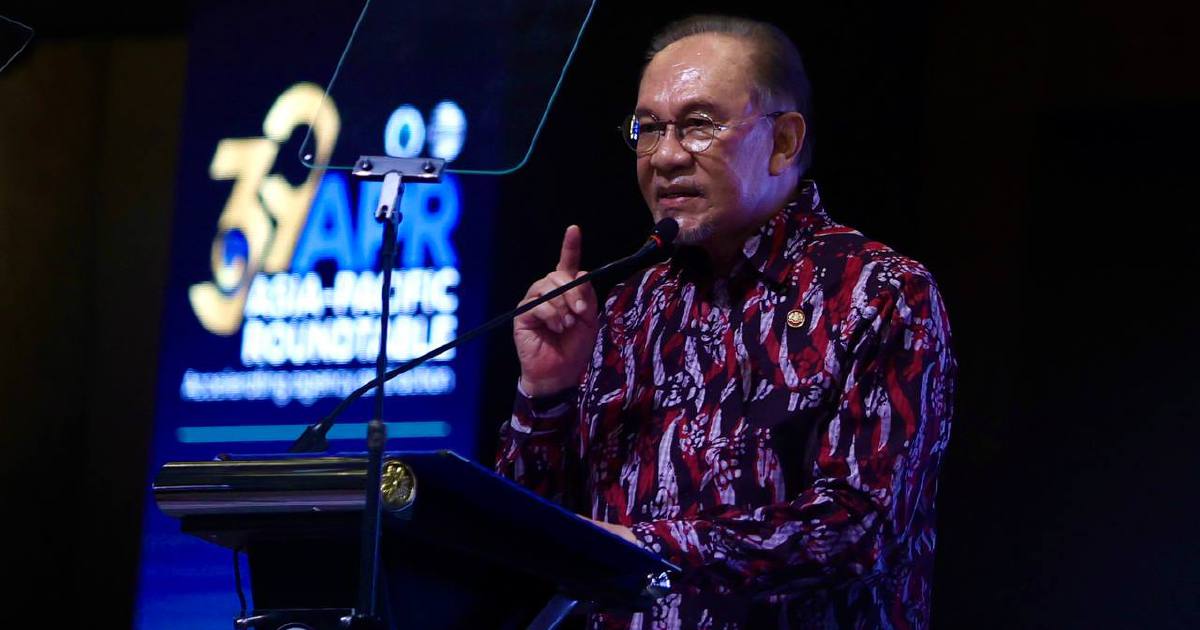
Prime Minister Datuk Seri Anwar Ibrahim has once again underscored Malaysia's dedication to pursuing an independent foreign policy that rejects alignment with any major power bloc while remaining actively engaged in regional affairs. This affirmation represents a continuation of Malaysia's longstanding diplomatic tradition dating back to the nation's founding principles, a positioning that has allowed the country to navigate complex geopolitical waters whilst maintaining relationships across multiple spheres of influence.
The emphasis on non-alignment carries particular significance in Southeast Asia's contemporary context, where smaller nations increasingly face pressure from competing global powers seeking strategic advantage. Malaysia's stance reflects a deliberate choice to prioritise the interests and sovereignty of the nation above the dictates of external actors, a principle that has guided diplomatic engagements throughout the decades. By publicly reaffirming this commitment, Anwar signals to both regional neighbours and international partners that Malaysia will chart its own course in foreign relations.
The proactive dimension of Malaysia's foreign policy distinguishes it from passive non-alignment. Rather than simply avoiding entanglement, the nation actively pursues bilateral and multilateral relationships that advance its economic, security and strategic interests. This approach is evident in Malaysia's multi-faceted engagement across ASEAN, its relationships with major economic partners spanning Asia, Europe and beyond, and its participation in regional forums addressing transnational challenges including maritime security, trade and environmental concerns.
For Malaysian business interests and citizens, this independent foreign policy framework creates opportunities for diverse economic partnerships. The nation can engage freely with investors, trading partners and technology providers globally without restrictions imposed by alignment with particular bloc, enabling Malaysian firms to participate in supply chains and markets across the world. This flexibility has been instrumental in attracting foreign direct investment and facilitating Malaysia's integration into regional and global economic networks.
The geopolitical backdrop to such pronouncements remains volatile, particularly given the intensifying strategic competition between major powers in the Indo-Pacific region. Malaysia sits at a crucial crossroads in terms of trade routes, resource access and strategic location. Maintaining genuine independence allows the country to mediate disputes, serve as a trusted partner for multiple nations, and avoid becoming a proxy arena for great power competition—a risk that materialises when nations surrender autonomy to external patrons.
Regional neighbours are similarly watching Malaysia's diplomatic moves with close attention. ASEAN's collective credibility depends significantly on the ability of member states to act independently whilst coordinating on shared concerns. When Malaysia reaffirms its non-aligned stance, it reinforces the principle that ASEAN remains an independent regional architecture rather than an instrument of larger powers, thereby strengthening the association's overall influence and relevance in Asia-Pacific affairs.
This position also shapes Malaysia's approach to contentious regional issues including the South China Sea disputes. By maintaining strategic independence rather than tilting toward particular claimants or external powers, Malaysia preserves its capacity to pursue negotiations that prioritise its own maritime interests while avoiding unnecessary confrontation. This balancing act requires sophisticated diplomacy and a clear-eyed assessment of Malaysia's capabilities and vulnerabilities.
The commitment to proactive engagement extends to Malaysia's soft power initiatives, cultural diplomacy and participation in global forums addressing transnational challenges. Whether through economic partnerships in the Digital Economy Framework, participation in climate change negotiations, or engagement with international security mechanisms, Malaysia seeks to shape outcomes rather than merely react to decisions taken elsewhere. This forward-leaning approach requires investment in diplomatic capacity and strategic clarity about national priorities.
For Southeast Asian stability more broadly, Malaysia's reaffirmation of independent foreign policy serves as a stabilising anchor. The region's strength derives from the collective resolve of member states to maintain autonomy and avoid polarisation. As pressures mount globally for nations to choose sides, Malaysia's explicit commitment to remaining unaligned offers an important counterweight, suggesting that alternatives to bloc competition remain viable and desirable for nations seeking to maximise their strategic options.
Looking ahead, maintaining this balance will require consistent application of principles and careful management of relationships across multiple partners. Malaysia must demonstrate that independence and non-alignment are not mere rhetoric but genuine strategic orientations reflected in concrete policy decisions. Simultaneously, the nation must nurture relationships with all significant partners—whether regional neighbours, major powers, or international institutions—to ensure that independence does not translate into isolation or weakness.

