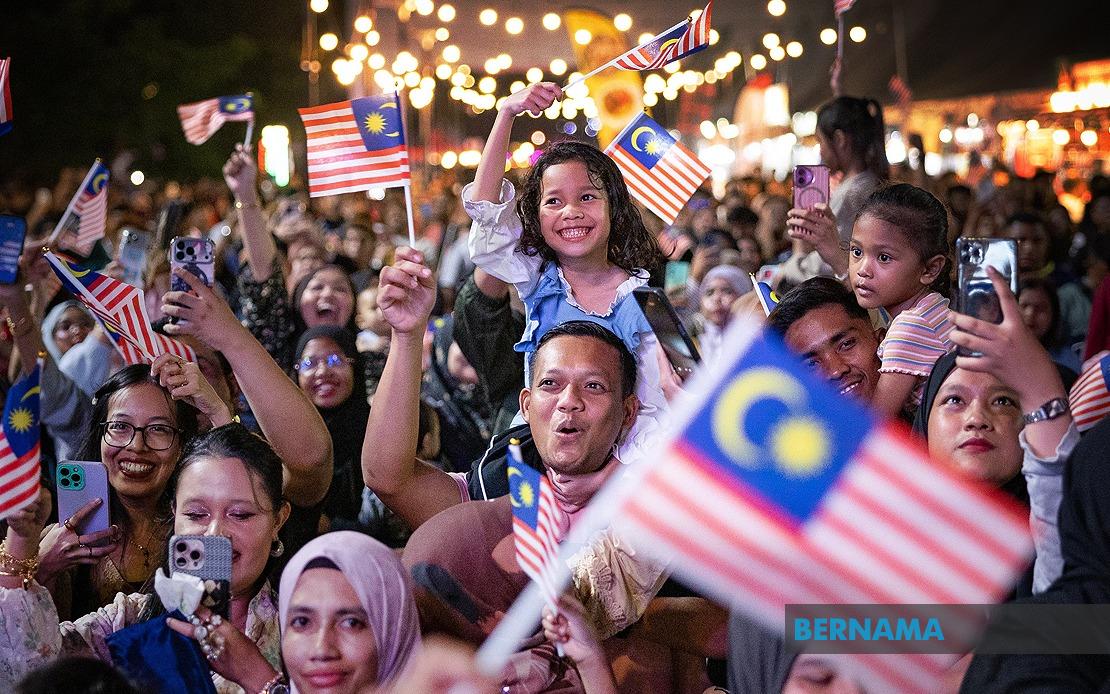
The eve of Malaysia's 69th National Day saw a resurgence of patriotic sentiment coursing through the country, as celebrations erupted simultaneously across multiple venues in a coordinated display of national pride. The most prominent gathering took place at Dataran Merdeka in Kuala Lumpur, where organisers recorded attendance exceeding 100,000 visitors who converged on the historic square to participate in countdown festivities leading into the witching hour. The sheer scale of participation underscored the enduring appeal of National Day observances among Malaysians from all walks of life, transcending age groups and demographic boundaries in their shared commitment to honouring the nation's independence.
The centrepiece of the Kuala Lumpur celebration was the 'Kita Bagi Jadi @ Ambang Merdeka 2026' concert, a 90-minute musical spectacular that assembled a roster of accomplished local performers including Aina Abdul, Aman RA, Nadia Aqilah, Asmidar, Haziq Rosebi, Mimifly, Izen Kong and Pasya. The production enlisted approximately 350 supporting performers who collectively wove narratives of Malaysia's historical trajectory and cultural mosaic through an integrated programme of musical performances, choreographed dance sequences and theatrical storytelling. This artistic approach served a dual purpose: entertaining the assembled crowds while simultaneously reinforcing the pedagogical dimension of National Day observance, ensuring that celebration functioned as a vehicle for transmitting national consciousness to younger generations attending with their families.
The atmosphere at Dataran Merdeka began building hours before the official countdown commenced, with survey data revealing substantial crowds already filling the square by 8 pm. Attendees punctuated the evening with displays of the Jalur Gemilang against the illuminated backdrop of the Sultan Abdul Samad Building, transforming the historic precinct into a tableau of national symbolism. This spontaneous flag-waving, evident throughout the evening, reflected an unscripted dimension of patriotic expression that distinguished grassroots celebration from government-organised pageantry.
Government representation at the main Kuala Lumpur venue included Hannah Yeoh, Minister in the Prime Minister's Department overseeing Federal Territories, and Kuala Lumpur Mayor Datuk Seri Fadlun Mak Ujud, signalling official sanction and support for the proceedings. The symbolic importance of government attendance at major celebrations cannot be underestimated, as such presence legitimises the event while publicly reaffirming the state's commitment to national unity and remembrance of independence.
The night's programme incorporated numerous spectacle elements designed to maximise visual and emotional impact. A skydiving display by the elite VAT 69 Commando unit punctuated the evening's entertainment, while the singing of Negaraku served as a focal point for collective national identification. A parade featuring contingents and decorated vehicles processed through the venue, succeeded by specially choreographed performances mounted by the Fire and Rescue Department, police and Malaysian Armed Forces personnel, demonstrating the integration of security services into celebratory proceedings.
The climactic moment arrived at midnight, triggered by shouted declarations of 'Merdeka' initiated by Menteri Besar Datuk Seri Amirudin Shari, whose arrival at 9.20 pm had heralded the final phase of festivities. The chanting coincided with an elaborate fireworks display and synchronised light show that transformed the urban skyline, followed by concluding performances from established artistes Datuk Ramli Sarip, Datuk Awie, Gerhana Skacinta, Merrah and Wani Kyrie. The sequencing of events created an escalating crescendo of patriotic expression, culminating in the collective moment of national affirmation.
Beyond the capital's marquee event, significant celebrations occurred in other regions. In Perlis, a celebration at an unspecified sports complex attracted over 46,000 visitors, demonstrating that the patriotic impulse extended well beyond Klang Valley concentrations of population. The Perlis gathering opened with renditions of Negaraku and the state anthem, supplemented by martial arts demonstrations that emphasised themes of national strength and cultural identity. This geographical dispersal of substantial crowds indicated that National Day resonance remained a nationwide phenomenon rather than merely an urban phenomenon.
The Dataran Merdeka venue featured an extensive complement of supporting activities and attractions extending beyond the headline concert. These encompassed the Bulatan Sultan Azlan Shah Run, promoting active citizenship through physical engagement; Jualan Rahmah stalls offering subsidised goods to lower-income participants; a thrift market facilitating sustainable consumption; food outlets catering to gathering crowds; complimentary health screening services; a karaoke competition allowing public participation in musical expression; the Tantirana Haunted House providing entertainment dimensions; and live concert performances throughout the evening. This multifaceted programming ensured that attendance catered to diverse preferences and age groups, preventing the celebration from becoming a passive spectating exercise.
Royal sanction for the proceedings came through a significant royal address delivered during the festivities. Tuanku Syed Sirajuddin utilised the occasion to articulate a philosophical framework for understanding Malaysian independence, emphasising that the nation's freedom emerged from protracted historical struggles, substantial sacrifices, and foundational unity among diverse racial communities. The Yang di-Pertuan Agong's remarks carried particular weight in reframing National Day from mere historical commemoration into a moral imperative for contemporary Malaysians. By stressing that independence required ongoing stewardship grounded in knowledge, integrity, racial cohesion and national responsibility, the royal address elevated the celebration beyond nostalgic reflection into a clarion call for virtuous citizenship and continued commitment to foundational principles of plurality and mutual respect.
Intrastate celebrations in Perlis featured public exhortations from political leadership reinforcing these themes. Muhammad Sanusi, addressing attendees at state-level events which opened with national and state anthems, urged constituents to consciously appreciate and actively protect the nation's independence. Such rhetorical emphasis on appreciation and guardianship reflected an underlying anxiety that younger generations, inheriting independence without direct experience of colonial subjugation or the independence struggle, might take sovereignty for granted. By framing independence preservation as a contemporary responsibility rather than merely inherited blessing, state leadership sought to generate intergenerational continuity of nationalist sentiment.
The nationwide scope and scale of National Day Eve celebrations reflected deeper currents within Malaysian society. The convergence of hundreds of thousands at designated venues, spanning from metropolitan centres to provincial locations, suggested that formal independence observance retained considerable popular legitimacy despite contemporary political polarisation and social fragmentation. The deliberate integration of cultural performances alongside civic ceremonial created spaces where national identity could be collectively affirmed through emotional and artistic registers rather than through purely political discourse, potentially explaining the broad appeal that transcended partisan divides.
For Malaysian observers, the 2025 National Day celebrations warranted consideration as barometers of national cohesion and patriotic vitality. The evident enthusiasm of attendees, the elaborate nature of programming, and the consistent messaging around unity, sacrifice and collective responsibility from official speakers indicated that foundational narratives of independence and national purpose retained persuasive force. However, the sustainability of such cohesion beyond ceremonial occasions remained an open question, particularly given persistent divisions around religious affairs, economic opportunity and political representation that characterised Malaysian public discourse between major commemorative dates.

