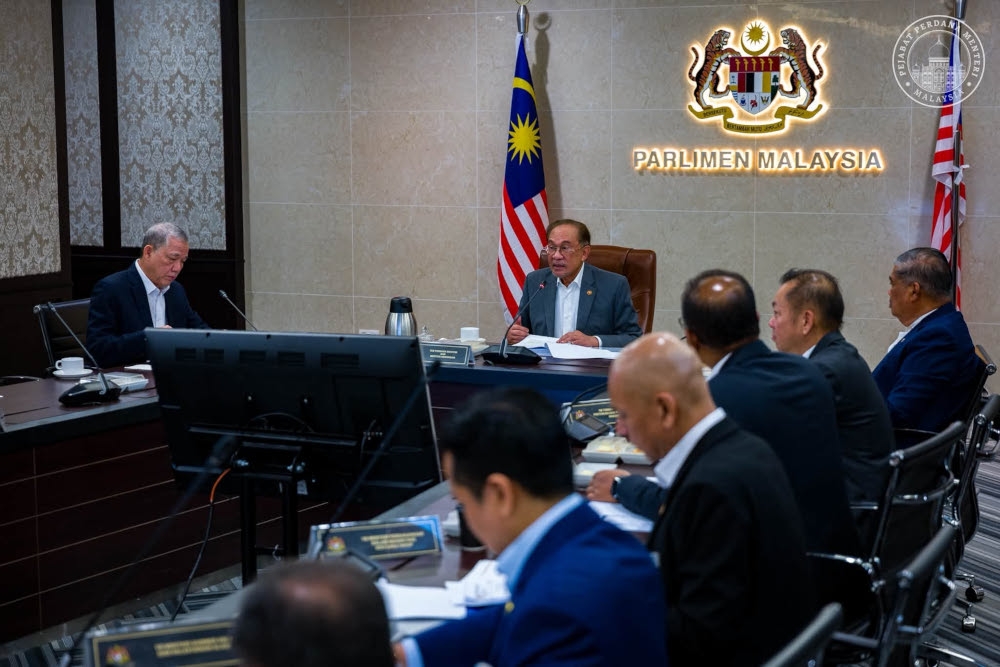
Prime Minister Datuk Seri Anwar Ibrahim has directed the Ministry of Agriculture and Food Security to implement urgent protective measures as Malaysia faces the prospect of a severe El Niño event that threatens to undermine agricultural output and domestic food availability. The government is taking the climatic threat seriously, recognising that a Super El Niño could have cascading effects across farming communities and food prices for Malaysian consumers.
El Niño episodes, which occur when sea surface temperatures in the central and eastern Pacific Ocean warm significantly, typically bring drier conditions to Southeast Asia during the second half of the year. A Super El Niño—the strongest variant of this climate pattern—poses an amplified risk to the region's agricultural systems. For Malaysia, which depends substantially on both domestic farming and imports, such climatic disruption could create vulnerability in the food chain and potentially drive inflation in fresh produce markets.
The Prime Minister's directive signals government awareness that reactive measures alone will be insufficient to manage this crisis. Instead, the emphasis is on anticipatory planning and systemic strengthening of agricultural infrastructure before drought conditions materialise. This proactive stance reflects lessons learned from previous El Niño episodes that caught supply chains unprepared, resulting in crop failures and sudden price spikes that strained household budgets nationwide.
Key among the expected initiatives will be enhancing irrigation systems in vulnerable agricultural regions, ensuring that farmers have reliable access to water supplies even as rainfall diminishes. Many Malaysian farming areas, particularly in Peninsular Malaysia and Sabah, have irrigation networks that require modernisation and expanded capacity. Investment in these systems not only addresses the immediate El Niño threat but also builds long-term resilience against future climate variability.
The government is likely to consider incentive programmes encouraging farmers to shift toward drought-resistant crop varieties and alternative agricultural methods. Climate-smart farming practices, including precision agriculture and soil conservation techniques, have proven effective in other regions facing similar climate risks. Malaysia's agricultural sector, while technologically advanced in some areas, could benefit from broader adoption of such innovations to withstand extended dry periods.
Strategic stockpiling of essential food items represents another expected component of the response. Governments throughout Southeast Asia typically accumulate reserves of staple foods ahead of anticipated El Niño events to buffer price volatility and ensure that vulnerable populations maintain food access. For Malaysia, this could involve government purchases of rice, cooking oil, and other essentials to create a buffer against supply shortages and price surges.
Trade relationships will also come into focus. Malaysia's reliance on agricultural imports—particularly from Thailand, Vietnam, and Indonesia—means that regional El Niño impacts cascade into domestic markets. Coordinating with neighbouring governments on food security measures and maintaining trade flows becomes critical during periods when multiple countries simultaneously experience reduced production. The Prime Minister's office may need to engage regional counterparts to ensure that Malaysia retains preferential access to critical imports.
The agricultural ministry will likely accelerate programmes supporting smallholder farmers, who represent a significant portion of domestic production but often lack resources to implement adaptive measures independently. Targeted financial assistance, extension services, and technical guidance can enable these farmers to transition toward more resilient production methods and varieties. Such support is not merely humanitarian; it represents an investment in food system stability that protects broader economic interests.
Research institutions and the private sector will probably receive renewed emphasis in government messaging. Universities and agricultural research centres possess expertise in developing climate-adapted crop varieties and testing new techniques. Public-private partnerships could accelerate the deployment of innovations, from water-efficient irrigation systems to early warning systems that help farmers time planting and harvesting decisions to avoid the worst impacts of changing precipitation patterns.
For Malaysian consumers and businesses, the government's mobilisation signals that prices for fresh produce could experience volatility over coming months. However, the advance action should theoretically dampen the severity of potential disruptions. Consumers may face temporary product availability challenges or modest price increases, but a well-coordinated government response aims to prevent the severe shortages and dramatic price spikes that characterised some previous El Niño episodes across the region.
The broader regional context adds urgency to Malaysia's preparations. If El Niño develops as climate scientists predict, agricultural stress will simultaneously affect Thailand, Vietnam, Indonesia, and other Southeast Asian suppliers on whom Malaysia partially depends. This convergence of challenges means that unilateral Malaysian action, while necessary, will be insufficient without regional cooperation and coordination on food trade and resource sharing.
Anwar Ibrahim's directive reflects recognition that food security has evolved into a strategic national priority rather than a purely sectoral concern. As global population growth and climate volatility make reliable food supplies increasingly precious, governments must treat agricultural resilience with the same urgency traditionally reserved for defence or energy security. Malaysia's response to the Super El Niño threat will serve as a test case for whether the country's agricultural and bureaucratic systems can adapt swiftly to emerging environmental challenges.

