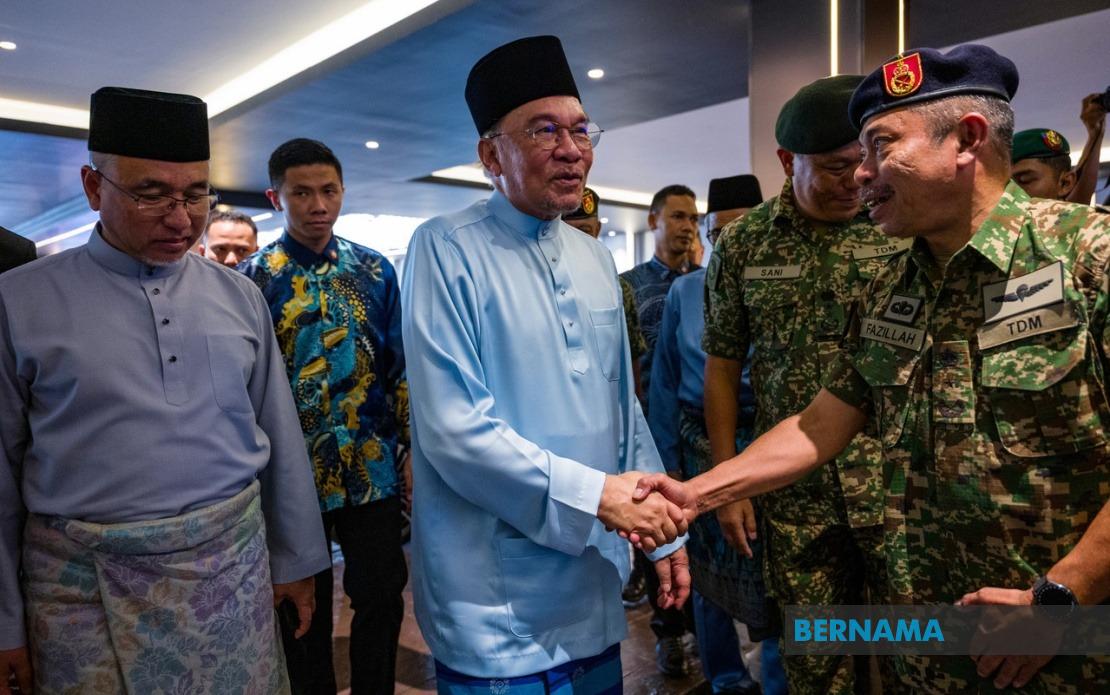
Prime Minister Datuk Seri Anwar Ibrahim has signalled the government's intention to lift defence spending in the 2027 budget, marking a significant policy statement about Malaysia's security priorities. The announcement, made during a government programme with the Malaysian Armed Forces at Terendak Camp in Melaka, underscores a commitment to strengthening the nation's military capabilities amid evolving regional security challenges in Southeast Asia.
Chief of Defence Force General Tan Sri Malek Razak Sulaiman welcomed the budgetary commitment, describing it as a reflection of government determination to build a modernised and effective force. The additional resources, he explained, would enable the MAF to advance its strategic capabilities and maintain operational readiness against potential threats to national security. This endorsement from Malaysia's top military officer carries weight in public discourse, as it validates the civilian government's defence spending priorities from a professional military perspective.
The proposed increase addresses a longstanding concern within military circles regarding the adequacy of defence resources. Malaysia's defence expenditure has historically lagged behind regional peers, and the commitment to boost allocation signals recognition that technological advancement and force modernisation require sustained investment. The announcement comes as regional powers continue expanding military capabilities, creating pressure on Malaysia to maintain credible deterrent capacity.
Under the Future Force strategic development plan, the additional funds would support the acquisition and upgrade of military assets and equipment. This framework outlines Malaysia's vision for a technologically competitive armed forces capable of addressing 21st-century security challenges. The specifics of equipment priorities remain undisclosed, but defence analysts expect focus on naval vessels, air defence systems, and surveillance technologies critical for maritime security in the Straits of Malacca and South China Sea.
Beyond hardware, the budget commitment addresses personnel welfare—a crucial yet often overlooked dimension of military effectiveness. Prime Minister Anwar highlighted improvements to military housing, construction of a new hospital facility, and maintenance of essential utilities such as water supply. These investments directly impact the quality of life for service members and their families, addressing grievances that have periodically surfaced regarding military living conditions.
The welfare dimension carries strategic importance for military recruitment and retention. Improved housing and healthcare facilities make military service more attractive to educated recruits in a competitive labour market. Enhanced morale and job satisfaction translate into better unit cohesion and operational effectiveness. For a professional military increasingly reliant on technical expertise, competitive compensation and living standards are essential to retaining skilled personnel.
Anwar, simultaneously holding the Finance Minister portfolio, positioned the defence increase within broader fiscal planning for the coming year. This dual role allows him to integrate defence spending into macroeconomic strategy, though it also creates inherent tensions between security expenditure and competing claims on government resources. The commitment to defend this spending in cabinet discussions will likely reflect the prime minister's political capital and conviction regarding security priorities.
A parallel administrative reform announced at the same event addresses promotion procedures for military and police personnel. Simplifying and expediting advancement aligns with modern human resource management practices and responds to concerns that bureaucratic delays frustrate career progression for capable officers. This reform, though procedural, signals broader modernisation of institutional frameworks beyond equipment acquisition.
The timing of this announcement reflects Malaysia's strategic posture during a period of regional flux. Tensions in the South China Sea, Myanmar's internal conflict affecting border stability, and maritime security challenges in vital shipping lanes create an environment where credible military capability underpins diplomatic leverage. Enhanced defence capabilities provide backing for Malaysia's engagement in regional forums and support for its assertions of maritime rights.
For Malaysian defence contractors and the broader industrial base, increased defence spending opens opportunities for technology transfer and capability development. Strategic partnerships with international suppliers could support domestic manufacturing capacity in aerospace, shipbuilding, and electronics sectors. However, realising such benefits requires deliberate industrial policy alongside budgetary allocation.
The defence budget increase must navigate fiscal constraints affecting other government spending priorities. Education, healthcare, and infrastructure development compete for limited resources, creating political pressures on budget allocations. How the government justifies defence spending relative to other needs will test the persuasiveness of security arguments in public discourse.
Regional implications extend beyond Malaysia's borders. Enhanced Malaysian military capacity affects the regional balance and influences security calculations among neighbouring states. Taiwan and countries concerned with maritime stability in Southeast Asia will note Malaysia's commitment to modernisation, while Beijing may scrutinise the scope and direction of Malaysian defence development. The balance Malaysia strikes between security strengthening and regional reassurance remains delicate.
Implementation success depends on efficient procurement processes, effective project management, and transparent budgeting practices. Past defence projects have experienced delays and cost overruns, raising questions about institutional capacity to execute larger programmes. Demonstrating improved governance in defence spending will be essential to maintaining political support for sustained increased allocation in subsequent budgets.

