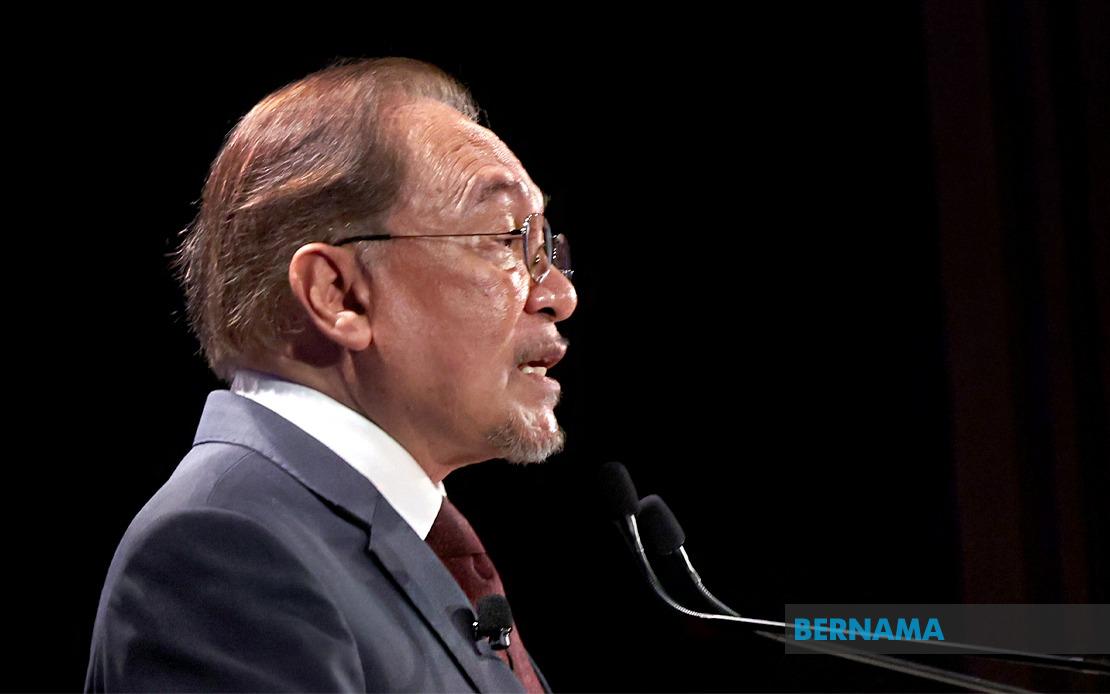
Malaysia has thrown its diplomatic weight behind the recently concluded understanding between the United States and Iran, signalling cautious optimism about prospects for reducing tensions that have destabilized the broader Middle East and sent shockwaves through global energy markets. Prime Minister Datuk Seri Anwar Ibrahim made the endorsement during his keynote address at the 39th Asia-Pacific Roundtable in Kuala Lumpur, simultaneously praising the diplomatic intermediation efforts of Gulf nations, Türkiye, Pakistan and other stakeholders in helping broker the memorandum of understanding between the two regional powers.
Yet Anwar's measured support came wrapped in sobering caveats about the fragility of the arrangement. He cautioned that the pathway to durable peace remains precarious and vulnerable to disruption, a reflection of the deep-rooted grievances and competing strategic interests that have defined US-Iran relations for decades. The Prime Minister's comments underscore a broader Southeast Asian anxiety about regional flashpoints that can ripple across global supply chains and disrupt economic growth trajectories thousands of kilometres away.
The centerpiece of the understanding reached in indirect talks mediated by Qatar focuses on restoring unrestricted international passage through the Strait of Hormuz, one of the world's most economically vital waterways. Before the escalation of hostilities, this chokepoint facilitated roughly one-fifth of global oil shipments, making its continued closure or threat of interdiction a matter of acute concern not just for Middle Eastern states but for energy-dependent economies throughout Asia and beyond. Anwar explicitly identified the reopening of this maritime corridor and strict compliance with all ceasefire provisions as matters requiring urgent priority attention from both signatories.
The economic dimensions of Middle Eastern instability carry particular resonance for Malaysian policymakers and audiences. Anwar drew a direct line between prolonged regional conflict and the persistent elevation of food and energy prices that has squeezed household budgets and corporate margins across the developing world. The geopolitical uncertainty spawned by US-Iran tensions has diverted enormous financial resources toward supply-chain resilience and commodity stockpiling—resources he noted could otherwise have been channelled toward social programmes, infrastructure development, and productive economic investment.
This reframing of a distant Middle Eastern dispute as a domestic livelihood issue reflects how interconnected modern economies have become. For Malaysia, which depends on imported energy and agricultural commodities, disruptions to Persian Gulf shipping directly translate into inflationary pressure on consumer prices and erosion of real wages. The statistics cited by the Prime Minister were not mere abstractions but rather metrics that determine whether ordinary Malaysians can afford housing, education, and healthcare without financial strain.
The three-day Asia-Pacific Roundtable, which concluded with Anwar's remarks, was convened by the Institute of Strategic and International Studies Malaysia. The forum provided a platform for regional leaders and strategic thinkers to assess the implications of Middle Eastern developments for Asian stability and prosperity. The timing of Anwar's statement reflected Malaysia's broader diplomatic positioning as a voice for Global South perspectives in international forums—emphasizing that developing nations bear disproportionate costs when major powers engage in confrontation.
The role of intermediaries like Qatar, along with contributions from Türkiye and Pakistan, highlighted the multipolar nature of contemporary diplomacy. These nations brought credibility with both Washington and Tehran, enabling backchannel communications that official government-to-government channels could not facilitate. Malaysia's acknowledgment of these intermediaries' contributions also signalled appreciation for diplomatic solutions rooted in regional agency rather than imposed by external powers—a principle consistent with ASEAN's broader commitment to dialogue and conflict avoidance.
However, Anwar's emphasis on the fragility and vulnerability of the understanding to sabotage suggested awareness that agreement on paper does not guarantee behavioural change on the ground. Historical precedent offers little comfort: previous arrangements between the US and Iran have unravelled when internal political dynamics in either capital shifted, as occurred following America's 2018 withdrawal from the Joint Comprehensive Plan of Action. Trust between the parties remains minimal, and spoiler actors—whether hardliners in Tehran or Washington, or proxy forces across the region—could attempt to derail implementation.
For Southeast Asian nations like Malaysia, this uncertainty underscores the vulnerability of their prosperity to great-power competition and regional instability beyond their direct control. The practical implication is that Malaysia and its ASEAN peers must continue advocating for multilateral conflict-resolution mechanisms while simultaneously diversifying their energy sources and supply chains to reduce exposure to Middle Eastern disruptions. Anwar's cautious endorsement reflected this balancing act: welcoming progress while refusing to assume the underlying geopolitical competition has fundamentally resolved.
The memorandum also carries implications for maritime security and freedom of navigation in the Strait of Hormuz, principles that resonate with ASEAN's emphasis on rules-based international order and unimpeded commerce. Malaysia, as a maritime state with significant shipping interests, has direct stakes in maintaining open sea lanes and preventing any power from unilaterally controlling critical chokepoints. Restoration of normal passage through the Strait would vindicate the principle that strategic waterways must remain accessible to all nations' vessels.
Moving forward, Malaysia's diplomatic messaging suggests it will monitor compliance with the understanding while maintaining hedged relationships with both Washington and Tehran. The nation's position as a non-aligned voice in Asian councils gives it credibility to encourage both parties toward de-escalation while avoiding the appearance of taking sides in the broader US-Iran strategic competition. For Malaysian readers, the bottom line is that the success or failure of this US-Iran arrangement will directly influence everything from petrol prices at the pump to the cost of imported food at neighbourhood markets—making distant Middle Eastern diplomacy a matter of immediate personal concern.

