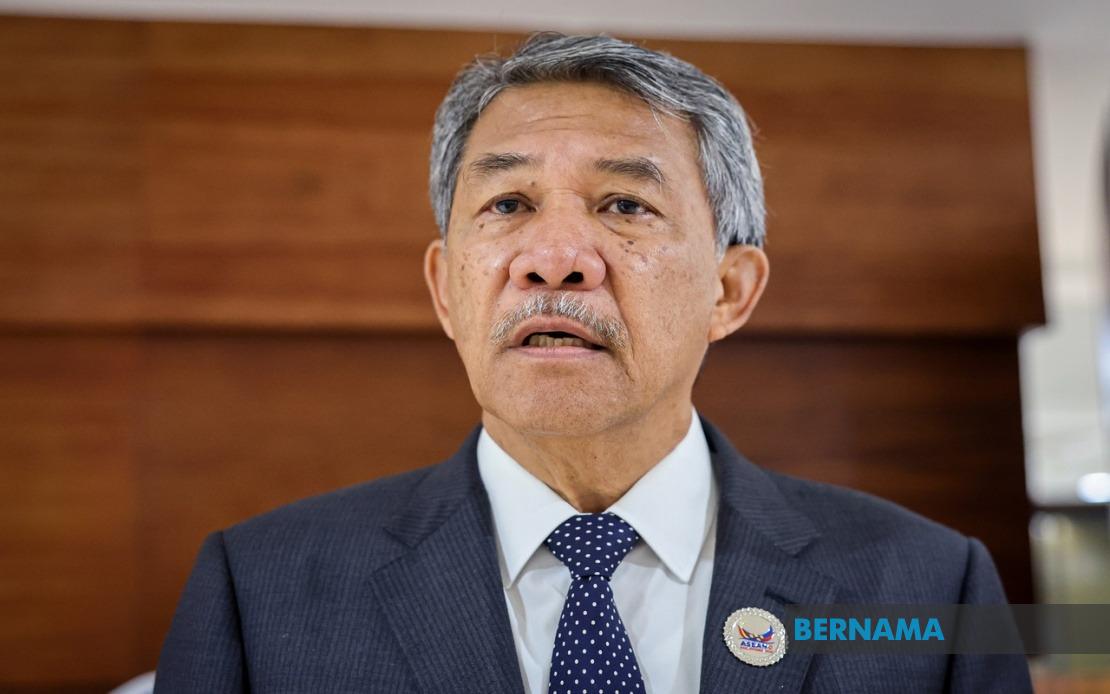
Malaysia has been entrusted with coordinating ASEAN's engagement with Turkiye following the regional bloc's decision to elevate the Turkish state to Dialogue Partner status. Foreign Minister Datuk Seri Mohamad Hasan announced both developments during the 59th ASEAN Foreign Ministers' Meeting in Manila, where the Philippines currently holds the chair. The appointments represent significant diplomatic progress for Turkiye in deepening its institutional connections across Southeast Asia and signal ASEAN's strategic openness to expanding its partnership architecture with key powers outside the region.
The acceptance of Turkiye as a Dialogue Partner culminates a careful vetting process that ASEAN had implemented at multiple governmental levels. Mohamad explained that the bloc operates under a stringent moratorium governing new Dialogue Partner admissions, requiring approval from the ASEAN secretariat, foreign ministers, and officials before any decision reaches the plenary. Malaysia's role as ASEAN Chair in 2025 positioned the country to champion Turkiye's candidacy, and the foreign minister indicated that his nation had championed specific criteria that all member states subsequently endorsed. This methodical approach reflects ASEAN's determination to maintain quality control over its external partnerships whilst remaining engaged with emerging opportunities for regional cooperation.
The designation of Malaysia as country coordinator carries practical significance for managing day-to-day relations between ASEAN as a bloc and Turkiye. In ASEAN's institutional framework, country coordinators serve as principal interlocutors and facilitators for structured dialogue with specific external partners, managing working groups, coordinating messaging, and proposing initiatives for consideration by the wider membership. By entrusting Malaysia with this role, ASEAN has essentially signaled confidence in the country's diplomatic capacity and regional standing, whilst simultaneously placing greater responsibility on Kuala Lumpur to shepherd the bilateral relationship through its formative stages.
Turkiye's elevation to Dialogue Partner status represents a milestone in the country's systematic deepening of ties with Southeast Asia. The nation has long sought greater institutional integration within ASEAN's framework, recognising the region's strategic importance in global affairs and the mutual benefits of closer economic, security, and cultural cooperation. For Turkiye, the Dialogue Partner designation opens new avenues for participation in ASEAN meetings, working groups, and confidence-building mechanisms, whilst falling short of the more comprehensive engagement enjoyed by Summit-level partners or development partners with longer historical relationships.
Simultaneously, ASEAN approved the United Kingdom's admission as a new member of the ASEAN Regional Forum, another decision announced during the plenary session. The ARF serves as ASEAN's primary vehicle for dialogue on regional security matters, bringing together major powers and interested stakeholders to discuss transnational challenges including maritime security, counterterrorism, and peacekeeping. Britain's entry reflects the forum's continued evolution as a platform for discussing Indo-Pacific security issues with expanded Western participation, particularly relevant given London's enhanced regional engagement through initiatives like the AUKUS partnership.
The 59th ASEAN Foreign Ministers' Meeting also provided an opportunity to assess progress on the ASEAN Community Vision 2045, the bloc's long-term strategic framework spanning economic integration, political-security cooperation, and socio-cultural development. ASEAN Secretary-General Dr Kao Kim Hourn presented updated status reports on implementation efforts, enabling member states to course-correct and recommit to shared objectives. For Malaysia and other smaller ASEAN members, Vision 2045 represents a mechanism for channelling their development priorities and ensuring equitable benefit distribution from regional integration processes.
Mohamad emphasised that preserving ASEAN centrality remained paramount in discussions, highlighting growing concerns about external efforts to circumvent or undermine the bloc's institutional authority. ASEAN centrality—the principle that the regional organisation should remain the driving force for regional architecture and decision-making—faces persistent challenges as major powers jockey for influence across Southeast Asia. By reinforcing this concept during the meeting, Mohamad signalled Malaysia's commitment to defending ASEAN's autonomy and preventing the region from becoming a theatre for great-power competition on terms dictated externally.
The geopolitical and geo-economic uncertainties looming over Southeast Asia featured prominently in foreign ministers' deliberations. Rising US-China strategic competition, ongoing tensions in the South China Sea, global inflation affecting trade flows, and shifting supply chain arrangements all create an intricate operating environment for ASEAN states. Within this landscape, ASEAN's collective voice carries weight, yet maintaining consensus and forward momentum requires careful diplomacy and genuine commitment to common principles rather than national advantage-seeking.
Malaysia's appointment as Turkiye coordinator reflects Kuala Lumpur's growing influence within ASEAN diplomacy. The country has repeatedly advocated for pragmatic engagement with external partners whilst maintaining firm principles about regional sovereignty and decision-making authority. Malaysia's geographic position, economic weight, and diplomatic networks position it well to facilitate Turkiye's integration into ASEAN institutions and foster productive dialogue between the Turkish government and individual ASEAN members.
For Malaysian readers and regional observers, these developments signal ASEAN's continued confidence in its institutional mechanisms and decision-making processes despite external pressures. The careful approval process for new Dialogue Partners demonstrates that ASEAN takes partnership quality seriously rather than simply expanding for numerical advantage. Turkiye's acceptance validates the bloc's openness to deepening relations with non-traditional partners whilst maintaining standards that protect ASEAN's interests and character.
Looking ahead, Malaysia's coordination role will involve organising bilateral consultations, sponsoring Turkiye's participation in relevant ASEAN forums, and building consensus among member states on issues of mutual concern. This responsibility places Malaysia at the intersection of ASEAN interests and Turkish foreign policy objectives, requiring diplomatic finesse to advance both without compromising regional solidarity. The coordination role also offers Malaysia an opportunity to shape how ASEAN engages with Turkiye on issues ranging from trade and investment to counterterrorism and maritime security.

