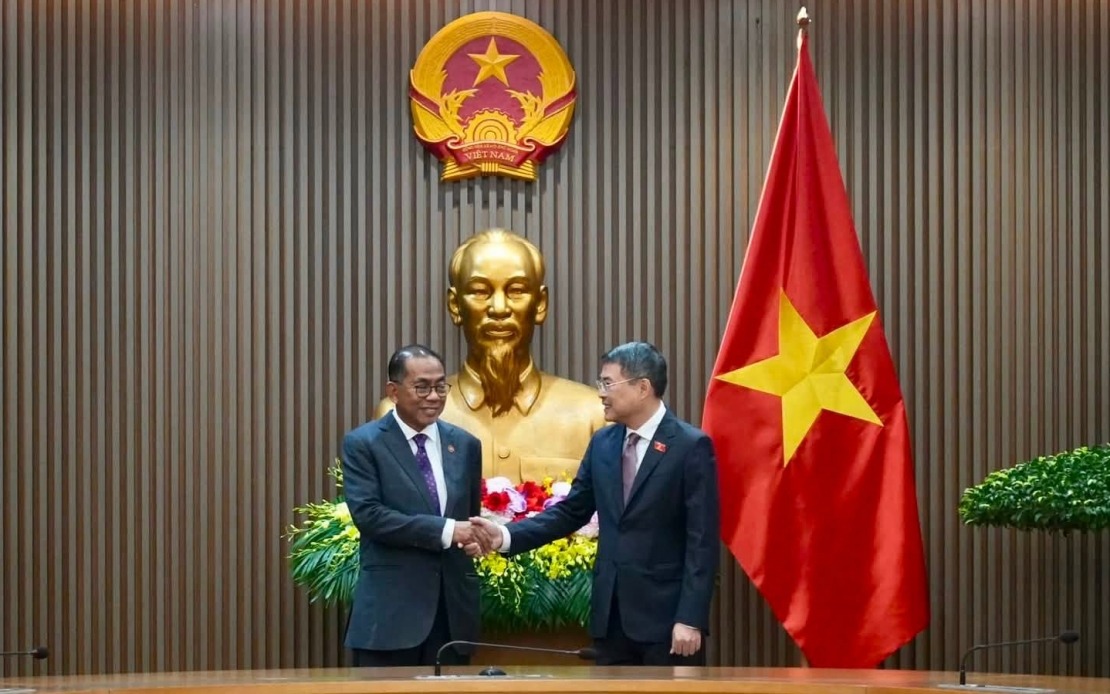
Malaysia and Vietnam are moving to substantially expand their defence relationship, with both nations identifying multiple areas for deeper cooperation spanning maritime operations, military capability building, and technological advancement. Defence Minister Datuk Seri Mohamed Khaled Nordin made the announcement following substantive discussions with Vietnamese Prime Minister Lê Minh Hưng during an official visit to Vietnam, signalling renewed momentum in bilateral security ties that extend well beyond traditional military exchanges.
The two Southeast Asian neighbours regard each other as strategically aligned partners in an increasingly complex regional security landscape. Mohamed Khaled's characterisation of Vietnam as a trusted and reliable partner reflects the calibre of trust that has developed between the defence establishments in both capitals. This mutual confidence has been built through years of sustained engagement and represents a foundation that both governments intend to leverage more fully across multiple defence domains.
Central to the expanding partnership is the 2023 Memorandum of Understanding on Defence Cooperation, which now serves as the governing framework for deepening military and security relations. Rather than treating this document as a static agreement, Malaysian and Vietnamese defence officials view it as a living roadmap that will guide increasingly ambitious collaborative initiatives. The document's flexibility allows both nations to adapt their cooperation strategies to emerging security challenges while maintaining strategic consistency.
Maritime security cooperation stands out as a particularly significant area of expansion. Given that both Malaysia and Vietnam maintain extensive coastlines and share interests in maintaining freedom of navigation and regional maritime stability, this sector offers substantial practical cooperation opportunities. The South China Sea remains a critical waterway for both nations, and enhanced maritime coordination between their naval forces serves mutual interests in securing vital shipping lanes and managing territorial interests in waters that are increasingly subject to competing claims and strategic competition from external powers.
The defence ministers also identified capability development as a priority for joint attention. This encompasses military training exchanges, joint exercises, and potentially shared procurement initiatives that allow both nations to develop more capable armed forces while managing defence spending through economies of scale. Technology transfer and collaborative research initiatives can help both Malaysia and Vietnam modernise their defence platforms and operational systems more efficiently than pursuing independent modernisation paths.
Technology and defence industry collaboration represents an emerging frontier in Malaysia-Vietnam ties. Rather than remaining passive consumers of foreign defence technology, both nations are increasingly interested in developing indigenous defence industrial capacity. Cooperation in this space could include joint ventures in defence manufacturing, technology licensing arrangements, and collaborative research in emerging military technologies. Such initiatives would strengthen the broader Southeast Asian defence industrial base and reduce regional dependence on external suppliers.
Beyond bilateral issues, the two nations share complementary perspectives on regional security architecture. Both Malaysia and Vietnam remain committed to ASEAN principles of non-interference, dialogue, and consensus-based decision-making. This philosophical alignment positions them as stabilising forces within the regional bloc and enables them to work together to shape ASEAN's collective response to security challenges that threaten multiple member states. Their partnership reinforces ASEAN's capacity to maintain strategic autonomy in an environment where global powers increasingly seek to influence regional outcomes.
The security environment that Mohamed Khaled highlighted during his Vietnam visit reflects contemporary challenges that extend far beyond traditional inter-state military competition. Grey zone activities—ambiguous operations that fall below the threshold of conventional military conflict—have become an enduring feature of regional security. Both nations face pressure from state and non-state actors engaging in activities that test the boundaries of acceptable conduct without triggering conventional military responses. Cyber threats and cognitive warfare represent particularly insidious challenges that can undermine societal cohesion and political stability without firing a shot. Artificial intelligence capabilities are rapidly becoming critical military assets, requiring substantial technological investment and research capacity.
Supply chain disruptions, whether arising from global economic turbulence or strategic competition between major powers, pose risks to regional defence industrial capacity and military operational readiness. By cooperating more closely on these dimensions, Malaysia and Vietnam can help insulate their defence establishments from external shocks and build more resilient security architectures. This approach aligns with broader ASEAN efforts to enhance collective regional resilience against an array of contemporary security threats.
The emphasis on dialogue and diplomacy as foundations for regional peace reflects a conscious choice by both nations to pursue their security interests through institutional channels and mutual accommodation rather than confrontation. This approach requires sustained commitment and political will, particularly when geopolitical pressures mount and great power competition intensifies. The Malaysia-Vietnam defence partnership thus serves not merely as a bilateral arrangement but as a contribution to regional stability architecture that benefits the entire Southeast Asian community.
For Malaysia specifically, the expanded partnership with Vietnam provides opportunities to modernise defence capabilities while building relationships with a technologically advancing neighbour that shares strategic perspectives on maintaining regional balance. Vietnam's own defence modernisation efforts create potential for beneficial technology exchanges and joint development initiatives that can advance Malaysian security interests. The partnership also positions Malaysia to contribute meaningfully to ASEAN's collective defence initiatives and to shape regional security outcomes in ways aligned with Malaysian interests and values.
Looking forward, both nations can expect that defence cooperation will deepen through expanded military-to-military exchanges, joint training exercises, and possibly collaborative defence procurement initiatives. The framework established through the 2023 MoU provides sufficient flexibility to accommodate evolving security priorities while maintaining strategic coherence. As regional security challenges continue to multiply and great power competition intensifies, the Malaysia-Vietnam partnership represents a deliberate effort to strengthen Southeast Asian resilience through sustained multilateral cooperation and shared commitment to institutional stability.

