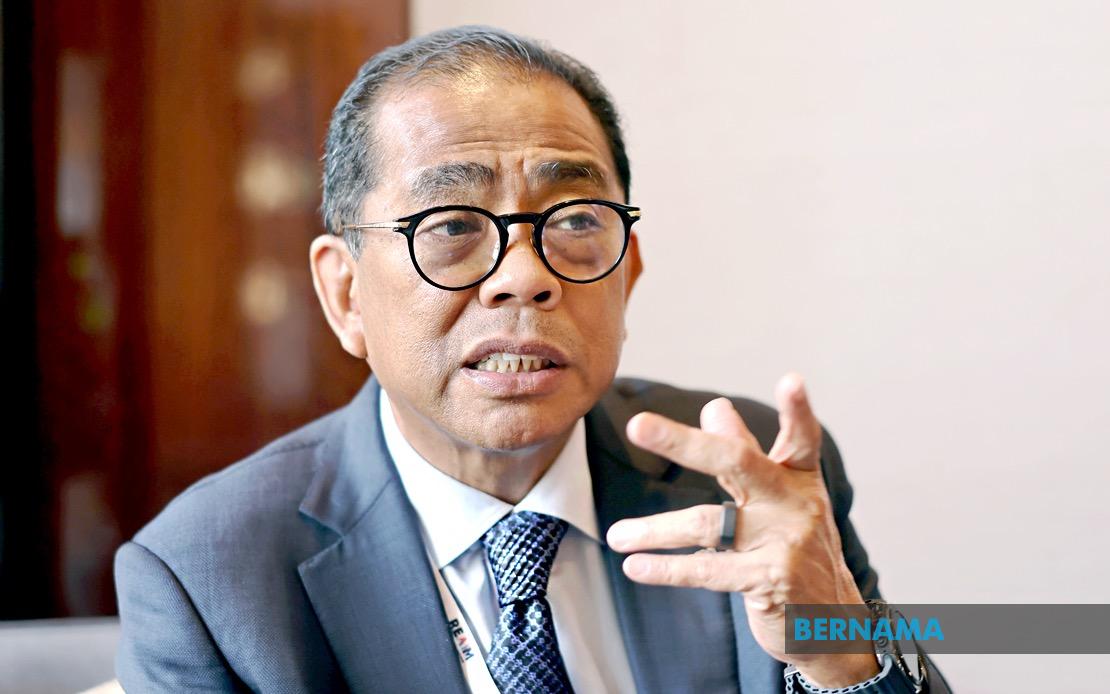
Defence Minister Datuk Seri Mohamed Khaled Nordin has reaffirmed Malaysia's commitment to deepening strategic ties with Vietnam, signalling a significant upgrade in bilateral military cooperation that carries implications for broader Southeast Asian security arrangements. During an official visit to Hanoi that commenced on August 5, Mohamed Khaled held substantive discussions with Vietnamese Minister of National Defence Gen Phan Van Giang, exploring avenues for expanded collaboration that extend well beyond traditional defence matters into contemporary security challenges facing the region.
The bilateral engagement touched upon an expansive range of defence initiatives, spanning conventional military training programmes and joint operations planning to more sophisticated domains such as artificial intelligence applications in defence systems and coordinated responses to maritime security threats. Intelligence-sharing protocols, submarine rescue capabilities, and mechanisms for addressing so-called grey zone activities—a euphemism for coercive actions below the threshold of conventional conflict—featured prominently in the two-day dialogue. These discussions underscore the complexity of modern defence relationships, where nations must synchronise efforts across traditional kinetic domains and emerging technological frontiers simultaneously.
A critical institutional development emerging from these talks involves Mohamed Khaled's proposal to strengthen the High-Level Committee mechanism governing Malaysia-Vietnam defence cooperation. This structural enhancement aims to ensure that bilateral initiatives proceed with greater coordination and implementation efficiency, avoiding the bureaucratic delays that can plague defence collaboration agreements. The proposal reflects a pragmatic recognition that expanding cooperation requires not merely political will but also institutional architecture capable of translating ambitions into concrete operational outcomes. By fortifying this mechanism, both nations signal intention to move beyond rhetorical commitments towards measurable, tangible progress.
The visit builds upon the foundation established by the Memorandum of Understanding on Defence Cooperation signed on November 4, 2023, demonstrating that Malaysia-Vietnam defence relations have transitioned from tentative exploration to institutionalised partnership. Malaysia's decision to send its Defence Minister on an official visit, coupled with courtesy calls on Vietnamese Prime Minister Le Minh Hung, illustrates the political salience both governments attach to this relationship. For Malaysian policymakers, strengthening ties with Vietnam—a fellow ASEAN member with significant maritime interests and defence capabilities—represents a calculated approach to building resilient regional security networks.
Maritime cooperation emerged as a particularly salient element within the broader defence agenda, reflecting geographical realities and shared economic interests. Both nations maintain substantial maritime territories and face comparable challenges regarding maritime domain awareness, resource protection, and freedom of navigation in increasingly contested waters. By coordinating training programmes for military officers and establishing joint protocols for maritime security operations, Malaysia and Vietnam position themselves to respond more effectively to transnational maritime threats ranging from piracy to illegal fishing and trafficking operations. This practical cooperation also indirectly reinforces ASEAN's collective ability to address challenges in regional maritime zones.
The discussions explicitly addressed the South China Sea issue, with Mohamed Khaled emphasising Malaysia's conviction that peace and stability in the region must be preserved through dialogue, diplomatic channels, and adherence to international legal frameworks. His statement particularly referenced support for concluding an effective and meaningful Code of Conduct, an initiative that has proceeded fitfully through multiple ASEAN forums. Malaysia's strategic positioning—balancing the need to maintain great power relations while preserving ASEAN unity and autonomy—becomes evident in this measured language. By pairing defence cooperation with careful diplomatic messaging regarding contentious regional issues, Malaysia attempts to calibrate its approach to avoid alienating any major power whilst protecting its interests and those of smaller Southeast Asian neighbours.
A significant dimension of these bilateral discussions concerns Malaysia's articulation of ASEAN Centrality, the principle asserting Southeast Asian nations' primacy in determining their own security architecture. Mohamed Khaled's emphasis on ASEAN's continuing responsibility for upholding unity, strategic autonomy, and its central role in regional stability reflects persistent concerns within ASEAN capitals that larger powers might circumvent regional institutions or marginalise smaller members in addressing security matters. Malaysia's reinforcement of this principle during Vietnam engagements signals that bilateral defence cooperation, whilst deepening, must remain embedded within ASEAN frameworks rather than becoming a purely bilateral security arrangement detached from regional consensus-building.
The Defence Ministry's invocation of Malaysia's National Defence Strategic Plan 2026-2030 provides strategic context for these initiatives, positioning the Vietnam engagement as instrumental to achieving the plan's Core 6 objective of strengthening international defence relations. This framing transforms defence diplomacy from tactical engagement into alignment with long-term national strategic planning. The reference to the Defence White Paper's pillar of Competent Partnership underscores official thinking that Malaysia's security requirements demand cultivating capable partners rather than attempting unilateral approaches to complex regional challenges.
For Malaysian readers, these developments carry tangible implications regarding the nation's security posture and regional influence. Deepening cooperation with Vietnam enhances Malaysia's capacity to address transnational maritime threats, intelligence challenges, and emerging security problems through expanded institutional mechanisms. The emphasis on military training and officer development suggests Malaysia values Vietnam's accumulated defence expertise and seeks reciprocal knowledge transfer. Furthermore, the visible elevation of Malaysia-Vietnam relations strengthens Malaysia's voice within ASEAN deliberations on regional security matters, as demonstrated partnerships with substantial regional actors provide greater weight during consensus-building discussions.
The bilateral engagement also reflects calculated hedging behaviour within Malaysia's broader foreign policy architecture. By simultaneously advancing pragmatic defence cooperation while maintaining rhetorical commitment to ASEAN Centrality and dialogue-based approaches to regional disputes, Malaysia attempts to preserve strategic flexibility. This approach permits Malaysia to deepen substantive security cooperation with Vietnam without appearing to take exclusive positions on divisive regional issues or alienating other major powers whose cooperation Malaysia equally requires.
Beyond the Malaysia-Vietnam bilateral dimension, these initiatives carry implications for ASEAN's collective security posture. As individual members develop robust defence cooperation frameworks with one another, ASEAN's institutional capacity to address regional challenges potentially improves through networked partnerships. However, the proliferation of bilateral defence arrangements also introduces complexity regarding consistency in positions across ASEAN platforms, particularly regarding sensitive matters such as South China Sea governance and responses to great power competition. Malaysia's careful articulation of positions during Vietnam discussions—emphasising dialogue and international law whilst supporting Code of Conduct conclusions—suggests awareness of this tension.
Looking forward, the Malaysia-Vietnam defence partnership appears poised for continued expansion, with the strengthened High-Level Committee mechanism facilitating additional cooperation initiatives. The emphasis on contemporary security challenges including artificial intelligence applications indicates both nations recognise that defence cooperation must evolve to address technological transformation in warfare and security operations. For Malaysian defence planners, Vietnam represents both a partner and a significant regional player whose capabilities and strategic interests warrant continued engagement. The trajectory of Malaysia-Vietnam defence relations over the coming years will serve as an indicator of ASEAN members' willingness to develop substantive, institutionalised security cooperation whilst maintaining the regional consensus-based approach that has characterised ASEAN security frameworks for decades.

