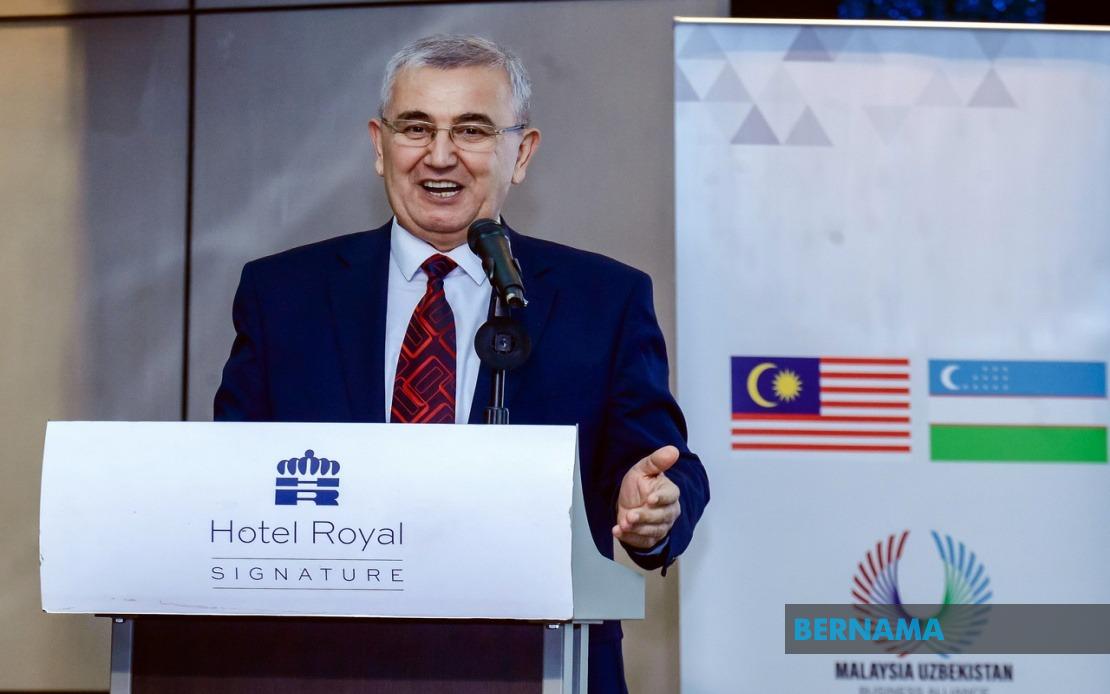
The agricultural sectors of Malaysia and Uzbekistan are on the cusp of a meaningful transformation through a strategic partnership designed to harness complementary strengths and address mutual food security challenges. Uzbekistan Ambassador to Malaysia Dr Karomidin Gadoyev has outlined an ambitious vision for bilateral cooperation spanning smart farming technologies, aquaculture development, and sustainable agricultural innovation, signalling that both nations view agricultural collaboration as fundamental to their long-term strategic relationship.
The momentum for this partnership has been building through high-level diplomatic engagement. Malaysian Prime Minister Datuk Seri Anwar Ibrahim's visit to Uzbekistan in May 2024 and President Shavkat Mirziyoyev's earlier visit to Malaysia in February 2023 both elevated agriculture to a priority discussion topic. More recently, the official visit by Agriculture and Food Security Minister Datuk Seri Mohamad Sabu to Uzbekistan has crystallised these discussions into concrete cooperative frameworks, opening pathways for substantive collaboration between government agencies, research institutions, and private sector players from both countries.
The foundation for this partnership rests on a clear recognition of complementary capabilities. Malaysia brings considerable expertise in paddy cultivation, aquaculture systems, fisheries management, precision farming techniques, and agricultural research infrastructure through institutions like the Malaysian Agricultural Research and Development Institute (MARDI). Uzbekistan, conversely, possesses advanced knowledge in energy-efficient irrigation technologies essential for Central Asian agriculture, sophisticated horticulture practices, and integrated agri-food production and processing capabilities that can serve broader regional markets. This division of comparative advantage creates natural synergies that both nations are actively pursuing.
The digital transformation of agriculture has emerged as a critical focal point in discussions between the two countries. Both Malaysia and Uzbekistan recognise that artificial intelligence and digital agricultural technologies are indispensable tools for enhancing productivity and building resilience against the mounting global pressures on food supply chains. The integration of smart farming solutions—including precision monitoring, automated resource management, and data-driven decision-making—offers tangible benefits that Uzbekistan is eager to implement by drawing on Malaysian experience and technological infrastructure developed over years of intensive agricultural innovation.
Agricultural drone technology represents a particularly promising avenue for bilateral cooperation. Malaysian company Miracule has already established Uzbekistan's first agricultural drone demonstration facility, signalling private sector confidence in the market opportunity. The strategic objective outlined by Ambassador Gadoyev encompasses not merely increased drone utilisation across Uzbek agricultural fields, but the establishment of advanced drone assembly operations within Uzbekistan itself. This value-chain integration would create local manufacturing capacity, foster technology transfer, and generate employment while reducing costs associated with imported agricultural equipment.
Aquaculture stands as a paramount area for development given Uzbekistan's demographic and geographic circumstances. With a population approaching 40 million and the constraint of being a double-landlocked nation with no marine access, Uzbekistan faces significant structural challenges in meeting seafood demand. Malaysia's advanced knowledge of biofloc technology—a breeding system that reduces feed expenses by approximately 30 percent whilst simultaneously enhancing productivity and minimising production costs—offers a transformative solution. Malaysian enterprises have already commenced feasibility studies and preliminary investment discussions in Uzbek shrimp farming and broader fisheries ventures, indicating genuine commercial interest underpinned by proven technical competence.
Current bilateral trade figures underscore both the existing engagement and substantial growth potential. Agri-food trade between Malaysia and Uzbekistan reached more than RM338 million in 2025, with Malaysian palm oil and palm oil derivatives dominating the export composition. Ambassador Gadoyev's assertion that this figure could realistically double or triple within five to ten years reflects confidence grounded in expanding production capacity, technological improvements, and evolving market demand across Central Asia. The proposition to establish Uzbekistan as a regional processing hub for crude palm oil—converting raw materials into value-added products for distribution throughout Central Asia—would strengthen Malaysian strategic positioning whilst generating local Uzbek economic benefits through employment and infrastructure development.
Simultaneously, Uzbekistan seeks expanded market access for its own agricultural products, particularly premium fresh fruits and processed food items that command premium prices in regional and global markets. Malaysian distribution networks, established trade relationships, and consumer recognition offer pathways for Uzbek agricultural exports to reach Southeast Asian consumers more efficiently than through existing supply chains. This reciprocal trade expansion benefits both economies by diversifying income sources, building supply chain resilience, and creating competitive pressures that ultimately benefit consumers through increased product variety and competitive pricing.
The institutional framework supporting this cooperation extends beyond government-to-government channels to encompass research institutions and private enterprise. MARDI's ongoing collaboration with Uzbek agricultural agencies to explore innovations demonstrates commitment to sustained technical exchange and knowledge transfer. The participation of Malaysian companies in establishing demonstration facilities and exploring investment opportunities reflects confidence in the commercial viability of these ventures beyond purely diplomatic gestures.
The decision to invite Uzbekistan to participate in the Malaysia Agriculture, Horticulture and Agrotourism Exhibition (MAHA) 2026 represents a strategic platform for showcasing Uzbek agricultural capabilities to Malaysian businesses and consumers whilst simultaneously exposing Uzbek sector participants to best practices, emerging technologies, and market opportunities within Southeast Asia. Such trade exhibitions serve as catalysts for business networking, technology demonstration, and the formation of commercial partnerships that translate diplomatic intentions into tangible economic outcomes.
Looking forward, the convergence of complementary strengths, demonstrated commitment at high political levels, and emerging private sector initiatives suggests this agricultural partnership possesses genuine substance rather than rhetorical flourish. For Malaysian agricultural enterprises, Uzbekistan represents an expanding market for technology exports, equipment sales, and service provision. For Malaysian consumers and food processors, Uzbek agricultural products offer supply diversification and cost advantages. For Uzbekistan, Malaysian expertise and technology transfer unlock productivity improvements critical for feeding a growing population whilst generating export revenues. The trajectory of this partnership will carry implications extending beyond bilateral relations, potentially reshaping Central Asian agricultural productivity and food security dynamics in meaningful ways.

