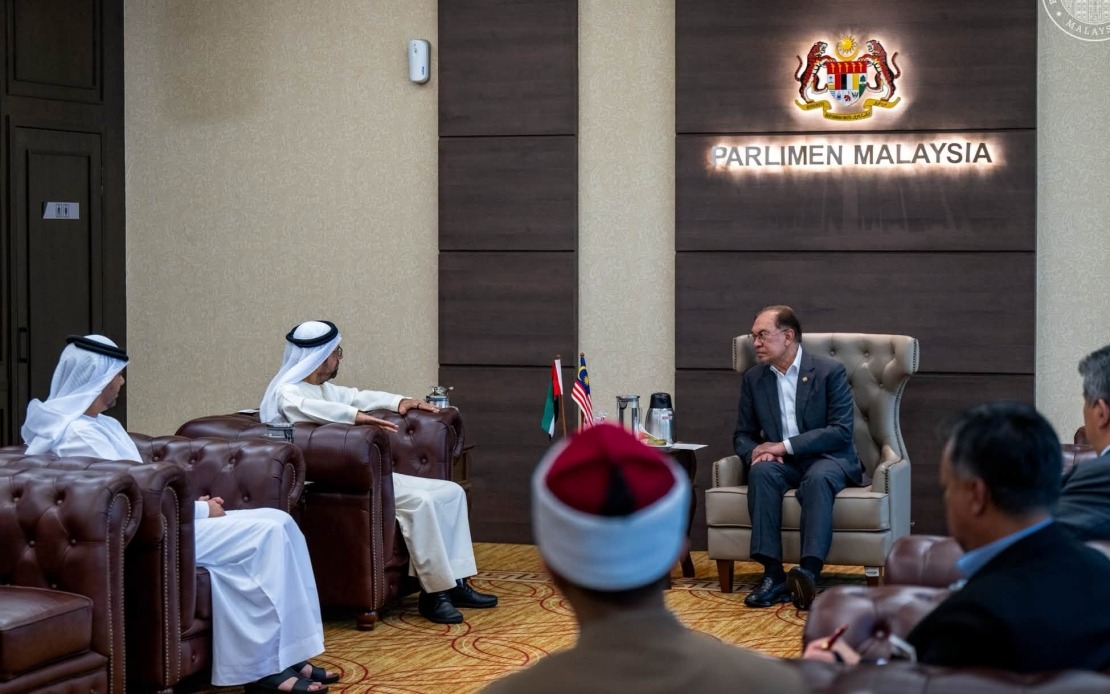
Malaysia and the United Arab Emirates have recommitted themselves to expanding their bilateral relationship through strategic initiatives that serve the interests of both nations, according to Prime Minister Datuk Seri Anwar Ibrahim. The declaration came during a meeting at Parliament House, where Anwar hosted Dr Ali Rashid Al Nuaimi, chairman of the Defence, Interior and Foreign Affairs Committee of the UAE's Federal National Council, underscoring the high-level nature of diplomatic engagement between the two Gulf and Southeast Asian partners.
The bilateral dialogue reflects a broader pattern of growing cooperation between Malaysia and the UAE across multiple sectors. Beyond routine diplomatic courtesies, the two nations have identified specific areas where collaboration could yield tangible benefits. The meeting represented an opportunity for both governments to articulate shared priorities and map out concrete initiatives that would advance mutual economic, security, and developmental interests in an increasingly complex global environment.
The conversation between the two leaders extended beyond ceremonial exchanges to encompass substantive discussions on pressing regional matters. Both delegations examined the evolving geopolitical landscape, particularly the tensions between the United States and Iran and the consequent implications for peace and stability across the Middle East and Indian Ocean regions. For Malaysia, which maintains diplomatic ties across the political spectrum and has economic interests throughout the region, understanding these dynamics is critical to navigating potential disruptions to trade routes, maritime security, and regional investment flows.
The inclusion of artificial intelligence in high-level bilateral discussions signals the modernization priorities of both governments. As technology increasingly shapes defence capabilities, governance efficiency, and economic competitiveness, Malaysia and the UAE recognize that early coordination on AI development and deployment can position them advantageously. The UAE has emerged as a regional and global leader in adopting cutting-edge technologies, and the Prime Minister's openness to learning from that experience demonstrates Malaysia's pragmatic approach to technological advancement.
Particularly noteworthy was Anwar's endorsement of the UAE's initiative to make artificial intelligence training mandatory for ministers and senior government officials. This policy reflects a strategic investment in ensuring that Malaysia's leadership cadre remains equipped to understand and harness transformative technologies. As governments worldwide grapple with ensuring policymakers possess sufficient digital literacy, the UAE's model of institutionalizing AI education for the executive branch offers a template that Malaysia may adapt. The rapid pace of technological change demands that decision-makers at the highest levels comprehend AI's capabilities and limitations, ensuring that policy formulation keeps pace with technological reality.
The defence cooperation dimension of the Malaysia-UAE relationship takes on particular importance given regional security challenges. Both nations have vested interests in maintaining maritime security, countering non-state actors, and preserving freedom of navigation through vital sea lanes. Enhanced defence coordination, facilitated by expanded high-level engagement such as this parliamentary committee visit, can improve interoperability, intelligence sharing, and coordinated responses to emerging threats. For Malaysia, a country with significant maritime territory and strategic interests in maintaining the stability of regional seas, such partnerships are indispensable.
The reaffirmation of Malaysia's commitment to strengthening ties with the UAE carries implications beyond bilateral relations. It signals to the international community Malaysia's intention to deepen engagement with economically robust and strategically important partners in the Gulf region. The UAE, as a hub for trade, finance, and investment in the Middle East, represents a gateway for Malaysian businesses seeking to expand into Arab markets. Conversely, Malaysian expertise in Islamic finance, palm oil production, and halal-certified industries represents complementary advantages that the UAE values.
The emphasis on mutual benefit in the Prime Minister's statement underscores a principle central to modern Malaysian foreign policy: that partnerships must be reciprocal and value-generating for both parties. This approach contrasts with zero-sum diplomatic frameworks and reflects Malaysia's role as a bridge between Asia and the Middle East, between developed and developing economies, and between different religious and cultural traditions. By articulating clear mutual benefits, Malaysia positions itself as a reliable, pragmatic partner rather than a supplicant seeking favours.
Regional peace and stability have emerged as organizing principles in the bilateral agenda, reflecting broader Southeast Asian and Middle Eastern concerns. For Malaysia, regional stability is foundational to economic prosperity and security. Instability in the Gulf, whether through military conflict or economic disruption, reverberates through global energy markets and supply chains, affecting Malaysian exporters and consumers. The UAE, similarly, benefits from a stable broader region where trade flows unimpeded and investment climates remain favourable.
The visit by the UAE Parliamentary committee chairman to Malaysia also demonstrates the depth of institutional engagement between the two countries. Beyond executive-to-executive contacts, the involvement of legislative bodies in diplomatic missions signals the embedding of bilateral relations across multiple governance structures. This multi-layered engagement helps insulate relationships from personality changes or shifts in individual leaders, creating institutional momentum that persists across political transitions.
Looking forward, the concrete outcomes of this dialogue will likely include expanded working groups on artificial intelligence governance, enhanced defence sector cooperation mechanisms, and possibly joint initiatives addressing transnational challenges such as cybersecurity and counter-terrorism. The willingness of both nations to engage substantively on emerging technological frontiers suggests that Malaysia-UAE relations are evolving beyond traditional commerce and diplomatic courtesy into strategic partnerships designed for the challenges and opportunities of the twenty-first century.

