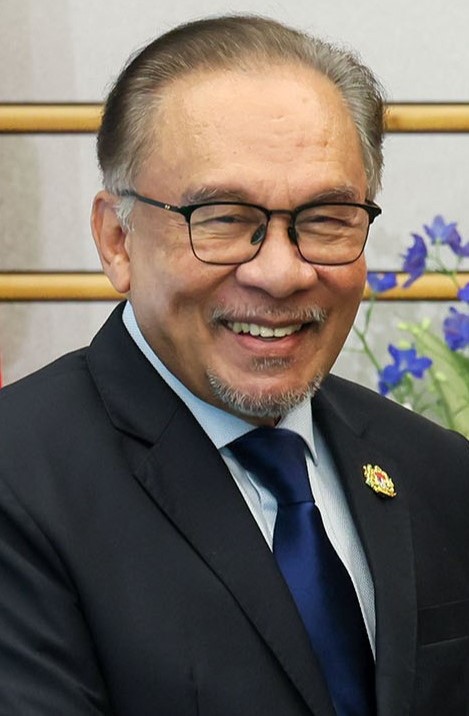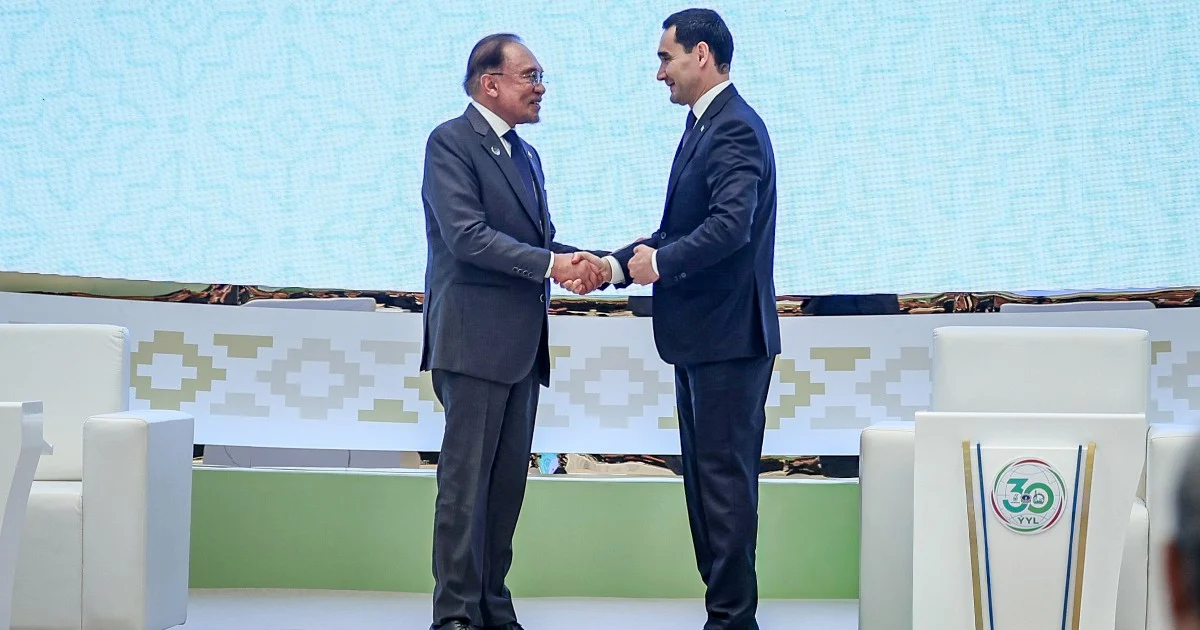
Malaysia and Turkmenistan have committed to strengthening their energy sector partnerships while simultaneously broadening economic collaboration across multiple strategic domains, according to agreements reached during Prime Minister Datuk Seri Anwar Ibrahim's official state visit to the Central Asian nation. The bilateral engagement represents a deliberate effort to move beyond traditional diplomatic courtesy into concrete sectoral cooperation that could yield tangible benefits for both economies.
The energy dimension of this partnership carries particular significance given Malaysia's position as a major global liquefied natural gas producer and exporter, and Turkmenistan's substantial hydrocarbon reserves. Turkmenistan sits atop significant natural gas deposits and has long sought diverse markets and partnership models for energy resource development and commercialisation. This convergence creates obvious opportunities for collaboration in exploration, production technology, and market access strategies that neither nation could pursue as effectively unilaterally.
Beyond the energy sector, the two countries have identified trade and investment as critical areas for expansion. Malaysia's established financial services ecosystem and its role as a regional hub for Islamic financing and banking could open pathways for Turkmenistan to access capital and expertise for infrastructure and development projects. Conversely, Malaysian companies operating across Southeast Asia might find opportunities to export services and technical knowledge to Central Asian markets where Malaysia enjoys growing recognition and soft power.
Transportation connectivity forms another pillar of the renewed cooperation framework. Direct air links, maritime agreements, and the facilitation of transit corridors could reduce transaction costs and timelines for bilateral commerce while positioning both nations as transit hubs within their respective regions. For Malaysia, enhanced connectivity to Central Asia through Turkmenistan could provide alternative supply chain routes and access to markets beyond Southeast Asia at a time when regional supply chain diversification is increasingly valued.
The educational dimension of the partnership reflects a longer-term strategic vision. Malaysian universities and technical institutions already attract students from across Central Asia and the Middle East, and formalised education partnerships with Turkmenistan could deepen people-to-people exchanges and create future professional networks that facilitate business and cultural understanding. This soft power investment often yields returns that extend well beyond immediate educational metrics.
Technology cooperation rounds out the framework, though specific sectors were not detailed in initial announcements. Malaysian expertise in information technology, telecommunications infrastructure, and digital financial services could be relevant to Turkmenistan's modernisation agenda. Similarly, Turkmenistan's experience in managing large-scale energy infrastructure projects might offer lessons for Malaysian planners addressing similar challenges.
The timing of Prime Minister Anwar Ibrahim's visit reflects Malaysia's broader geopolitical positioning in an increasingly multipolar world. Rather than confining engagement to immediate Southeast Asian neighbours or traditional Western partners, Malaysia is actively cultivating relationships across divergent regions and economic systems. This approach aligns with the nation's stated commitment to South-South cooperation and the idea that prosperity is not a zero-sum proposition but emerges from diverse and resilient international partnerships.
For Malaysian businesses, particularly in construction, engineering, energy services, and financial technology sectors, these governmental commitments create a permitting environment for commercial expansion. State-level agreements often precede and enable private sector initiatives by removing diplomatic obstacles and creating confidence for investors considering unfamiliar markets. Companies waiting for official bilateral frameworks to signal government support now possess clearer mandates to explore Central Asian opportunities.
Turkmenistan's perspective on this partnership reflects its own diversification imperative. As a hydrocarbon exporter, Turkmenistan faces the perpetual challenge of avoiding overreliance on commodity exports while building sustainable economic foundations. Malaysian experience in managing resource wealth and transitioning toward higher-value-added sectors holds practical lessons. Additionally, deepening ties with an Islamic-majority nation and ASEAN member positioned at the intersection of Middle Eastern, Asian, and Central Asian influences offers Turkmenistan valuable political positioning.
The infrastructure implications should not be overlooked. Malaysian port facilities, logistics expertise, and experience managing free trade zones could facilitate Turkmenistan's integration into Asian supply chains. Conversely, Turkmenistan's geographic location and existing infrastructure create potential for Malaysia to access markets across the Caspian region and Central Asia more efficiently than pursuing routes through more traditional gateways.
Challenges to realising this cooperative vision exist, of course. Geographic distance, limited existing business networks, unfamiliarity with respective regulatory environments, and the absence of significant pre-existing commercial relationships require sustained commitment from both governments to translate political will into functional mechanisms. However, the fact that both nations chose to formally expand their engagement framework suggests they view the potential gains as justifying these transitional costs.
Looking forward, the success of this partnership will likely be measured not through grandiose announcements but through incremental increases in bilateral trade flows, verified joint ventures, student exchange statistics, and tangible energy sector collaborations. Malaysian policymakers and business leaders would be wise to treat this expanded relationship as a genuine opportunity rather than ceremonial diplomacy, while remaining patient with the organic pace at which new commercial relationships typically develop across such geographic and cultural distances.