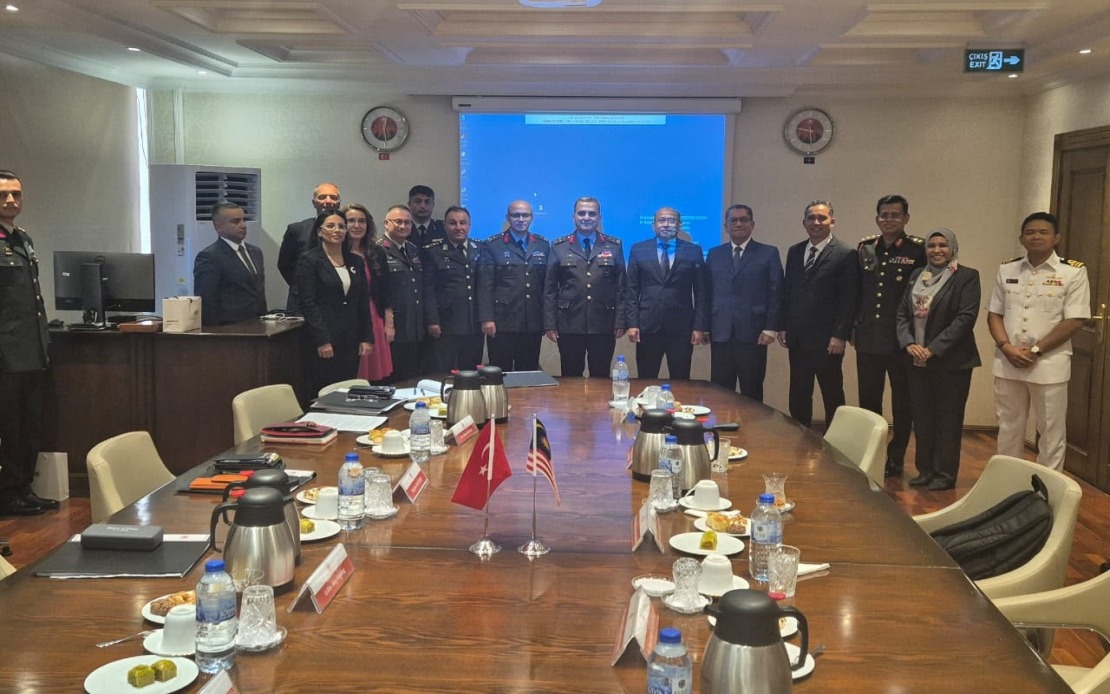
Malaysia and Türkiye have taken a significant step in formalizing their defence relationship through the inaugural Malaysia-Türkiye Policy Talk, held at Türkiye's Ministry of National Defence headquarters in Ankara on Monday. The meeting represents a structured approach to bilateral military engagement, with both nations committing to regular strategic discussions on matters ranging from defence policy to regional security challenges. Led on the Turkish side by Lieutenant General Ilkay Altindag, the director-general of defence and security at the Ministry of National Defence, and headed by Malaysia's delegation through Datuk Yani Daud, deputy secretary-general of policy at the Ministry of Defence, the talks underscored both nations' commitment to deepening institutional ties.
The agenda during the Ankara gathering encompassed a broad spectrum of defence-related discussions, reflecting the comprehensive nature of the bilateral partnership being cultivated. Participants examined defence policy frameworks and strategic considerations affecting both nations, explored wider geopolitical security developments impacting the Indo-Pacific and beyond, and established channels for the systematic exchange of perspectives and intelligence. This multifaceted approach suggests that Malaysia and Türkiye view their defence cooperation not merely as bilateral matters but as interconnected with broader regional and international security dynamics. The emphasis on policy dialogue rather than merely operational coordination indicates a mature relationship seeking to align strategic thinking and long-term objectives.
A central theme throughout the discussions involved the shared commitment to maintaining regional peace and stability, a priority that resonates across Southeast Asia and beyond. Malaysia, as a member of ASEAN and a nation deeply invested in regional prosperity, has consistently advocated for peaceful resolution of disputes and respect for international law. Türkiye's interests in regional stability, particularly through its diplomatic initiatives in West Asia, align with this Malaysian perspective. The two nations' mutual recognition of these principles creates a foundation for cooperation that extends beyond traditional military considerations to encompass conflict prevention and diplomatic engagement.
The Malaysian delegation specifically acknowledged Türkiye's recent diplomatic achievements, particularly the country's role in facilitating the Makkah Pact, a significant regional agreement aimed at promoting peace and cooperation in West Asia. This recognition demonstrates Malaysia's appreciation for constructive diplomatic efforts and suggests potential areas of collaboration on regional conflict resolution. As Malaysia navigates its own regional challenges and seeks to promote stability in Southeast Asia, learning from Türkiye's diplomatic approaches and building connections with nations actively engaged in peacebuilding could prove mutually beneficial. The endorsement of these efforts signals Malaysia's willingness to learn from and collaborate with international partners on complex geopolitical issues.
To institutionalize their growing partnership, both nations agreed to establish formal Terms of Reference for the Policy Talk framework. This structural foundation is crucial for ensuring that bilateral engagement remains consistent, purposeful, and progressively deepens over time. The Terms of Reference will provide clarity on discussion topics, decision-making processes, and mechanisms for evaluating the effectiveness of cooperation initiatives. More importantly, it creates a platform for discussing potential defence cooperation instruments and identifying future joint programmes that could benefit both nations. Such institutionalization transforms what might have been ad hoc meetings into a sustainable strategic dialogue mechanism.
Malaysia's formal invitation to Türkiye to participate in the second Policy Talk, scheduled to take place in Kuala Lumpur next year, represents a reciprocal commitment to maintaining this engagement at the highest levels. By hosting the follow-up meeting, Malaysia asserts its role as an active participant in shaping the trajectory of this partnership rather than merely receiving Türkiye's initiatives. The choice of location also signals Malaysia's intention to showcase its defence capabilities, institutional framework, and strategic vision to its Turkish counterparts. Furthermore, a Kuala Lumpur venue provides an opportunity for Malaysian policymakers to present ASEAN's perspectives on regional security to an important non-regional power with significant influence in global affairs.
The timing and content of these talks align with Malaysia's broader defence strategic priorities, as outlined in the Mid-Term Review of the Defence White Paper. This policy document articulates Malaysia's defence priorities, modernization objectives, and strategic vision for the coming years. By establishing formal dialogue with Türkiye, Malaysia signals its willingness to engage with global defence partners in advancing shared security objectives. The defence white paper's priorities likely encompass maritime security, counterterrorism, regional stability, and capacity building—all areas where Türkiye brings relevant experience and capabilities. The deliberate connection between the Policy Talk framework and these documented strategic priorities demonstrates methodical planning rather than ad hoc engagement.
From a broader Southeast Asian perspective, Malaysia's strengthened ties with Türkiye contribute to the region's international diversification strategy. While ASEAN nations maintain strong defence relationships with established Western powers and regional neighbours, engaging with emerging defence partners like Türkiye provides additional options and perspectives on security challenges. Türkiye's geopolitical position, straddling Europe and Asia, and its experience in managing complex security environments offer insights valuable to Malaysian and ASEAN policymakers. This diversification also reinforces the centrality of ASEAN nations in global affairs, as major powers actively seek deeper engagement beyond traditional bilateral relationships.
The defence cooperation framework emerging from these discussions could eventually encompass practical military collaboration, including training exchanges, joint exercises, defence technology transfers, or intelligence sharing arrangements. However, the initial focus on policy dialogue and strategic discussion suggests both nations are taking a measured approach to deepening military ties. This gradualist methodology is prudent, allowing both sides to develop trust and understanding before committing to more operationally intensive forms of cooperation. As the relationship matures through successive policy talks, opportunities for substantive defence collaboration will likely emerge organically.
For Malaysia, engaging with Türkiye represents a recognition that contemporary security challenges require partnerships with nations beyond its immediate geographic region. The Middle East and North Africa region, where Türkiye plays an important role, intersects with Malaysian interests in various ways, from maritime security in the Red Sea to counterterrorism efforts and energy security concerns. By establishing institutional mechanisms for dialogue with Turkish defence officials, Malaysia positions itself to coordinate responses to transnational security threats and gain valuable intelligence on developments affecting global security. This forward-thinking approach acknowledges that regional security is increasingly interconnected with global developments.
The establishment of the Malaysia-Türkiye Policy Talk framework also demonstrates Malaysia's commitment to pursuing a balanced, non-aligned foreign policy that maintains flexibility in international partnerships. Rather than limiting defence cooperation to a narrow range of partners, Malaysia proactively cultivates relationships with diverse nations across multiple continents. This approach strengthens Malaysia's diplomatic hand and ensures that its defence interests are not overly dependent on any single partner nation. The inaugural policy talk thus represents not merely a bilateral initiative but a strategic investment in Malaysia's long-term security autonomy and diplomatic influence.

