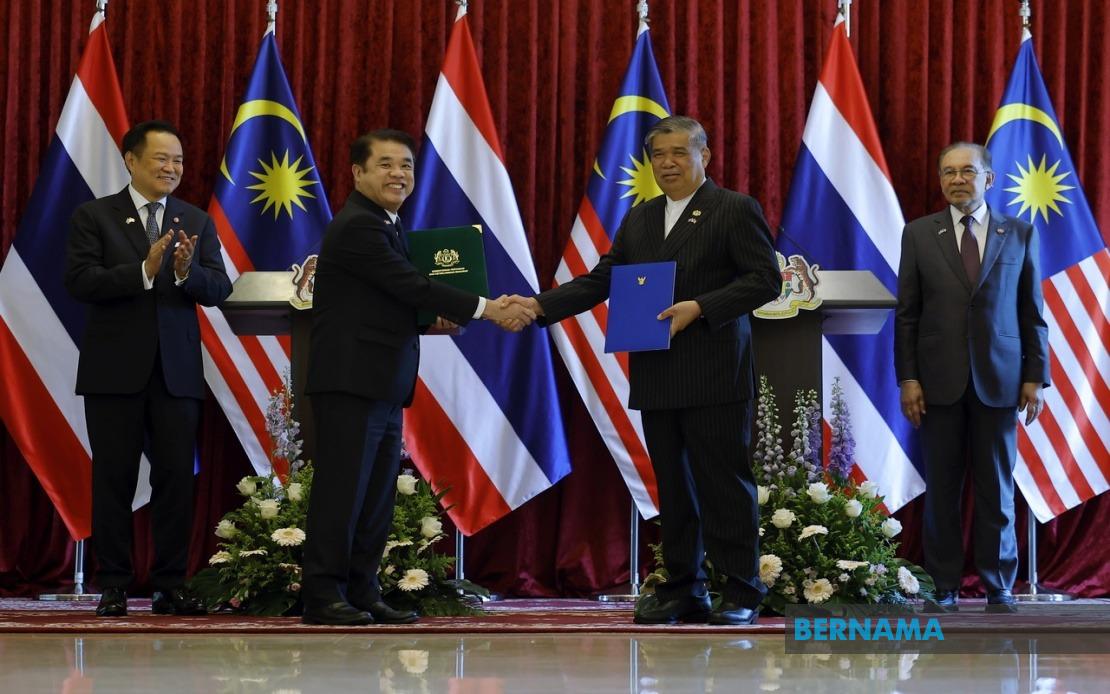
Prime Ministers Datuk Seri Anwar Ibrahim and Anutin Charnvirakul of Thailand have cemented bilateral agricultural cooperation with a sweeping memorandum of understanding during talks in Putrajaya, marking a significant step toward food security and economic integration between the two neighbouring nations. The wide-ranging agreement encompasses crop production, livestock management, fisheries development, and joint research initiatives, alongside critical provisions for technology exchange and capacity building across the agricultural sector.
Beyond the foundational cooperation framework, the two governments have successfully navigated longstanding market access complications that have previously hindered trade in key aquaculture products. The resolution of outstanding disputes surrounding shrimp and barramundi exports represents a pragmatic breakthrough for producers in both nations, who have faced regulatory and market barriers that constrained bilateral commerce. This resolution signals renewed commitment to removing non-tariff obstacles that have complicated agricultural trade flows across the region.
The cooperation agreement emerged from high-level bilateral discussions that extended beyond agriculture into broader economic domains. Thai Government spokesperson Ratchada Thanadirek emphasised that both nations intend to pursue enhanced coordination across trade, investment, tourism, infrastructure development, and security matters. The comprehensive nature of the engagement reflects a strategic realignment designed to generate substantial economic opportunities and enhance living standards for citizens in both countries, positioning agriculture as a cornerstone of a wider partnership.
Human resource development and technology transfer stand as central pillars within the agricultural framework, acknowledging that long-term sectoral competitiveness depends on knowledge sharing and skilled personnel. The emphasis on these dimensions suggests both governments recognise that sustainable agricultural advancement requires investment in farmer education, research capabilities, and modern farming techniques. This forward-looking approach addresses not merely immediate trade expansion but the structural foundations required for lasting agricultural prosperity across Southeast Asia.
The agriculture ministers from both countries have received explicit directives to accelerate implementation of the agreed measures, with particular attention to addressing farmer concerns that have accumulated through periods of market access restrictions. By prioritising ministerial-level coordination and rapid deployment of agreed protocols, the two governments have signalled that political commitment translates into operational urgency. The removal of trade barriers affecting shrimp and barramundi producers promises immediate relief to farming communities whose livelihoods depend on export markets.
Within the broader economic context, both nations have reaffirmed an ambitious target of achieving US$30 billion in bilateral trade within the near term. This aspirational figure reflects confidence that deepened cooperation across multiple sectors—particularly supply chain integration in food security, energy, and advanced technology industries—can drive substantial commercial expansion. For Malaysian readers, this trade escalation carries implications for agricultural export opportunities, employment in agro-processing industries, and downstream benefits through enhanced regional food systems stability.
The timing of Anutin's visit represents his inaugural bilateral engagement with Malaysia since his reinstatement in March 2026, underscoring the political significance attributed to agricultural and economic cooperation renewal. The two-day official visit trajectory demonstrates institutional commitment beyond ceremonial engagement, with concrete outputs materialising through signed agreements and ministerial taskings. This engagement pattern signals that both governments view agricultural partnership as strategically important rather than peripheral to their bilateral relationship.
A particularly symbolic element of the visit encompasses the joint inauguration of the road infrastructure connecting the Immigration, Customs, Quarantine and Security Complex in Bukit Kayu Hitam, Kedah, with its Thai counterpart, the Customs, Immigration and Quarantine Complex in Sadao. This infrastructural development facilitates smoother border crossing procedures and trade facilitation, directly enabling the market access improvements negotiated in agricultural products. Enhanced border infrastructure removes logistical friction that has historically slowed agricultural trade, particularly for time-sensitive perishable commodities like shrimp and fresh fish.
Looking ahead, both governments have tasked relevant agencies with expediting implementation of the agreements and concluding additional bilateral memoranda of understanding scheduled before the 70th anniversary of diplomatic relations in 2027. This forward planning creates a structured timeline for deepening institutional cooperation and suggests that agricultural partnership constitutes merely the opening phase of a broader strategic engagement architecture. The celebration of seven decades of diplomatic relations in 2027 provides a symbolic target date for consolidating gains and establishing new cooperation frameworks.
For Malaysia specifically, this agricultural cooperation carries substantial implications across multiple dimensions. The resolution of market access issues benefits Malaysian shrimp farmers and aquaculture producers who supply both domestic consumption and export markets. Enhanced technology transfer supports Malaysian agricultural competitiveness through access to Thai expertise and research innovations in tropical agriculture. Furthermore, the emphasis on food security cooperation addresses regional vulnerabilities in agricultural supply chains, particularly relevant given climate change pressures and population growth across Southeast Asia.
The cooperation framework also reflects broader geopolitical trends in Southeast Asia, where bilateral partnerships increasingly emphasise economic integration and supply chain interdependence as mechanisms for stability and prosperity. By deepening agricultural linkages, Malaysia and Thailand reinforce regional food systems resilience and create mutual economic interests that discourage destabilisation. This pragmatic economic engagement demonstrates how neighbouring countries can translate geographical proximity into collaborative advantage across critical sectors.
From a sectoral perspective, the agreement's emphasis on fisheries cooperation carries particular weight given both nations' substantial aquaculture industries and dependence on marine resources. The resolution of shrimp and barramundi trade complications removes impediments that have fragmented regional value chains, enabling producers to access larger integrated markets. Technology sharing in fisheries management, disease prevention, and sustainable harvesting practices promises to enhance productivity while addressing environmental sustainability concerns increasingly prominent in consumer markets, particularly in developed nations where Malaysian and Thai seafood exports concentrate.

