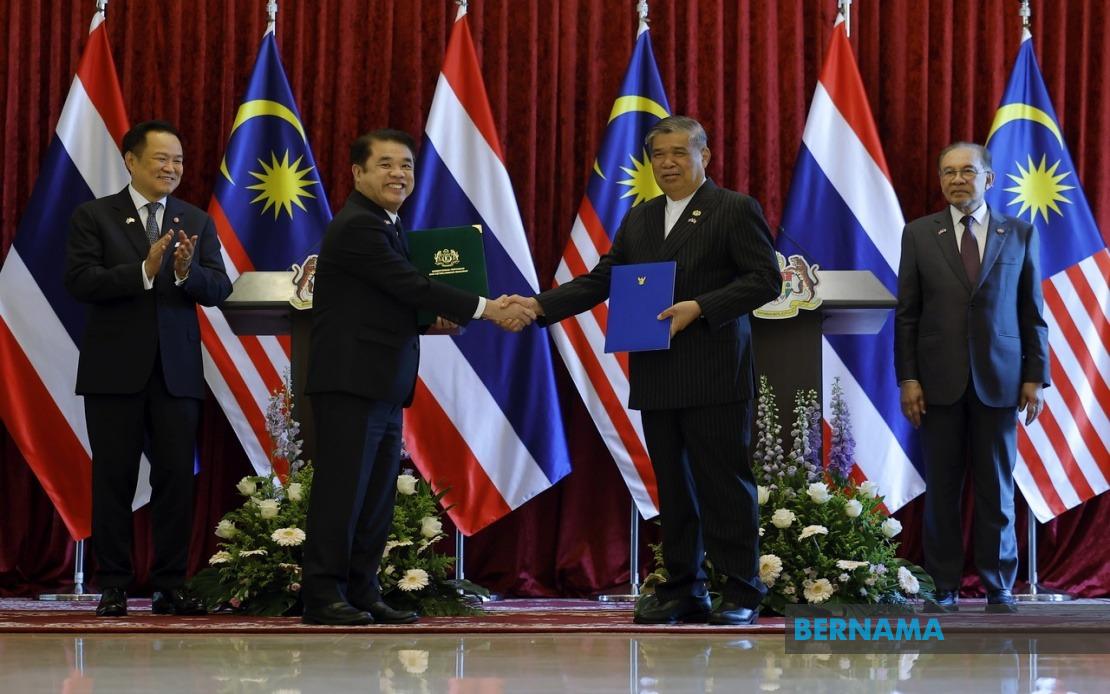
Malaysia and Thailand have moved swiftly to resolve a contentious fisheries row and unlock deeper agricultural collaboration, with both nations committing to activate their freshly signed Memorandum of Understanding on agricultural cooperation within a single week. The breakthrough came during Thai Prime Minister Anutin Charnvirakul's inaugural official visit to Malaysia, where he and Prime Minister Datuk Seri Anwar Ibrahim oversaw the formal exchange of the agreement between their respective agriculture ministers, Datuk Seri Mohamad Sabu and Suriya Juangroongruangkit, in Putrajaya on July 9.
The resolution of outstanding fisheries market access disputes represents a significant diplomatic achievement after months of mounting trade friction between the neighbours. Malaysia had taken a hardline stance in June, implementing stricter import controls on Thai fisheries products by mandating Certificates of Analysis for barramundi shipments and temporarily restricting five designated shrimp species. These measures reflected broader concerns over product standards and biosecurity, but they simultaneously threatened to disrupt the substantial agri-food trade relationship between the two nations.
Anwar underscored the strategic importance of the accord during the joint press conference, framing it as evidence of both countries' determination to fortify food security across the region whilst expanding mutually beneficial commerce. The Prime Minister highlighted the dramatic acceleration of the implementation timeline, noting that Thailand had initially sought a one-and-a-half-month window before the MoU took effect, yet both sides agreed to compress this to just seven days. This compressed schedule signals the urgency with which senior leadership views the need to normalise agricultural trade flows and demonstrate regional cohesion on food security matters.
The MoU itself establishes an expansive cooperative framework covering multiple agricultural domains essential to both economies. Beyond fisheries and crop production, the accord encompasses livestock development, trade facilitation mechanisms, and coordinated marketing strategies for agricultural commodities. The agreement also addresses critical technical areas including research and development collaboration, capacity building initiatives, and the harmonisation of biosecurity standards alongside sanitary and phytosanitary protocols. These provisions aim to eliminate non-tariff barriers that frequently impede seamless regional trade.
Thailand's Prime Minister Anutin echoed his Malaysian counterpart's sentiments, emphasising that food security had dominated the bilateral ministerial discussions. He characterised the resolution of pending market access cases for fishery and agricultural products as an "amicable solution," suggesting that both nations found common ground through pragmatic negotiation rather than regulatory escalation. This language implies that the earlier June restrictions may be partially or fully lifted as the MoU framework takes root.
The Ministry of Agriculture and Food Security elaborated on the structural benefits embedded within the accord, emphasising how the arrangement would establish more formalised channels for communication and coordination between relevant Thai and Malaysian authorities. By institutionalising these relationships through transparent and continuous mechanisms, the framework promises to expedite the resolution of agricultural and agri-food disputes before they metastasise into wider trade friction. The structured approach reflects lessons learned from the recent barramundi and shrimp standoff, where unilateral action by one party prompted defensive responses.
Bilateral agricultural trade between Malaysia and Thailand has demonstrated robust expansion, with combined agri-food commerce reaching RM20.33 billion across the 2025 calendar year through December. This scale of trade underscores the mutual economic stakes involved; any protracted dispute threatens livelihoods across supply chains in both countries. Malaysia primarily exports high-value products including coffee, cocoa, tea, spices and processed food items, whilst Thailand supplies substantial volumes of meat and meat-based products, establishing complementary rather than directly competitive trade patterns.
The accord also reflects broader diplomatic momentum following bilateral talks conducted the previous week, during which Anwar and Anutin addressed trade expansion, investment opportunities, and regional security concerns. This sequencing demonstrates how agricultural cooperation frequently serves as a confidence-building mechanism within Southeast Asian diplomacy, creating tangible benefits that reinforce political relationships and provide platforms for addressing more sensitive geopolitical issues.
For Malaysian stakeholders, the accelerated MoU implementation offers near-term relief from the uncertainty that characterised the June restrictions period. Local fisheries exporters, particularly those dependent on barramundi shipments, faced potential losses during the limbo before normalisation. The seven-day timeline suggests that Certificate of Analysis requirements and temporary import restrictions may be revisited or suspended, though formal announcements remain pending.
The resolution also carries implications for ASEAN's broader regional integration agenda. As Southeast Asian nations grapple with supply chain vulnerabilities exposed during various global disruptions, bilateral frameworks like the Malaysia-Thailand MoU demonstrate how member states can operationalise food security cooperation. The precedent of rapid dispute resolution may encourage other ASEAN pairs to adopt similarly expedited protocols for resolving sectoral trade frictions.
Looking ahead, the true measure of success will depend on implementation fidelity. The MoU's effectiveness hinges on whether the promised structured communication mechanisms genuinely prevent future disputes and whether both governments prioritise the accord's principles over domestic political pressures. Thailand's agriculture sector, which employs millions in rural communities, exerts substantial influence over Bangkok's trade policy, as does the Malaysian agricultural lobby over Kuala Lumpur's decisions.
The accord represents not merely a transaction between two trading partners but a statement about regional stability and the willingness of major Southeast Asian economies to pursue pragmatic solutions over prolonged confrontation. As supply chain resilience remains a priority across Asia, Malaysia and Thailand's collaborative framework on agriculture and fisheries could serve as a model for deeper integration, potentially expanding to encompass areas such as technology transfer in aquaculture and joint market development initiatives.

