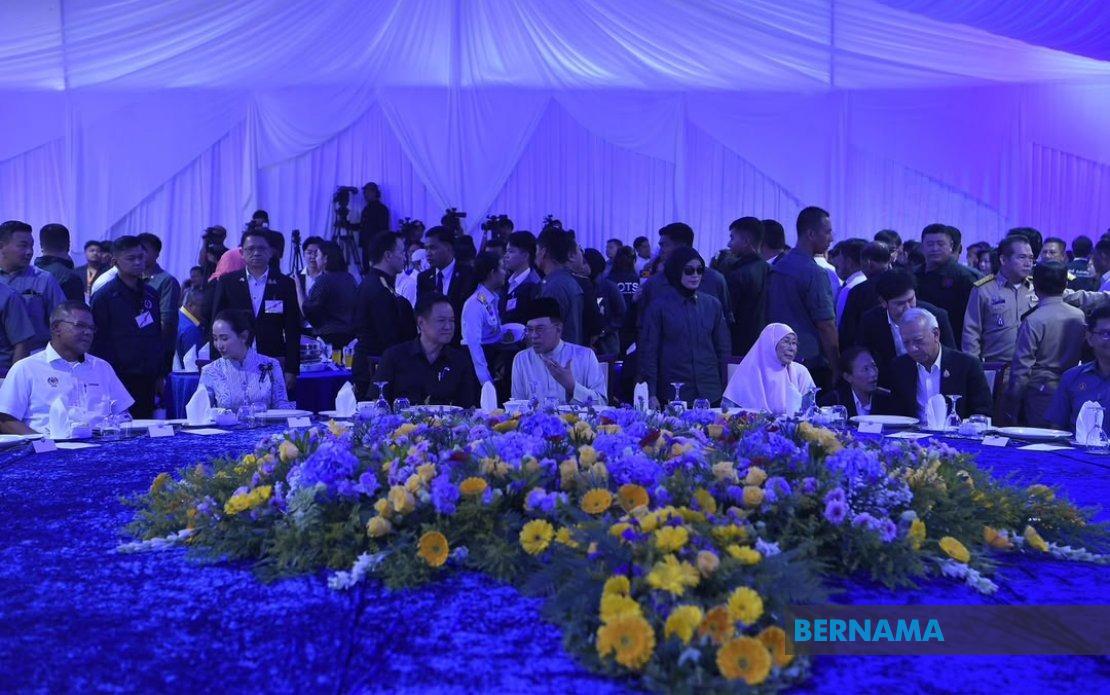
Prime Minister Datuk Seri Anwar Ibrahim and Thai Prime Minister Anutin Charnvirakul jointly inaugurated a new border crossing road on July 10, linking Malaysia's Bukit Kayu Hitam Immigration, Customs, Quarantine and Security Complex with Thailand's Sadao Customs, Immigration and Quarantine facility. The ceremonial launch represents a significant infrastructure upgrade for both nations and underscores their deepening commitment to seamless regional integration. The road corridor will commence operations at 6 am Malaysia time the following day, whilst the older Bukit Kayu Hitam-Danok crossing permanently closes at midnight to complete the transition to the newer, more efficient facility.
This infrastructure development carries substantial strategic importance beyond mere physical connectivity. The Home Ministry emphasised that the project embodies both countries' resolve to elevate diplomatic engagement, deepen cross-border collaboration, and fortify regional economic ties that benefit all ASEAN members. The new crossing represents the culmination of extensive coordination between Malaysian and Thai government agencies, enforcement bodies, and international partners who contributed technical expertise and resources throughout the development phase.
The upgraded border facility reflects a broader regional shift toward modernising entry points across Southeast Asia. As trade volumes continue expanding and people-to-people exchanges intensify, aging infrastructure at congested crossings increasingly constrains economic activity. The Bukit Kayu Hitam-Sadao corridor carries significant traffic given its position along major commercial routes connecting Thailand, Malaysia, and beyond. By deploying contemporary facilities and integrated control systems, both nations position themselves to handle growing volumes more efficiently whilst maintaining rigorous security protocols.
The project aligns strategically with the ASEAN North-South Economic Corridor initiative, which aims to strengthen connectivity among member states through improved transportation networks and logistical frameworks. Malaysia's participation advances its broader ASEAN Connectivity agenda, facilitating smoother movement of goods, investment capital, and tourists throughout the region. For Thailand, enhanced border infrastructure strengthens its role as a crucial trade hub linking mainland Southeast Asia with maritime economies.
Economic benefits are expected to flow extensively through border communities in both countries. The improved crossing should substantially reduce congestion-related delays that previously deterred smaller traders and logistics operators from utilising the route. Enhanced efficiency reduces costs throughout supply chains, making products more competitive both domestically and regionally. Border zones typically experience accelerated development when infrastructure improvements reduce transaction friction, enabling local businesses to capture opportunities in cross-border commerce, warehousing, and services.
The transition also demonstrates commitment to border security modernisation. Sophisticated integrated control systems at the new facility enable customs and immigration authorities to conduct thorough inspections more rapidly, balancing security imperatives with commercial efficiency. Rather than trading safety for speed, contemporary facilities achieve both simultaneously through technological advancement. This approach proves increasingly essential as governments navigate security challenges whilst facilitating legitimate trade and travel that underpins economic growth.
Aligned with Malaysia MADANI development aspirations, the Home Ministry articulated intentions to continue strengthening border management infrastructure through technology adoption and international partnerships. This commitment suggests ongoing enhancement projects at other Malaysian entry points, reflecting broader acknowledgment that modern borders require continuous investment to remain competitive and secure. Regional dynamics favour nations that can offer streamlined, transparent, and technologically advanced border procedures.
The project's completion also carries implications for Malaysia's positioning within broader regional geopolitics. As China and other external powers compete for influence through infrastructure investments across Southeast Asia, successful Malaysia-Thailand collaboration demonstrates ASEAN members' capacity for autonomous development cooperation. Joint projects initiated and executed by regional partners themselves strengthen collective resilience and reduce external dependency.
For Malaysian businesses, particularly those engaged in automotive manufacturing, food processing, electronics, and logistics, the improved corridor offers tangible competitive advantages. Reduced border transit times translate directly to lower operational costs and faster market access for Thai consumers, potentially spurring Malaysian exports. Similarly, Thai agricultural and manufactured products access Malaysian markets more efficiently, creating reciprocal benefits that deepen economic interdependence and make future bilateral disputes costlier for both parties to contemplate.
The permanent closure of the Danok crossing represents a clear demarcation point in bilateral infrastructure evolution. Rather than maintaining parallel routes that dilute efficiency gains across divided traffic, consolidating operations at the modern Sadao facility concentrates resources and expertise. This streamlined approach mirrors global best practices where multiple small crossings often yield to consolidated modern facilities serving broader areas.
Tourism represents another significant beneficiary sector. Malaysia and Thailand both recognise tourism's substantial contribution to national revenue and employment. Reduced friction at border crossings particularly encourages regional tourism, where travellers moving between countries multiple times require efficient, hassle-free procedures. Enhanced crossing experience generates positive impressions that encourage repeat visits and positive international word-of-mouth marketing.
The initiative demonstrates that despite occasional diplomatic tensions or competing interests, Malaysia and Thailand maintain sufficient institutional capacity and political will to execute major collaborative projects serving mutual interests. Such successful cooperation provides a foundation for addressing other bilateral issues and deepens the relationships between government institutions that extend beyond political cycles. Career officials and agencies develop professional relationships and trust that facilitate problem-solving even during periods of political disagreement.

