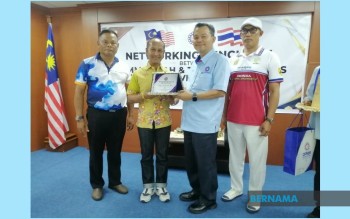
A significant step towards deeper Malaysia-Thailand economic integration has emerged from Alor Setar, where the Malay Chamber of Commerce Malaysia (DPMM) Kedah and Thailand's Trang Chamber of Commerce and Industry have jointly established a business matching and networking platform aimed at strengthening bilateral commerce. The initiative, launched on August 24, represents an earnest attempt to transform the geographical advantage shared by both Kedah and Trang into concrete economic benefits, particularly within the tourism and halal-certified food sectors where Southeast Asian demand continues to expand rapidly.
The geographical proximity between Kedah and Trang presents a paradox that has long plagued both regions: despite being strategically positioned along major transit routes, neither has successfully captured the economic spillover from cross-border traffic. Zuhaizar Abdul Karim, adviser to DPMM Kedah, articulated this missed opportunity during remarks to media, noting that Malaysian holidaymakers en route to Thailand's more celebrated beach destinations in Phuket and Krabi routinely bypass Trang without stopping. The barriers preventing such stops are primarily psychological—persistent misconceptions about limited tourist attractions and apprehension about locating halal dining options have discouraged visitors from venturing beyond the highway.
Kedah faces an analogous challenge in reverse. Thai nationals and international visitors transiting the state with intentions to renew visas or explore Malaysia's larger urban centres predominantly pass through without pausing to explore local offerings, instead heading directly toward Penang or Kuala Lumpur. This pattern of non-engagement has meant that both regions remain economically invisible to visitors who are literally passing through their territories, an inefficiency that the new platform seeks to address through structured dialogue and commercial matchmaking.
The delegation visit to Alor Setar, led by Trang Deputy Governor Anan Boon Samran and comprising 22 entrepreneurs spanning diverse sectors, represented the first concrete manifestation of this collaborative vision. The gathering facilitated direct engagement between business operators from both sides, enabling knowledge exchange and identification of complementary commercial opportunities. Rather than leaving such connections to chance or informal networking, the chamber-sponsored approach ensures systematic exploration of mutual interests and potential joint ventures.
For Malaysian businesses operating within DPMM Kedah, the initiative offers a particularly compelling opportunity to internationalise their operations with minimal geographical friction. Thailand represents an accessible first market for Malaysian enterprises seeking to expand beyond domestic borders, and Trang's positioning as a lower-cost tourist destination with developing infrastructure creates openings for service providers, food manufacturers, and hospitality operators. Zuhaizar explicitly identified halal food products and services as a priority export category, recognising that Thailand's Muslim population and growing halal consciousness among Asian consumers create sustained demand for certified products that Malaysian producers are well-positioned to supply.
Trang's economic challenges differ somewhat, though complementary interests remain evident. The province acknowledges its competitive disadvantage relative to more established Thai tourist destinations, yet this disadvantage contains seeds of opportunity. Anan Boon framed Trang as an affordable alternative to premium destinations, an positioning that resonates with budget-conscious tourists and families seeking value. The province's existing Muslim communities and halal-certified food producers, combined with its religious and cultural diversity, represent genuine attractions for Malaysian visitors who seek authentic experiences beyond Kedah's borders. By marketing Trang effectively to Kedah residents and to visitors from other Malaysian states, provincial authorities can redirect portions of regional tourism spending toward their economy.
The halal industry dimension deserves particular attention for regional observers. As Muslim-majority nations seek to develop halal economies comprehensively—extending beyond food into cosmetics, pharmaceuticals, tourism services, and financial products—cross-border halal collaboration becomes increasingly strategic. Malaysia's advanced halal certification ecosystem and established brand reputation position the country's producers advantageously, while Thai production capabilities and lower labour costs create complementary benefits. Joint ventures combining Malaysian halal expertise with Thai manufacturing efficiency could produce competitively priced products for Southeast Asian markets, particularly benefiting Indonesia, Brunei, and other Muslim-majority neighbours.
The reciprocal visit that Trang has proposed for DPMM Kedah representatives underscores the momentum building behind this initiative. Such reverse delegations prevent partnerships from becoming unidirectional and ensure that Kedah businesses develop direct understanding of their Thai counterparts' capabilities, constraints, and ambitions. Repeated face-to-face engagement typically strengthens business relationships beyond what telecommunications or written correspondence can achieve, particularly in Southeast Asia where relationship-based commerce remains culturally embedded.
For policymakers observing from Kuala Lumpur and Bangkok, this grassroots chamber-driven initiative offers a model for stimulating regional integration at the sub-national level. Rather than awaiting comprehensive bilateral trade agreements or top-down government programmes, business chambers have proactively identified shared challenges and structured mechanisms to address them. This approach distributes initiative-taking across multiple actors and reduces dependency on formal diplomatic channels, potentially accelerating problem-solving and commercial innovation. The success or failure of the Kedah-Trang platform will likely influence whether similar initiatives emerge between other Malaysian and Thai border regions, such as Satun and Perlis or further inland zones.
The broader implications extend to Malaysia's regional positioning. As the country seeks to strengthen ties with ASEAN neighbours and establish itself as a hub for halal commerce and Islamic finance, demonstrating practical cross-border collaboration yields tangible benefits. Enhanced economic interdependence between Malaysian and Thai regions creates constituencies invested in stable bilateral relations and peaceful commerce, reinforcing diplomatic foundations. For Thai counterparts, closer integration with Malaysia's more developed halal infrastructure and consumer markets opens growth pathways for Thai businesses whilst addressing infrastructure gaps that presently constrain international competitiveness.
Challenges remain substantial. Regulatory differences between Malaysia and Thailand, visa procedures, product certification requirements, and currency fluctuations all present operational obstacles that the chambers must navigate. Marketing misconceptions—particularly regarding Trang's tourism appeal and halal food availability—requires sustained, coordinated messaging rather than one-time initiatives. Yet the willingness of business organisations on both sides to invest time and resources into structured problem-solving suggests genuine commitment beyond rhetorical enthusiasm for regional cooperation. The coming months will reveal whether the August meeting catalyses substantive partnerships or represents a well-intentioned but ultimately inconsequential gathering.

