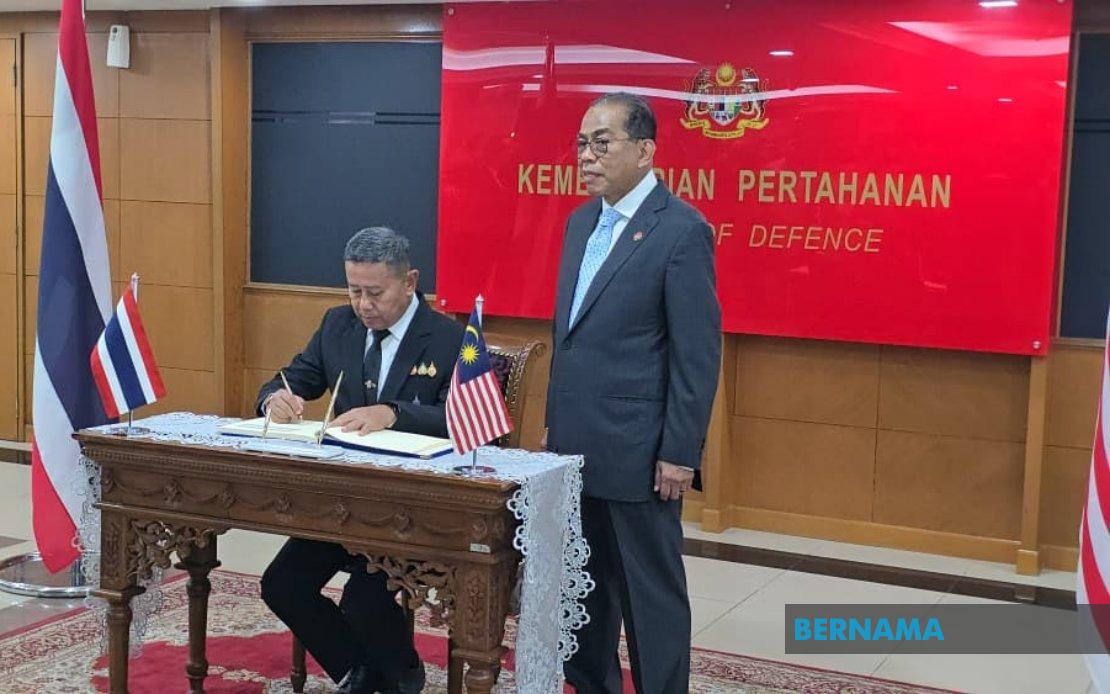
Malaysia and Thailand have reinforced their defence and security partnership at a high-level meeting in Kuala Lumpur, signalling renewed commitment to collaborative approaches addressing the complex security landscape facing Southeast Asia. The engagement between Defence Minister Datuk Seri Mohamed Khaled Nordin and Lieutenant General Adul Boonthumjaroen, Thailand's newly appointed Defence Minister, underscored the strategic importance both nations place on bilateral military relations amid evolving regional challenges.
Adul's visit to Wisma Pertahanan marked his introductory engagement with Malaysia's defence establishment following his recent appointment to Thailand's Defence Ministry under Prime Minister Anutin Charnvirakul. The formality of an official bilateral defence meeting at such an early stage of his tenure reflects the institutional depth of Malaysia-Thailand military cooperation and the priority both governments assign to this relationship. Thai defence officials have historically maintained strong working relationships with their Malaysian counterparts, and this exchange signals continuity alongside fresh momentum under the new Thai defence leadership.
The discussions ranged beyond ceremonial pleasantries to substantive security matters affecting the broader Southeast Asian region. Both ministers reaffirmed their shared vision for promoting peace and stability throughout the region, a commitment that extends beyond bilateral concerns to encompass collective regional interests. This emphasis on transnational security cooperation reflects the reality that contemporary threats—including maritime piracy, human trafficking, terrorism, and irregular migration—transcend national borders and demand coordinated responses from neighbouring states.
A particularly significant dimension of the talks involved Thailand's acknowledgement of Malaysia's diplomatic efforts in facilitating dialogue between Thailand and Cambodia regarding their longstanding border dispute. By explicitly recognising Malaysia's constructive role in defusing tensions and supporting dialogue, Thailand reinforced the value placed on Malaysia as a trusted regional mediator and honest broker in sensitive interstate disputes. Malaysia's ability to maintain balanced relationships and credibility with multiple ASEAN partners positions it uniquely to facilitate such peace-building initiatives, a capacity that strengthens its standing within regional security architecture.
The border situation between Thailand and Cambodia represents one of Southeast Asia's most volatile and persistent territorial disputes, with periodic flare-ups involving military clashes and civilian casualties. Malaysia's involvement in encouraging dialogue and confidence-building measures contributes to broader regional stability objectives. By highlighting Malaysia's proactive engagement, Thailand implicitly endorsed ASEAN's approach of peer-to-peer diplomacy and consensus-building rather than internationalising disputes through extra-regional powers.
Beyond high-level diplomatic exchanges, the visit encompassed practical industrial and technological dimensions. Adul toured the National Aerospace and Defence Industries (NADI) Group of Companies and its operational facilities, a component of Malaysia's defence-industrial base. Such facility visits serve multiple purposes: they allow foreign counterparts to understand the technological capabilities and industrial partnerships available within a nation's defence sector, they explore possibilities for joint defence projects or technology sharing, and they strengthen personal relationships between military leaders and defence industry practitioners who shape procurement and cooperation arrangements.
These industrial exchanges carry particular significance in the Southeast Asian context, where defence modernisation remains a priority for multiple nations yet budgetary constraints limit individual countries' capacity for advanced procurement. Collaborative defence production, shared research and development ventures, and technology transfer agreements can enhance military capabilities across partner nations while distributing costs and building interoperability. The exposure of Thailand's defence leadership to Malaysia's aerospace and defence manufacturing ecosystem may catalyse future partnership possibilities ranging from joint training programmes to coordinated procurement initiatives.
The emphasis on regional peace and stability throughout the ministers' discussions reflects the multifaceted security environment characterising contemporary Southeast Asia. Beyond territorial disputes, the region faces transnational organised crime, maritime security challenges in crowded shipping lanes, environmental degradation affecting resource management, and the long-term implications of great power competition in the Indo-Pacific. Malaysia and Thailand, as significant ASEAN members with substantial defence capabilities and strategic geographic positions, recognise their shared interests in maintaining a secure, predictable regional order.
The strengthening of Malaysia-Thailand defence cooperation also carries implications for broader ASEAN cohesion and the Association's capacity to address security challenges collectively. When major ASEAN members maintain robust bilateral military relationships and coordinate on regional security matters, it reinforces ASEAN's relevance and effectiveness. Conversely, fractious relations among member states can undermine institutional effectiveness and create space for extra-regional actors to pursue divisive strategies. The warmth expressed at this meeting and the substantive agenda discussed contribute to maintaining ASEAN's unity and institutional strength.
Moving forward, the practical outcomes of this meeting will emerge through follow-up military-to-military contacts, potential defence cooperation agreements, and enhanced coordination on specific regional security initiatives. The investment in personal relationships between defence leaders, particularly at the start of a new Thai defence minister's tenure, typically yields sustained cooperation across the bureaucratic machinery of both defence establishments. Training exchanges, joint exercises, and intelligence-sharing arrangements may expand as a result of the foundation laid during this visit.
For Malaysia specifically, maintaining strong defence partnerships with key ASEAN neighbours supports its broader strategic positioning within Southeast Asia and the wider Indo-Pacific region. As Malaysia navigates complex relationships with larger powers and manages its own internal security challenges, reliable partnerships with neighbours sharing similar interests in regional stability provide valuable strategic flexibility. The Thailand engagement exemplifies Malaysia's capacity to engage constructively with ASEAN peers on security matters while advancing shared interests in maintaining a rules-based regional order.

