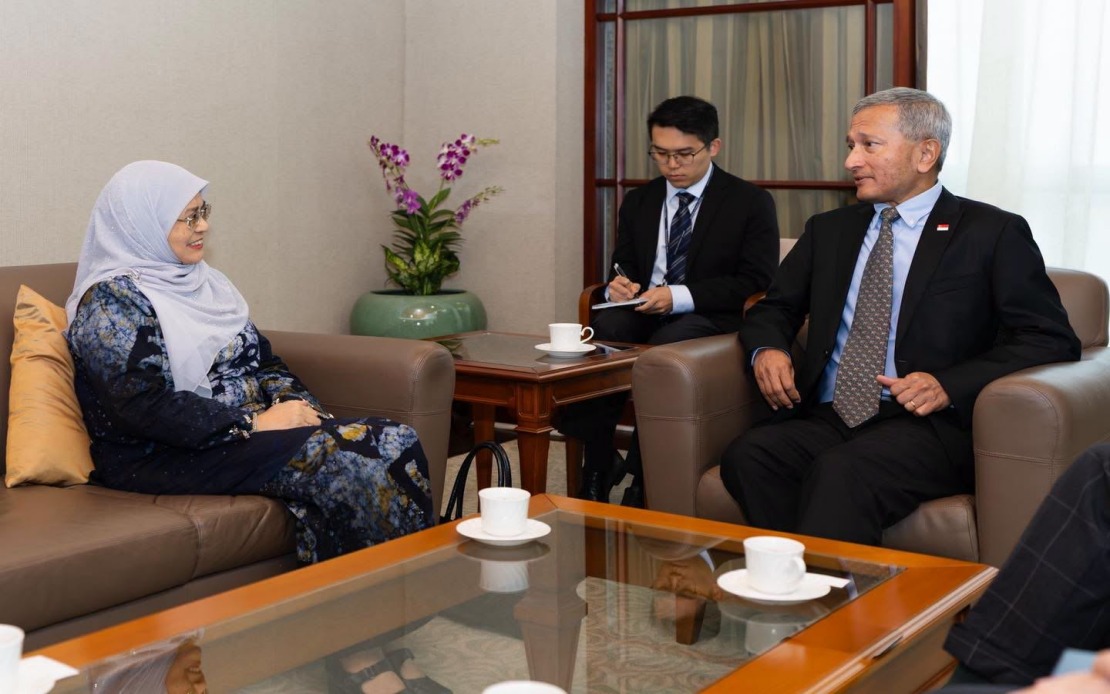
Malaysia and Singapore have pledged to maintain momentum in their relationship and expand collaborative efforts across multiple sectors, according to a statement from the Malaysian High Commission in Singapore. The commitment emerged from a formal courtesy meeting in which Datin Paduka Anizan Siti Hajjar Adnin, the newly appointed Malaysian High Commissioner to Singapore, met with Singapore's Foreign Minister Dr Vivian Balakrishnan on Wednesday. The exchange underscores the ongoing priority both nations place on their foundational partnership, which continues to shape regional stability and prosperity in Southeast Asia.
Datin Paduka Anizan officially assumed her diplomatic posting on July 2, bringing extensive experience from her long career in Malaysia's foreign service. Her appointment represents a significant moment for bilateral engagement, as high commissioners serve as key conduits for political dialogue and policy coordination between neighbouring capitals. The courtesy visit—a traditional diplomatic formality—provided an opportunity to establish working rapport and outline priorities for the tenure ahead. Such meetings typically signal renewed momentum in bilateral affairs and set the tone for sustained engagement across government levels.
During the discussion, both delegations acknowledged the special relationship binding the two nations, rooted in shared historical experience and deep people-to-people connections that transcend official channels. Minister Balakrishnan emphasised that the partnership draws strength from cultural affinity, family networks spanning both territories, and institutional cooperation developed over decades. This foundation has enabled Malaysia and Singapore to navigate differences pragmatically while pursuing common interests in regional security, trade, and development.
A critical focus of the meeting involved identifying practical pathways to enhance daily life for ordinary citizens in both countries, particularly those with cross-border commitments through employment, business ventures, or family ties. This people-centric approach reflects recognition that bilateral relations derive meaning and legitimacy from tangible benefits reaching individual households and enterprises. Millions of Malaysians and Singaporeans maintain complex transnational lives—commuting for work, managing family properties, or operating businesses across the causeway—making practical cooperation on movement, services, and recognition of qualifications essential policy matters.
The discussion highlighted the breadth of potential collaboration, spanning economic integration, infrastructure development, environmental stewardship, security coordination, and cultural exchange. Trade between the nations remains substantial, with Singapore serving as a critical financial and logistics hub for Malaysian commerce while Malaysia provides natural resources and manufacturing capacity complementing Singapore's service economy. Digital economy initiatives, maritime cooperation, and talent mobility represent emerging frontiers where joint efforts could yield significant returns for both populations.
Minister Balakrishnan's public endorsement of High Commissioner Anizan's diplomatic appointment carries weight in establishing confidence during a leadership transition. By specifically acknowledging her distinguished career and ability to build upon predecessors' achievements, Balakrishnan signalled Singapore's commitment to continuity while welcoming fresh perspectives. This diplomatic messaging reassures stakeholders in both capitals that foundational relationships transcend individual personalities, though leadership quality and experience remain important factors in effective bilateral management.
The reaffirmation of commitment takes place within a regional context where Malaysia-Singapore relations periodically encounter tensions—whether rooted in water agreements, maritime boundary disputes, or labour mobility issues. Each such challenge requires patient diplomacy and willingness to explore creative solutions respecting both nations' sovereignty and vital interests. The successful management of differences, alongside celebration of convergent interests, has become the hallmark of mature neighbouring relationships in Southeast Asia.
For Malaysia specifically, Singapore represents both crucial economic partner and strategic reference point for development pathways. Singapore's prosperity and institutional strength offer lessons while creating competitive pressures that motivate Malaysian policymakers toward efficiency improvements and regulatory modernisation. Conversely, Singapore depends on Malaysia for water supplies, land resources, and regional stability—reminders that despite vast differences in scale and development stage, interdependencies bind the two countries inextricably.
The commitment to exploring enhanced cooperation across sectors aligns with broader regional integration efforts within the Association of Southeast Asian Nations framework. As ASEAN nations navigate post-pandemic recovery, geopolitical realignment, and economic transformation, bilateral relationships between member states become even more consequential. Malaysia and Singapore, positioned as among ASEAN's more developed economies with significant institutional capacity, carry responsibility for demonstrating that neighbouring nations can deepen cooperation while respecting each other's concerns and constraints.
Looking ahead, substantive progress will depend on translating diplomatic pledges into concrete initiatives addressing shared challenges—whether infrastructure bottlenecks limiting cross-border movement, skills mismatches in labour markets, or coordination gaps in regional supply chains. High Commissioner Anizan's tenure will be measured partly by her effectiveness in translating ministerial-level goodwill into practical cooperation benefiting both Malaysian and Singaporean citizens navigating the complexities of life in one of Asia's most economically dynamic and densely populated regions.

