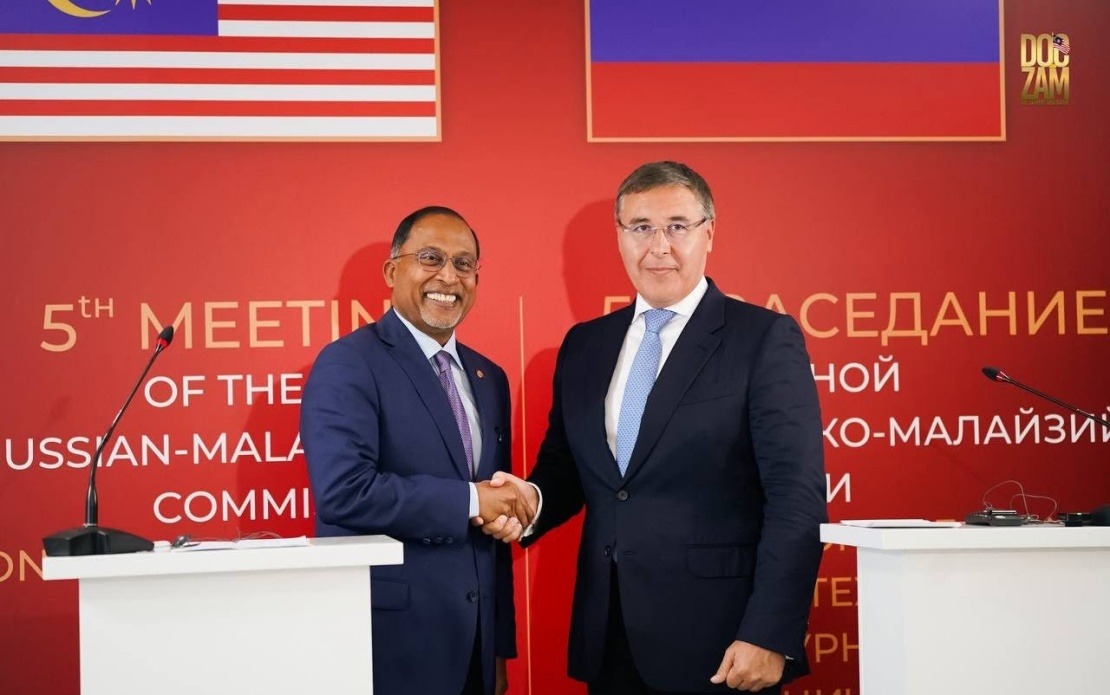
Malaysia and Russia have pledged to complete their 2027 Joint Action Plan before the year concludes, signalling a concerted push to transform their strengthening diplomatic ties into tangible collaborative outcomes across multiple sectors. Higher Education Minister Datuk Seri Dr Zambry Abd Kadir announced the agreement during the Fifth Meeting of the Malaysia-Russia Joint Commission for Economic, Scientific, Technical and Cultural Cooperation (JC-ESTC) held in Vladivostok, which he co-chaired with Russian Minister of Science and Higher Education Valery Falkov.
The commitment reflects growing momentum at the highest political levels, building on recent engagements involving His Majesty Sultan Ibrahim, King of Malaysia, Russian President Vladimir Putin and Prime Minister Datuk Seri Anwar Ibrahim. By establishing a comprehensive framework through the 2027 action plan, both nations intend to shift from aspirational partnership rhetoric towards structured, results-driven initiatives that benefit citizens and businesses on both sides. This strategic planning horizon aligns with Malaysia's position as a leading Southeast Asian economy and Russia's broader pivot towards Asian markets amid geopolitical shifts.
In the crucial area of human capital development, Russia will sustain its commitment to provide 40 government scholarships annually to Malaysian students, enabling continued brain circulation and knowledge exchange. Beyond this standing offer, the two countries have embraced an ambitious slate of educational initiatives. These include establishing the first Malaysia-Russia Rectors' Forum in 2027, which will convene senior university leaders to identify collaborative research priorities, expand the existing MAI-UniKL Russian Aerospace Programme to deepen technical expertise sharing, and establish a Russia-Malaysia Raw Materials Dialogue to explore joint research and resource development. Additionally, a Malaysia-Russia Youth Leadership Summer Camp will introduce young professionals to bilateral cooperation frameworks, fostering networks that may influence regional affairs for decades.
The education and academic initiatives hold particular significance for Malaysia's knowledge economy aspirations. By facilitating deeper connections between Malaysian and Russian universities and research institutions, both countries create pathways for technology transfer, joint patent development, and shared problem-solving on challenges ranging from materials science to aerospace engineering. The three cooperation agreements signed during the meeting, involving Universiti Teknologi MARA (UiTM) and National Research University Moscow Power Engineering Institute, UiTM and the Institute of Experimental Medicine, and Universiti Tun Hussein Onn Malaysia (UTHM) and the State University of Land Use Planning, represent concrete manifestations of this commitment.
Trade and agricultural cooperation emerged as another central pillar of the bilateral agenda. Both governments acknowledged the need to expand market access and strengthen commercial linkages, particularly regarding fertiliser supplies including urea, which directly supports Malaysia's food security objectives. For a nation with significant agricultural interests and a growing population, securing alternative and reliable fertiliser sources beyond traditional suppliers enhances supply chain resilience. The dialogue also encompasses broader efforts to identify complementary economic strengths and eliminate trade barriers that may hinder bilateral commercial relationships.
Strategic sectors have received heightened attention, reflecting both nations' alignment on emerging technologies and sustainable development priorities. Cooperation domains now encompass artificial intelligence, digital technology, smart cities, information security, telecommunications, renewable energy, and liquefied natural gas and liquefied petroleum gas sectors. Notably, both countries have also initiated exploratory discussions on peaceful applications of nuclear energy, contingent upon adherence to each nation's respective legal and regulatory frameworks. This diversified sectoral approach acknowledges that 21st-century great power partnerships extend far beyond traditional diplomacy, encompassing technological capabilities that will determine competitive advantage in coming decades.
Financial cooperation has expanded significantly, with central banks from both countries—Bank Negara Malaysia and the Bank of Russia—now engaged in substantive discussions. These conversations explore Labuan's potential as a regional financial hub and gateway to ASEAN markets, a role that could elevate Malaysia's profile as a financial services destination. The partnership also encompasses Islamic finance cooperation and digital assets exploration, sectors where Malaysia possesses particular expertise and regional influence. By leveraging Labuan's regulatory framework and geographic position, the two countries may establish financial infrastructure that benefits broader ASEAN integration objectives.
The scope of cooperation has expanded into industrial manufacturing, healthcare services, transport systems, green technology, climate change mitigation strategies, creative economy development, and space exploration initiatives. This comprehensive approach reflects recognition that sustainable bilateral partnerships require multiple entry points for commercial and scientific engagement. Such breadth also distributes collaboration across diverse constituencies—business communities, research institutions, government agencies, and creative industries—reducing dependency on any single sector or political relationship.
Malaysia's hosting of the sixth JC-ESTC meeting in 2027 carries symbolic and practical significance. The timing coincides with the 60th anniversary of Malaysia-Russia diplomatic relations, providing an opportunity to commemorate decades of engagement while launching the next phase of partnership. The decision to conduct this meeting in Malaysia rather than alternating venues demonstrates confidence in the partnership's trajectory and offers Malaysian institutions, businesses, and policymakers the chance to shape the bilateral agenda directly.
For Malaysian observers, this deepening partnership offers several strategic implications. First, it provides an alternative pathway for technological cooperation and educational exchange beyond traditional Western partnerships, enriching Malaysia's options in an increasingly multipolar world. Second, access to Russian expertise in aerospace, advanced manufacturing, and energy sectors could accelerate domestic capacity-building. Third, expanding trade relationships with Russia offers business opportunities and supply chain diversification for Malaysian companies operating in fertilisers, agricultural products, and technology sectors. Fourth, the emphasis on peaceful nuclear energy cooperation reflects Malaysia's long-term energy security thinking, though regulatory and public acceptance hurdles remain considerable.
The commitment to finalise the 2027 action plan by year-end demonstrates that both governments view this partnership not as symbolic gesture but as practical framework requiring detailed implementation mechanisms. By establishing clear timelines and concrete deliverables, Malaysia and Russia signal to their respective constituencies, commercial sectors, and the broader region that bilateral ties rest on substantial foundations. For Malaysia particularly, as a non-aligned nation navigating great power competition, deepening Russian partnerships while maintaining Western relationships illustrates the balancing act central to Malaysian foreign policy strategy.

