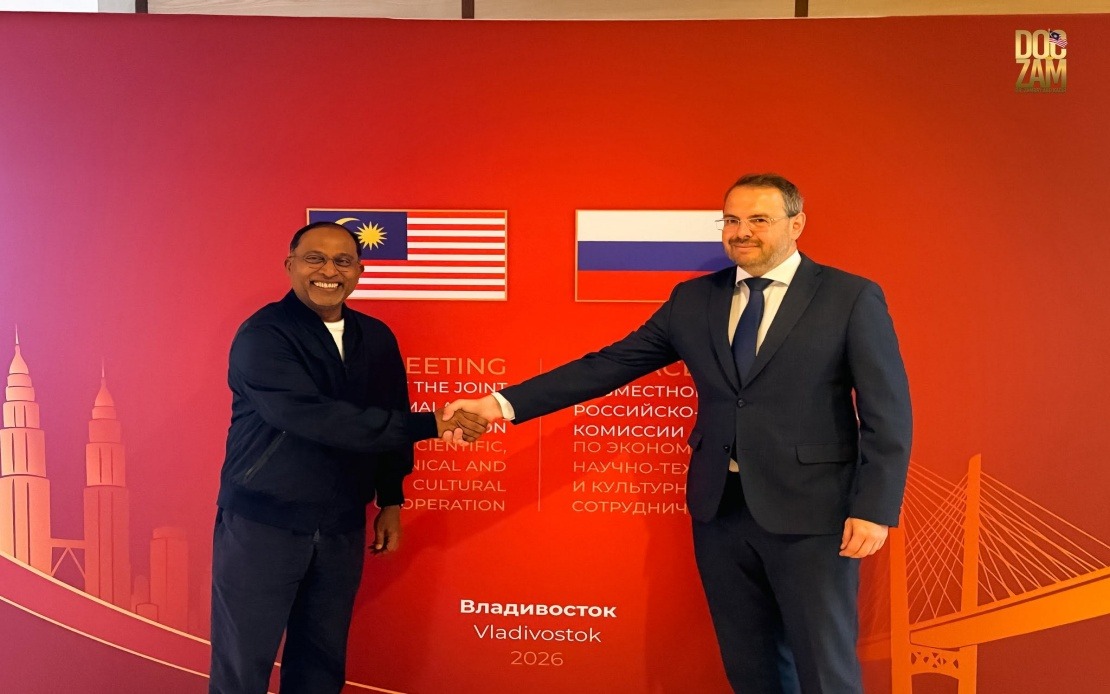
Malaysia is preparing to chart fresh ground in its relationship with Russia through the Fifth Malaysia-Russia JC-ESTC Meeting, scheduled for mid-August in Vladivostok. Higher Education Minister Datuk Seri Dr Zambry Abd Kadir is leading the Malaysian delegation to the gathering, which signals both nations' commitment to translating diplomatic goodwill into tangible economic and social benefits. The timing reflects growing regional interest in strengthening partnerships beyond traditional Western-aligned frameworks, particularly as Southeast Asian nations seek to diversify their strategic relationships.
The joint commission, established in 2015, has evolved into a comprehensive mechanism for bilateral engagement spanning seventeen government ministries and agencies. This breadth of participation underscores the scale of the relationship being managed, touching everything from energy security and agricultural development to cultural exchange programmes. For Malaysian policymakers, the platform represents an opportunity to position the country as a bridge between Southeast Asia and Russia at a moment when geopolitical alignments are shifting. The involvement of such diverse government entities suggests that both nations view cooperation not as a peripheral concern but as central to their respective strategic interests.
Trade and investment expansion constitute the primary drivers of the agenda. Malaysia and Russia have complementary economic profiles: Russia possesses abundant natural resources and technological expertise, while Malaysia offers market access to one of the world's most dynamic regions. By formalising commercial cooperation frameworks through official channels, both nations hope to reduce transaction costs and regulatory friction that have historically limited bilateral trade volumes. For Malaysian companies, improved institutional ties could unlock opportunities in Russian industrial sectors, energy projects, and emerging technologies. Conversely, Russian investment in Malaysia's growing digital economy and renewable energy sector represents potential growth vectors.
Higher education collaboration stands as a particular priority, with both nations recognising the strategic importance of human capital development in a technology-driven world. Dr Zambry's emphasis on student and academic mobility reflects a deliberate strategy to build lasting people-to-people connections that transcend governmental cycles. Malaysian universities increasingly seek international partnerships that enhance research credentials and provide students with exposure to diverse educational systems. Russian institutions, particularly those in Moscow and St. Petersburg, maintain formidable reputations in mathematics, physics, and engineering—fields where Malaysian institutions are eager to strengthen capacity. Joint research initiatives, particularly in emerging technologies and fundamental sciences, could yield discoveries with regional applications.
The innovation and research dimensions deserve particular attention for Southeast Asian observers. Both Malaysia and Russia have invested substantially in developing indigenous technological capabilities, creating natural synergies in areas such as artificial intelligence, materials science, and advanced manufacturing. The JC-ESTC framework allows both nations to pool intellectual resources and share research infrastructure without the geopolitical complications that sometimes constrain collaboration with other major powers. For Malaysia specifically, partnerships with Russian research institutions could accelerate the development of home-grown technological solutions tailored to regional challenges, from palm oil productivity to tropical disease research.
Energy cooperation represents another dimension where mutual interests align. Russia's vast hydrocarbon reserves and expertise in energy infrastructure development complement Malaysia's position as a Southeast Asian energy hub and its growing investments in renewable technologies. Joint projects in liquefied natural gas, nuclear research, or energy efficiency could strengthen regional energy security while creating investment opportunities for both nations. The energy sector's capital intensity makes it particularly suitable for strategic bilateral partnerships that require patient capital and long-term commitment.
The agricultural and food security implications should not be overlooked, particularly given Southeast Asia's growing concern about food self-sufficiency. Russia possesses substantial agricultural capabilities, particularly in grain production and biotechnology, while Malaysia's tropical agricultural expertise and established regional trade networks could benefit Russian producers seeking Asian market access. Collaborative research into crop resilience, sustainable farming practices, and agricultural technology could address challenges facing both nations while creating commercial opportunities.
Dr Zambry's emphasis on making the JC-ESTC "action-oriented" and focused on outcomes reflects frustration that sometimes affects bilateral platforms across the world: the proliferation of agreements that lack implementation mechanisms or sustained follow-through. By insisting on concrete projects and investment commitments rather than aspirational statements, Malaysia is attempting to ensure that diplomatic engagement translates into measurable economic and social returns. This pragmatic approach resonates with regional governments increasingly sceptical of high-level meetings that generate press releases but fail to deliver substantive results.
The Russian deputy and minister-level participation confirms Moscow's serious engagement with the bilateral relationship. Russian Deputy Minister of Science and Higher Education Konstantin Mogilevsky's involvement in welcoming the Malaysian delegation, and the scheduled co-chairmanship with Minister Valery Falkov, indicates that Moscow views Malaysia not as a peripheral relationship but as part of its broader Asia-Pacific strategy. For Malaysia, this level of engagement provides leverage to ensure that agreed commitments receive implementation priority within Russian bureaucratic structures.
The geopolitical context surrounding this meeting warrants consideration. With Western nations maintaining various restrictions on Russian engagement, Malaysia's willingness to expand institutional ties reflects the country's non-aligned foreign policy orientation and its practical assessment that isolation serves neither nation's interests. Southeast Asian countries have traditionally avoided choosing between great power blocs, instead pursuing pragmatic partnerships that serve national development objectives. Malaysia's approach to Russia exemplifies this philosophy: engaging seriously on matters of mutual benefit while maintaining independent foreign policy judgment.
From a Malaysian perspective, deepening Russia ties contributes to the broader objective of economic diversification and reduced dependency on any single trading partner or investment source. As the region becomes increasingly competitive for foreign direct investment, Malaysia's ability to attract capital from multiple sources—including non-traditional partners like Russia—strengthens its negotiating position with established investment sources. The educational exchanges envisioned in the JC-ESTC framework also contribute to Malaysia's soft power, as Russian students and scholars returning home become ambassadors for Malaysian educational quality and cultural sophistication.
The Fifth Meeting represents an inflection point where preliminary relationship-building transitions into substantive cooperation architecture. Success will be measured not by the eloquence of joint statements but by the emergence of specific projects with defined timelines, responsible parties, and resource commitments. For both nations, demonstrating that institutional cooperation yields tangible benefits justifies the bureaucratic machinery and political capital expended. As Malaysia positions itself as a key Southeast Asian node in broader regional connectivity initiatives, partnerships with powers like Russia that bring distinct comparative advantages become increasingly valuable.

