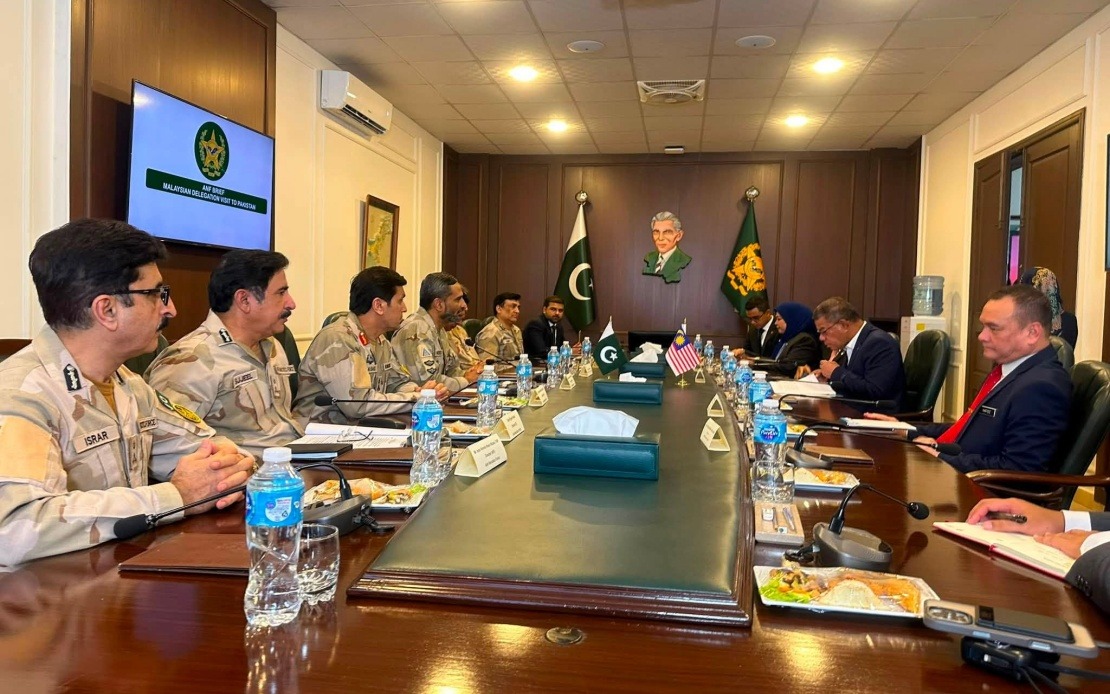
Home Minister Datuk Seri Saifuddin Nasution Ismail has unveiled plans for a comprehensive Memorandum of Understanding on narcotics control, signalling Malaysia's commitment to elevating its partnership with Pakistan in tackling what both nations recognise as an increasingly volatile drug crisis. The initiative emerged from discussions at Pakistan's Anti-Narcotics Force headquarters in Islamabad, where Saifuddin Nasution received operational briefings from Director-General Major General Abdul Moeed during a two-day official visit that commenced Thursday, August 20. This formalised framework represents a strategic evolution beyond existing arrangements, designed to create institutional mechanisms for sustained engagement in addressing cross-border drug threats that threaten the stability and security of both Muslim-majority nations and the broader Asian region.
The urgency driving this cooperation stems from the alarming transformation of global drug markets. Traditional narcotics trafficking has given way to a far more complex ecosystem dominated by synthetic substances such as methamphetamine, which require minimal cultivation infrastructure and can be produced anywhere with access to precursor chemicals. These modern drugs fuel transnational organised crime syndicates that operate with sophisticated logistics networks, corrupting officials across multiple jurisdictions and capitalising on porous borders. Malaysia has experienced the devastating consequences of this shift firsthand, with addiction rates climbing and organised crime groups establishing production and distribution hubs throughout the region. Pakistan's geographic position as a frontline state adjacent to Afghanistan—historically the world's largest opium producer—places it at the convergence of multiple trafficking routes, making its experience invaluable for understanding supply chain dynamics.
What distinguishes this emerging partnership is the recognition that enforcement cannot operate within isolated national silos. Saifuddin Nasution explicitly acknowledged that Malaysia cannot address these threats solely through domestic policing or regional cooperation mechanisms like ASEAN alone. Instead, the new MoU envisions a genuinely transnational operational model centred on active intelligence sharing, coordinated law enforcement operations guided by intelligence analysis, and the dismantling of supply chains before narcotics reach Malaysian ports and airports. This represents a maturation of anti-narcotics strategy, moving beyond reactive enforcement toward proactive disruption of trafficking infrastructure. The emphasis on intelligence-led operations reflects lessons learned from successful international campaigns elsewhere, where sustained cooperation between source countries, transit routes, and destination markets has demonstrably reduced drug flows.
Historically, Malaysia and Pakistan have laid groundwork for this ambition. Between 2012 and 2018, the two nations jointly coordinated more than 28 cases, establishing operational protocols and building personal relationships among enforcement personnel. These cases provided evidence that aligned interests and compatible law enforcement methodologies could produce tangible results. However, officials recognised that sporadic case-by-case cooperation lacked the institutional depth needed for sustained impact against increasingly resourced criminal enterprises. The proposed MoU addresses this deficiency by establishing permanent coordination mechanisms, including a dedicated Joint Working Group focusing on security, narcotics control, and police training. By institutionalising cooperation rather than relying on goodwill and individual initiative, both nations aim to ensure continuity regardless of personnel changes or shifts in political priorities.
The training and expertise exchange component of the agreement carries particular significance for Malaysia's law enforcement ecosystem. Pakistan's ANF personnel bring operational experience combating some of the world's most sophisticated trafficking networks, having disrupted major heroin, hashish, and increasingly synthetic drug operations over decades. Similarly, Malaysia's experiences managing drug abuse in urban Southeast Asian populations, coupled with its advanced forensic and intelligence capabilities, offer valuable insights for Pakistani counterparts. These reciprocal knowledge transfers strengthen enforcement capacity throughout both institutions, creating a multiplier effect where improvements in one country's operations enhance effectiveness across the partnership. The agreement also extends to prison management, with the signing of the International Transfer of Prisoners Agreement enabling both nations to manage offenders more efficiently and reducing incarceration burdens.
Beyond narrowly defined narcotics enforcement, the broader bilateral engagement during Saifuddin Nasution's visit reveals how security cooperation increasingly interlocks with economic and diplomatic objectives. Discussions with Pakistan's Deputy Prime Minister and Foreign Minister Mohammad Ishaq Dar encompassed regional stability, the role of dialogue in conflict resolution, and strengthening cooperation among Islamic nations facing common geopolitical challenges. These conversations reflect understanding that addressing transnational crime requires addressing underlying instability, poverty, and governance deficits that traffickers exploit. Additionally, trade opportunities emerged as a secondary benefit, with Pakistani officials indicating potential to supply Malaysia with rice and meat products, addressing Malaysian food security concerns while generating economic activity in Pakistan.
The digital dimension of cooperation merits particular attention given Malaysia's strategic positioning in the regional digital economy. During the visit, Saifuddin Nasution's delegation studied Pakistan's National Database and Registration Authority systems, observing identity management infrastructure that Lieutenant General Muhammad Munir Afsar briefed the Malaysian team on. Pakistan's experience integrating biometric databases with border management and passport verification systems offers instructive lessons for Malaysia as it advances its digital transformation agenda under the MADANI Government framework. Enhanced identity verification and border surveillance technology can substantially impede traffickers' ability to move personnel and precursor chemicals across frontiers, representing a crucial technological multiplier to traditional enforcement methods.
The timing of this initiative aligns with regional anxieties about drug trafficking's trajectory following Afghanistan's 2021 Taliban transition. With Afghanistan producing record opium volumes despite Taliban rhetoric against the trade, and with criminal networks exploiting political instability to expand operations, nations across Asia face mounting pressure to demonstrate enforcement capacity. Malaysia particularly confronts challenges as a geographically strategic transit hub between major production regions and consumption markets in East Asia. The Pakistan partnership provides institutional channels for accessing intelligence about upstream trafficking developments, enabling Malaysian authorities to prepare interdiction strategies before drugs physically arrive at national borders. This proactive capability translates directly into lives saved through prevented addiction, reduced crime rates, and diminished burden on public health systems.
Implementing this MoU will require sustained political commitment, adequate funding, and resolution of inevitable operational frictions that emerge in transnational law enforcement. Different legal systems, investigative standards, and operational cultures occasionally create friction between partner nations. Malaysia's experience with other international partnerships suggests that these challenges can be managed through professional relationships, clear protocols, and periodic high-level engagement reaffirming commitment. The establishment of the Joint Working Group provides an institutionalised forum for resolving disputes and adapting procedures as circumstances evolve. Regular training exchanges and rotation of liaison officers further build personal relationships that smooth cooperation when operational pressures mount.
For Malaysian readers and policymakers, this development carries implications extending far beyond bilateral relations with Pakistan. It signals that Malaysia views narcotics trafficking as a persistent, sophisticated threat requiring long-term strategic responses rather than episodic enforcement surges. The partnership demonstrates recognition that Malaysia's security depends substantially on developments thousands of kilometres away in Afghanistan and Pakistan, making international cooperation not merely desirable but essential. As regional tensions rise and as climate change potentially drives opium cultivation to new locations, Malaysia's commitment to formalised, institution-based partnerships with other threatened nations strengthens the collective capacity to respond. The MoU thus represents not an isolated agreement but rather an investment in Malaysia's long-term stability and public health security through preventive international collaboration.

