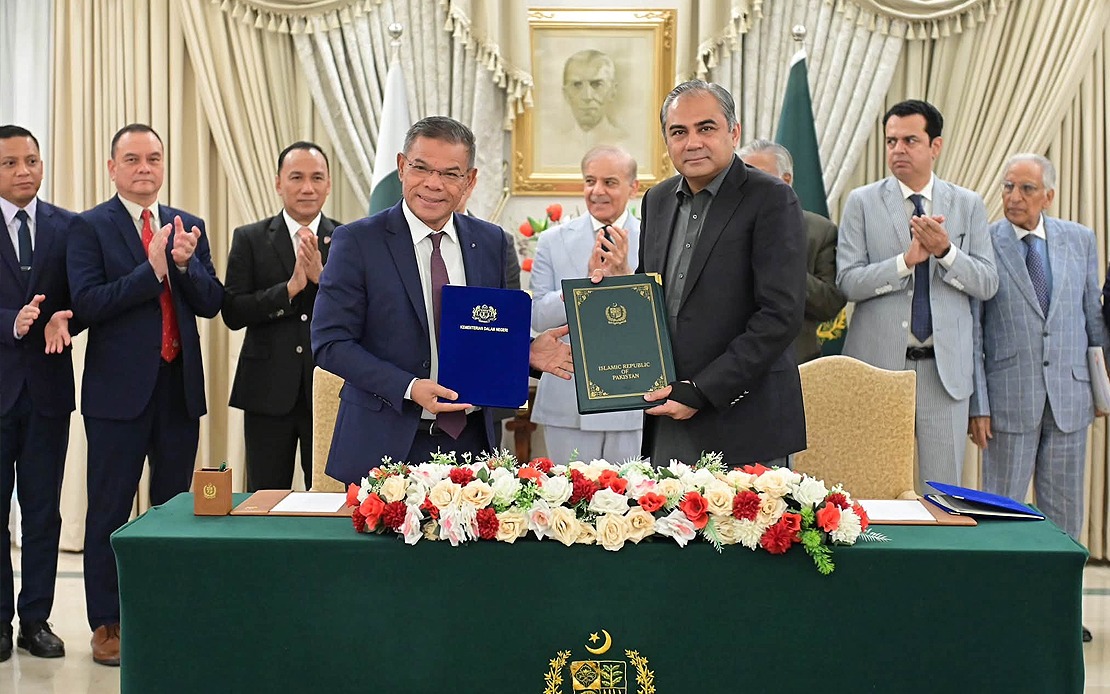
Malaysia and Pakistan have formalised a landmark agreement on prisoner transfers, with Home Minister Datuk Seri Saifuddin Nasution Ismail and Pakistan's Interior and Narcotics Control Minister Syed Mohsin Raza Naqvi signing the International Transfer of Prisoners (ITOP) Treaty at Pakistan's Prime Minister's Office. The ceremony took place following Saifuddin's courtesy call on Pakistan Prime Minister Muhammad Shehbaz Sharif, who witnessed the signing. The accord represents a significant development in the security and legal framework governing relations between the two South Asian and Southeast Asian nations.
The treaty emerged from an extended negotiation process spanning five rounds of talks initiated in September 2025, involving multiple Malaysian government bodies. The Home Ministry coordinated efforts alongside the Foreign Ministry, Attorney General's Chambers, Malaysian Prisons Department, and Royal Malaysia Police. Cabinet approval was secured on May 13, paving the way for the formal signing ceremony. This multi-agency approach underscores the complexity and importance of establishing such agreements, which require alignment across criminal justice, diplomacy, and law enforcement sectors.
At its core, the ITOP framework permits Malaysian prisoners currently incarcerated in Pakistan to be repatriated, allowing them to complete their remaining sentences within Malaysia's correctional system. Conversely, Pakistani nationals serving sentences in Malaysian prisons gain the ability to transfer back to Pakistan for the remainder of their terms. This reciprocal arrangement addresses a longstanding challenge in bilateral relations: the plight of nationals imprisoned abroad, often isolated from family support systems and cultural contexts that could facilitate rehabilitation.
According to Saifuddin Nasution, the treaty recognises that prisoners benefit significantly from serving their sentences in environments aligned with their cultural values and home country practices. Repatriation enables access to rehabilitation programmes specifically designed within each nation's correctional philosophy and social framework. This principle reflects modern criminal justice thinking, which increasingly emphasises that successful rehabilitation depends partly on maintaining family bonds and cultural continuity rather than lengthy separation in foreign institutions.
For Malaysia, the agreement holds particular relevance given the country's significant expatriate population and the likelihood of Malaysian citizens facing incarceration abroad, whether in Pakistan or other nations. Conversely, Pakistan's sizeable diaspora within Malaysia and historical migrant communities mean that Pakistani prisoners transferred from Malaysian jails would return to a situation where family and community reintegration is feasible. The arrangement thus serves humanitarian purposes while addressing practical concerns about prison overcrowding and the integration of foreign nationals into local correctional systems.
The treaty's significance extends beyond individual prisoner circumstances to broader diplomatic architecture. Saifuddin characterised the signing as marking another important milestone in Malaysia-Pakistan bilateral relations, particularly in deepening security and legal cooperation. The addition of this new legal instrument builds upon decades of formal and informal engagement between the two nations, reflecting their commitment to expanding institutional frameworks that facilitate cooperation benefiting both populations.
Malaysia-Pakistan ties have historically been anchored in shared Islamic heritage and regional interests, though cooperation has often remained episodic. The formalisation of the prisoner transfer mechanism indicates a trend toward institutionalising practical arrangements addressing everyday challenges faced by citizens. Such instruments may establish precedent for additional agreements in criminal justice, extradition, and mutual legal assistance, gradually creating a more comprehensive legal architecture governing bilateral relations.
The timing of the treaty's conclusion, following an extended negotiation period, suggests careful calibration to ensure both nations' legal frameworks and constitutional requirements were satisfied. Pakistan's recent political transitions and Malaysia's complex federal structure both necessitated thorough consultation. The successful conclusion demonstrates political will from both governments despite other pressing national concerns, indicating the issue's priority within respective government agendas.
Southeast Asian governments increasingly recognise that orderly prisoner transfer mechanisms reduce friction points while demonstrating commitment to rule of law and humanitarian principles. Malaysia's conclusion of this treaty with Pakistan may encourage similar arrangements with other nations where significant Malaysian prisoner populations exist. Conversely, other regional governments may view Malaysia's approach as a model for developing their own transfer agreements, potentially creating a network of reciprocal arrangements across Asia.
The agreement also reflects practical recognition that modern migration patterns create situations where nationals find themselves incarcerated far from home. Rather than regarding such scenarios purely through a law-and-order lens, progressive bilateral arrangements acknowledge prisoners' human needs and rehabilitation potential. By enabling transfer to familiar legal systems and cultural environments, both nations demonstrate capacity for balancing security concerns with rehabilitative justice principles.
Implementation of the ITOP will require establishing administrative procedures, including case-by-case evaluation mechanisms, documentation requirements, and coordination protocols between Malaysian and Pakistani correctional authorities. The groundwork laid during negotiations should facilitate smooth operational launch, though practical challenges may emerge during initial transfers. Both nations will need to establish clear criteria for assessing prisoner eligibility and determining whether individual cases meet treaty requirements.
Looking forward, the treaty's success depends on institutional commitment from both governments, effective communication between correctional agencies, and willingness to resolve disputes or ambiguities that may arise. Regular bilateral consultations and potential amendments should be anticipated as both sides gain operational experience. The accord ultimately demonstrates that even amid global geopolitical complexities, practical institutional cooperation addressing citizens' concrete needs remains both feasible and valuable for bilateral relations.

