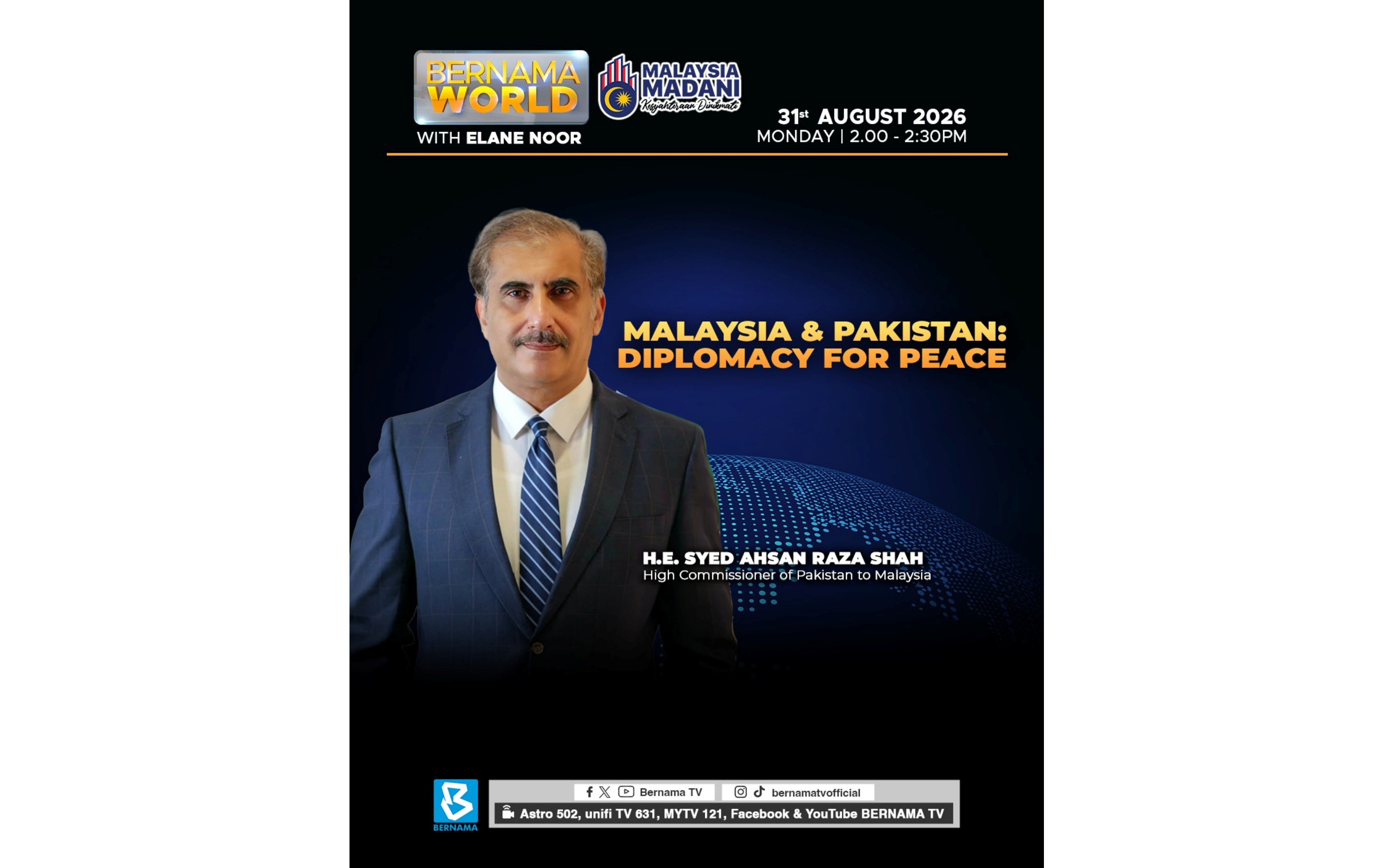
Pakistan High Commissioner to Malaysia Syed Ahsan Raza Shah has made a compelling case for deepened collaboration between Kuala Lumpur and Islamabad on approaches to managing international conflicts, arguing that such partnership represents a critical necessity in an era of escalating geopolitical friction. Speaking in an interview, the envoy highlighted how both nations occupy uniquely influential positions within their respective regions and have demonstrated considerable capacity to broker peace during moments of acute international crisis.
The diplomat pointed to concrete examples of Malaysia and Pakistan's respective diplomatic successes to underscore why knowledge-sharing between the two countries would prove invaluable. Prime Minister Datuk Seri Anwar Ibrahim's intervention during the Thailand-Cambodia hostilities exemplified Malaysia's ability to act decisively when tensions threatened regional stability and when ASEAN's conventional institutional frameworks showed signs of strain. Anwar's measured approach ultimately paved the way toward a ceasefire agreement and the subsequent Kuala Lumpur accord, demonstrating both personal diplomatic acumen and institutional capacity to navigate complex multilateral disputes.
Islamabad's track record in bridging seemingly insurmountable divides between distant powers reflects similarly impressive credentials. Pakistan's geographical proximity to Iran, combined with decades of deep historical and cultural connections, positioned it as a uniquely credible interlocutor with Tehran during periods of heightened US-Iran tensions. Simultaneously, Pakistan's enduring strategic partnership with Washington afforded it direct access to American decision-makers. When the two powers appeared locked in intractable conflict with little possibility of productive engagement, Pakistan successfully facilitated dialogue resulting in the Islamabad accord, a diplomatic achievement the High Commissioner described with evident pride.
Syed Ahsan articulated a sophisticated understanding of why traditional diplomatic frameworks require significant adaptation in what Prime Minister Anwar has termed "post-normal times." The contemporary international environment, characterized by rapid shifts in alliance patterns, the emergence of non-state actors with significant influence, and the intersection of regional and global crises, demands that established powers rethink their mediation methodologies. Malaysia and Pakistan, having navigated these evolving dynamics, possess accumulated wisdom that deserves systematic exchange and collaborative refinement.
Central to the High Commissioner's framework for effective mediation is the paramount importance of trust. Mediators cannot hope to achieve progress unless all disputing parties genuinely perceive them as principled actors operating with transparent intentions. This foundational principle explains why personal connections and demonstrated track records matter considerably in diplomatic engagement. A mediator's credibility, accumulated over years of consistent behaviour and demonstrated impartiality, becomes the currency through which negotiating space is created and maintained.
The diplomat articulated a patience-oriented approach to conflict resolution that contrasts sharply with the pressure for immediate breakthroughs often imposed by international media and domestic constituencies. Rather than pursuing comprehensive settlements in single intensive negotiating sessions, successful mediators should pursue incremental gains, understanding that substantial progress emerges through accumulated small victories and growing mutual confidence. This gradualist perspective requires psychological resilience; mediators must remain steadfast even when negotiations encounter setbacks or when parties resort to inflammatory rhetoric designed to reassert maximalist positions.
Anwar Ibrahim's personal capacity to establish genuine rapport with international leaders emerged as another critical factor in Malaysia's mediation successes. The Prime Minister's ability to connect with diverse world leaders on an individual basis, transcending formal diplomatic protocols, creates informal channels through which creative solutions become possible. This interpersonal dimension, often overlooked in analyses focused purely on structural factors or institutional mechanisms, frequently proves decisive when formal negotiating frameworks reach impasses.
The High Commissioner's warning about the interconnected nature of contemporary conflicts carries particular resonance for Malaysia and other Southeast Asian nations. International disputes, even those occurring geographically distant from the region, generate cascading economic and strategic consequences that inevitably reach Southeast Asia. Volatility in the Middle East affects energy prices and maritime security throughout the region. Instability in South Asia reverberates through supply chains and migration patterns affecting Malaysia. Recognising these linkages, regional powers cannot afford to treat distant conflicts as peripheral matters requiring only humanitarian concern or charitable diplomatic gestures.
The imperative for Malaysia-Pakistan cooperation on mediation reflects broader recognition that Southeast Asian and South Asian stability are increasingly interdependent. Malaysia's experience managing intra-ASEAN disputes, its historical role in facilitating dialogue between major powers, and its position as a Muslim-majority nation with substantial credibility across diverse international constituencies, combine to create a distinctive diplomatic profile. Pakistan's strategic location, its relationships with multiple power centres, and its experience as both a principal in regional disputes and a facilitator in external conflicts, contribute complementary assets.
For Malaysia specifically, deeper engagement with Pakistani expertise on mediation could enhance the country's capacity to influence regional outcomes during future crises. As ASEAN evolves and increasingly faces pressure to address not only internal disagreements but also external security challenges, access to tested methodologies and candid dialogue with experienced practitioners becomes increasingly valuable. The exchange Syed Ahsan proposed would benefit not only the two countries but potentially the broader region, as refined approaches to conflict resolution developed collaboratively could eventually inform ASEAN's institutional practices.
The High Commissioner's framing of mediation cooperation as a "strategic necessity" rather than merely an admirable diplomatic gesture reflects clear-eyed assessment of current international realities. Competition among major powers, proliferation of regional conflicts, and the stakes involved in failed negotiations all combine to make professional, sophisticated approaches to mediation matters of genuine national interest rather than optional extras in foreign policy. By institutionalising cooperation, Malaysia and Pakistan could develop deeper institutional relationships and build cadres of diplomats trained in proven conflict-resolution techniques.
Moving forward, the practical expression of this cooperation might encompass regular strategic dialogues between foreign ministries, joint training programmes for diplomatic personnel, collaborative research on mediation effectiveness, and coordinated diplomatic initiatives when crises emerge requiring intervention. Such arrangements would signal to the international community that both countries treat conflict resolution not as an incidental activity but as a core component of their foreign policy identities. For Malaysia, this positioning aligns with longstanding aspirations to play a constructive regional role while maintaining autonomy in foreign policy decisions.

