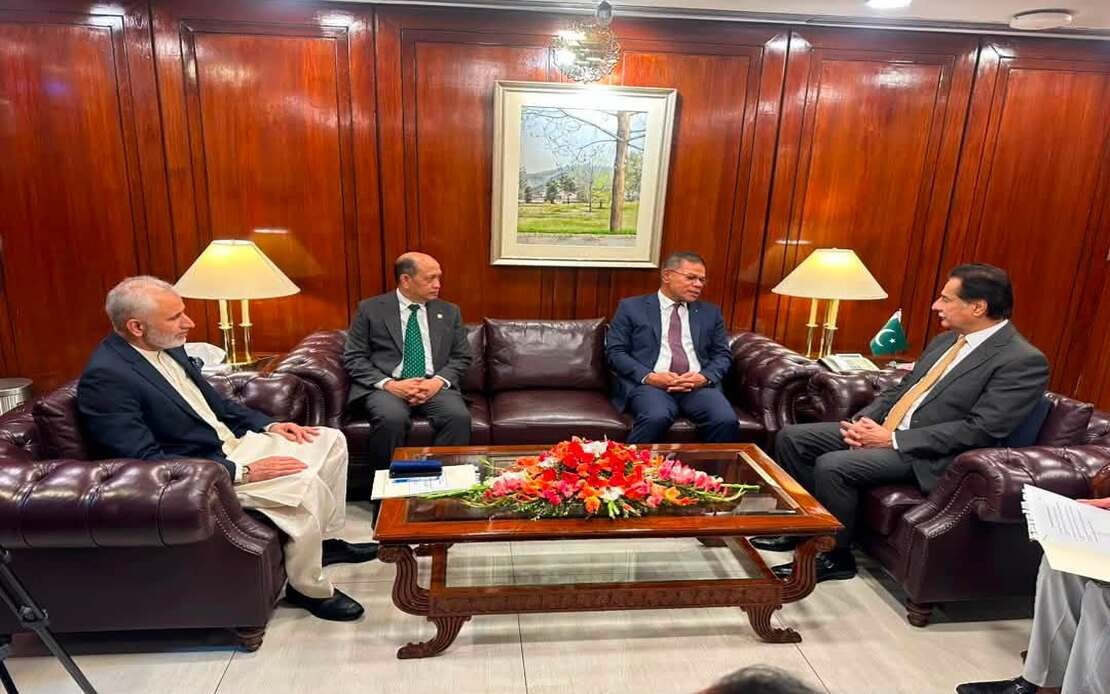
Malaysia and Pakistan have reaffirmed their commitment to peaceful resolution of regional disputes through dialogue and constructive diplomacy, according to discussions held during Home Minister Datuk Seri Saifuddin Nasution Ismail's official visit to Islamabad. The emphasis on multilateral engagement reflects both nations' conviction that collaborative approaches remain essential for managing the complex security environment facing South and Southeast Asia in an increasingly multipolar world.
During the second day of his Islamabad visit, Saifuddin Nasution met with Sardar Ayaz Sadiq, Speaker of Pakistan's National Assembly, and paid a courtesy call on Syed Yousaf Raza Gilan, chairman of the Pakistani Senate. These high-level parliamentary engagements underscored the importance both governments place on institutional dialogue as a mechanism for advancing mutual interests and understanding. The meetings allowed senior legislators from both countries to examine shared concerns and identify areas where cooperation might deepen, particularly on matters affecting regional security and development.
The Home Minister highlighted Malaysia's track record in utilizing ASEAN mechanisms to promote peace and stability across Southeast Asia, offering Pakistani counterparts insights into how multilateral forums can facilitate consensus-building on contentious issues. This exchange of experiences carries particular relevance for Pakistan, which faces its own set of complex regional dynamics involving multiple stakeholders with divergent interests. By showcasing how ASEAN's emphasis on dialogue and non-interference has enabled ten diverse nations to maintain relative harmony, Malaysia's approach provides a model worth examining for other regions grappling with similar challenges.
Bilateral relations between the two nations rest on foundations of historical connection, shared Islamic heritage, and people-to-people ties that span decades. Saifuddin Nasution emphasized that these relationships, built on trust and mutual respect, create space for candid discussions on pressing international questions. The personal bonds between Malaysian and Pakistani citizens—ranging from business networks to academic exchanges and cultural associations—provide organic channels through which diplomatic efforts can be reinforced at grassroots levels, strengthening the resilience of formal state relationships.
A significant portion of the discussions focused on expanding cooperation between parliamentary institutions from both countries. Recognizing that legislatures serve as vital forums for reflecting public opinion and debating policy directions, both sides explored how to intensify exchanges between their respective parliamentary bodies. Such parliamentary diplomacy offers distinct advantages over conventional diplomatic channels, as elected representatives bring constituents' perspectives into international negotiations and can build broader societal support for bilateral initiatives. Malaysia and Pakistan identified potential areas for legislative collaboration, including shared experience in regulatory frameworks, economic cooperation, and regional security matters.
Saifuddin Nasution also devoted time to studying Pakistan's parliamentary heritage, visiting the Parliament Museum to examine the historical development of democratic institutions in the country. This research into Pakistan's constitutional evolution and parliamentary framework reflected Malaysia's genuine interest in understanding its partner nation's governance structures and institutional values. Such cultural and institutional familiarity fosters deeper understanding between nations and provides common reference points for discussing governance, representation, and rule of law—themes that resonate across both Muslim-majority democracies.
The timing of this visit carries significance given contemporary regional dynamics. Both nations operate within a geopolitical context characterized by great power competition, regional proxy conflicts, terrorism concerns, and economic interdependencies that create both opportunities and vulnerabilities. Pakistan's strategic location at the crossroads of South Asia, Central Asia, and the Middle East, combined with Malaysia's position as a major Southeast Asian economy with significant international influence, means that cooperation between them extends beyond bilateral dimensions to affect regional and global stability. High-level engagement at this moment signals both nations' determination to maintain voice and agency in shaping their respective regions' futures.
Economic dimensions of Malaysia-Pakistan relations also warrant attention, though not extensively detailed in these particular discussions. Trade flows between the nations, investment patterns, and potential collaboration in sectors ranging from manufacturing to financial services represent concrete areas where deepened ties generate tangible benefits for both peoples. Parliamentary exchanges can facilitate understanding of regulatory environments and help remove barriers to commercial interaction, thereby translating diplomatic goodwill into economic outcomes.
The emphasis on dialogue and peaceful solutions reflected in these meetings stands in contrast to more confrontational or militaristic approaches to regional challenges. Both Malaysia and Pakistan have experienced terrorism and security threats, yet both have generally favored counter-terrorism strategies emphasizing intelligence, law enforcement cooperation, and addressing root causes of radicalization. This shared perspective on security challenges creates natural grounds for collaboration on counterterrorism training, intelligence-sharing protocols, and development initiatives aimed at preventing extremism recruitment.
Looking ahead, these exchanges will likely yield concrete outcomes in the form of increased parliamentary delegations, working groups examining specific cooperation areas, and deeper institutional linkages. Such mechanisms transform high-level political visits from ceremonial occasions into catalysts for sustained, structured engagement. For Malaysia's Home Ministry, engagement with Pakistan's parliamentary leadership reflects recognition that security and stability increasingly depend on international cooperation and sustained diplomatic attention rather than unilateral action.
The visit also symbolizes both nations' commitment to maintaining vibrant bilateral relationships despite the gravitational pull of larger regional powers. In an era where smaller and medium-sized nations sometimes find themselves pressured to choose sides in great power competitions, Malaysia and Pakistan's continued emphasis on independent, dialogue-based foreign policies reflects principled adherence to multilateralism and non-alignment traditions central to their post-independence trajectories. This approach preserves their ability to pursue national interests while contributing to broader regional and international stability.

