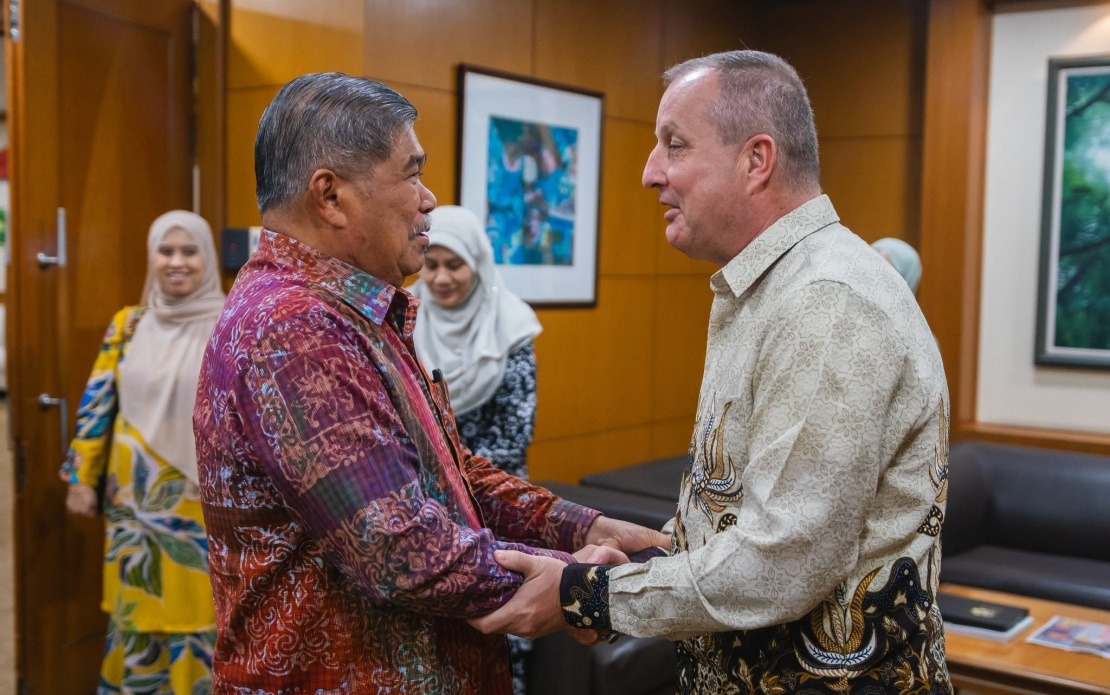
Malaysia and Hungary are moving to deepen their agricultural partnership, with both nations prioritising food security and knowledge-sharing in the sector. Agriculture and Food Security Minister Datuk Seri Mohamad Sabu outlined the expanding collaboration during a meeting with Hungarian Ambassador to Malaysia Dr. Sándor Sipos this week, signalling Kuala Lumpur's commitment to broadening ties beyond traditional political and economic channels into specialist agricultural domains.
The bilateral relationship is taking concrete form through Hungary's participation in the Malaysian Agriculture, Horticulture and Agrotourism Exhibition (MAHA) 2026, a flagship annual event that draws agribusiness professionals, researchers, and entrepreneurs from across the region. This involvement positions Hungary as an active contributor to Malaysia's agricultural marketplace and demonstrates confidence in the growth potential of the agri-food sector within Southeast Asia. For Malaysian stakeholders, the Hungarian presence promises access to European farming innovations and practices that could be adapted to tropical and subtropical growing conditions.
A cornerstone of the bilateral agenda centres on the inaugural Malaysia-Hungary Joint Working Group (JWG) meeting, which provides a structured platform for coordinating policy, resolving trade barriers, and identifying joint investment opportunities. Such working groups typically establish regular dialogue cycles and create accountability mechanisms, ensuring that cooperation moves beyond symbolic gestures toward sustained institutional engagement. For Malaysia, this formalisation strengthens the foundation for negotiations on specific agricultural products and production standards.
The scientific dimension of the partnership reflects both countries' recognition that agricultural competitiveness increasingly depends on research capacity and technological innovation. The Malaysian Agricultural Research and Development Institute (MARDI) and Hungary's University of Agriculture and Life Sciences (MATE) have initiated collaborative research programmes under the Erasmus+ Researcher exchange scheme, facilitating academic mobility and joint investigations. These exchanges enable Malaysian scientists to access European expertise in genetics, crop breeding, and animal husbandry while offering Hungarian researchers insights into tropical agriculture and emerging Southeast Asian market dynamics.
Genetics and breeding technology represent particularly strategic focus areas for cooperation. Malaysia's agribusiness sector, facing pressure to boost productivity on limited arable land while adapting to climate variability, stands to benefit from advanced breeding techniques that have been refined in European contexts. Similarly, the development of high-quality livestock products through selective breeding aligns with Malaysia's ambitions to strengthen domestic animal agriculture and reduce import dependency for meat and dairy. Hungary's experience in these domains—built on decades of agricultural research in temperate zones—provides a practical reference point for Malaysian researchers seeking to enhance output and product standards.
The exchange of expertise and technology carries particular relevance for Malaysian farmers and agribusiness entrepreneurs, many of whom operate in a competitive regional landscape marked by varying regulatory standards and production practices. By facilitating dialogue between Malaysian agricultural producers and Hungarian counterparts, the partnership creates networks that transcend formal government-to-government channels. Breeders in Malaysia can learn about performance-tested livestock strains; researchers can access peer-reviewed publications and methodologies; agri-food entrepreneurs can explore joint ventures, franchise opportunities, or supply chain partnerships that leverage complementary strengths.
Food security concerns resonate acutely across Southeast Asia, where population growth, climate change, and urbanisation continue to reshape agricultural landscapes and consumption patterns. Malaysia's reliance on food imports—particularly for grains, animal feed, and certain protein sources—underscores the strategic importance of strengthening domestic production capacity and diversifying supply chains. Cooperation with Hungary, a nation with established agricultural productivity and export capabilities, diversifies Malaysia's knowledge partnerships beyond traditional trading partners and signals openness to learning from peers in different geographic and climatic contexts.
Hungary's perspective on this partnership reflects its own strategic interests in expanding presence and influence in Asia. As a European Union member state, Hungary brings EU agricultural standards, best practices, and regulatory frameworks to discussions with Malaysia. This exposure allows Malaysian policymakers to benchmark their own standards against international norms and consider gradual alignment where beneficial to trade. For Hungarian firms, Malaysia represents a gateway to Southeast Asian markets with growing demand for quality agricultural products, inputs, and agribusiness services.
The bilateral cooperation signals broader shifts in Malaysia's agricultural diplomacy. Rather than concentrating partnerships within ASEAN or limiting engagement to major trading partners, Malaysia is cultivating diversified relationships that reflect sectoral specialisation. Hungary's strengths in value-added agricultural production, research intensity, and food processing innovation complement Malaysia's interests in upgrading its own agribusiness ecosystem. This approach acknowledges that food security and agricultural competitiveness are not purely national concerns but benefit from international collaboration and the pooling of technical knowledge.
Moving forward, the sustainability of this partnership will depend on translating statements of intent into tangible outcomes: successfully completed research projects with publishable results, field-tested innovations adopted by Malaysian farmers, measurable increases in bilateral agricultural trade, and documented examples of technology transfer or joint ventures. The involvement of MARDI and MATE suggests institutional commitment, while the Erasmus+ framework provides financial and logistical support for exchange activities. Over time, these mechanisms should produce a generation of Malaysian and Hungarian agricultural professionals with direct experience of each other's farming systems, research priorities, and business practices—relationships that often prove more durable and productive than top-level diplomatic declarations.
For Malaysian readers and policymakers, this partnership reinforces the message that national food security is strengthened not through isolation but through engagement with proven centres of agricultural expertise. Hungary's track record in agricultural research, breeding, and production offers Malaysia practical lessons applicable to its own climate and socioeconomic context, while positioning Malaysian agriculture within a broader international network of innovation and knowledge exchange.

