Malaysia and the European Union have made substantial progress on their proposed free trade agreement, completing five negotiating chapters as both sides work toward sealing the deal by 2027. The momentum reflects growing economic interdependence between the Southeast Asian nation and the bloc, particularly in advanced manufacturing and green technology sectors that are reshaping regional trade patterns.
The fourth round of negotiations, conducted in Kuala Lumpur from June 8 to 12, concluded three additional chapters covering Customs and Trade Facilitation, Trade Remedies, and Good Regulatory Practices, according to Deputy Minister of Investment, Trade and Industry Sim Tze Tzin. Earlier rounds had already locked in agreements on transparency provisions and support for small and medium enterprises, establishing a foundation for deeper commercial integration. The negotiating teams will reconvene on September 21 to 25 in Brussels to continue discussions on remaining technical matters.
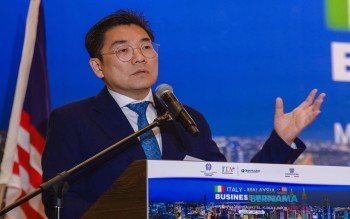
Sim described the Malaysia-European Union Free Trade Agreement (MEUFTA) as transformative for Malaysian business, characterising it as an instrument that would anchor the country more firmly within the EU's economic sphere while opening doors to high-value sectors including advanced services, renewable energy infrastructure, and digital commerce. The deputy minister made these remarks during an Italy-Malaysia Business Mission in Kuala Lumpur, an event flowing from Prime Minister Datuk Seri Anwar Ibrahim's state visit to Italy the previous year at the invitation of Italian counterpart Giorgia Meloni.
Bilateral commerce between Malaysia and Italy underscores the potential unlocked by deeper trade liberalisation. Malaysian-Italian trade volumes surged 14.2 per cent year-on-year to approximately RM17 billion in 2025, positioning Italy as Malaysia's fifth-largest European trading partner. The growth was anchored by rising Malaysian exports, which climbed 12.7 per cent to RM7.6 billion, driven predominantly by palm oil derivatives, metals, electrical machinery, and manufacturing components that reflect Malaysia's established competitive advantages in resource-based and labour-intensive value chains.
Italian imports to Malaysia, conversely, concentrate on sophisticated industrial goods: precision machinery, optical equipment, chemicals, and advanced electronics. This complementary trade structure reveals how Malaysia and Italy occupy different tiers of manufacturing sophistication, a dynamic the proposed free trade agreement could deepen. Over 80 Italian manufacturing ventures valued at US$442 million have taken root in Malaysia across food processing, chemicals, aerospace components, and machinery sectors, illustrating how institutional frameworks and investment incentives already facilitate cross-border commercial activity.
Sim highlighted Malaysia's comprehensive industrial ecosystem as a magnet for European investors seeking to establish regional production hubs. Italian manufacturers particularly value Malaysia's mature supply chains, established logistics networks, and proximity to Southeast Asian consumer markets. The deputy minister noted that machinery manufacturing represents a sector where both nations possess genuine competitive strength, suggesting that reduced tariff barriers and harmonised standards could catalyse joint ventures and specialised production arrangements serving wider Asian markets.
The Malaysian government's commitment to semiconductors and advanced manufacturing reflects its determination to escape dependence on commodity exports and lower-value processing. The New Investment Incentive Framework, implemented in March, extends tax breaks for front-end semiconductor activities, integrated circuit design, and advanced manufacturing operations. Sim stressed that these incentives apply equally to domestic and foreign investors, positioning Malaysia as a jurisdiction serious about upgrading its industrial base rather than merely courting foreign capital.
The MEUFTA negotiations occur against a backdrop of intensifying great-power competition for influence in Southeast Asia. The EU, seeking to balance China's economic dominance in the region, views trade agreements as instruments for deepening ties and anchoring regional partners within a liberal trade system. Malaysia, pursuing a doctrine of strategic hedging, benefits from negotiating with multiple blocs simultaneously, securing preferential market access while maintaining flexibility in geopolitical alignment.
Completion by 2027 would position Malaysia ahead of other Southeast Asian nations in securing preferential access to the EU market, potentially conferring competitive advantages in sectors where Malaysian exporters currently face tariff barriers. The automotive, electronics, and processed food industries stand to gain substantially from reduced duty rates and simplified customs procedures. European firms, meanwhile, gain assured access to Malaysia's 34-million-strong consumer base and its role as a gateway to broader ASEAN markets numbering over 650 million people.
The agreement also carries significance for Malaysia's participation in global value chains centred on sustainability. EU regulations on carbon accounting, deforestation-linked commodities, and circular economy principles increasingly determine market access for developing-economy suppliers. A formalised trade relationship could provide Malaysian exporters clarity on these standards while creating opportunities for certification and compliance assistance, sectors where European expertise commands premium pricing.
Sim's emphasis on treating domestic and foreign investors equally suggests Malaysia recognises that sustainable industrial upgrading requires nurturing local entrepreneurship alongside foreign direct investment attraction. Malaysian companies must develop capabilities in design, research, and brand creation rather than merely hosting assembly operations. Trade agreements that harmonise intellectual property protections and facilitate technology transfer can accelerate this transition, though political economy obstacles—including rent-seeking by incumbent industrialists—remain formidable.
The timing of MEUFTA negotiations coincides with broader Malaysian efforts to diversify economic partnerships and reduce concentration risk. Existing trade relationships with China, Japan, and ASEAN partners are already substantial; EU engagement adds ballast and insurance against supply chain disruptions originating in major manufacturing hubs. For European counterparts, Malaysia represents a stable, strategically positioned economy with proven commitment to rules-based trade and relatively investor-friendly governance structures.
As negotiations advance toward 2027, both sides face pressure to resolve contentious issues likely to emerge in subsequent rounds. Agricultural support mechanisms, environmental standards, and rules of origin will test political resolve, particularly if elections intervene in either jurisdiction. Successfully navigating these hurdles would demonstrate that developed and developing economies can negotiate mutually beneficial frameworks even as global trade becomes increasingly fractious and weaponised.

