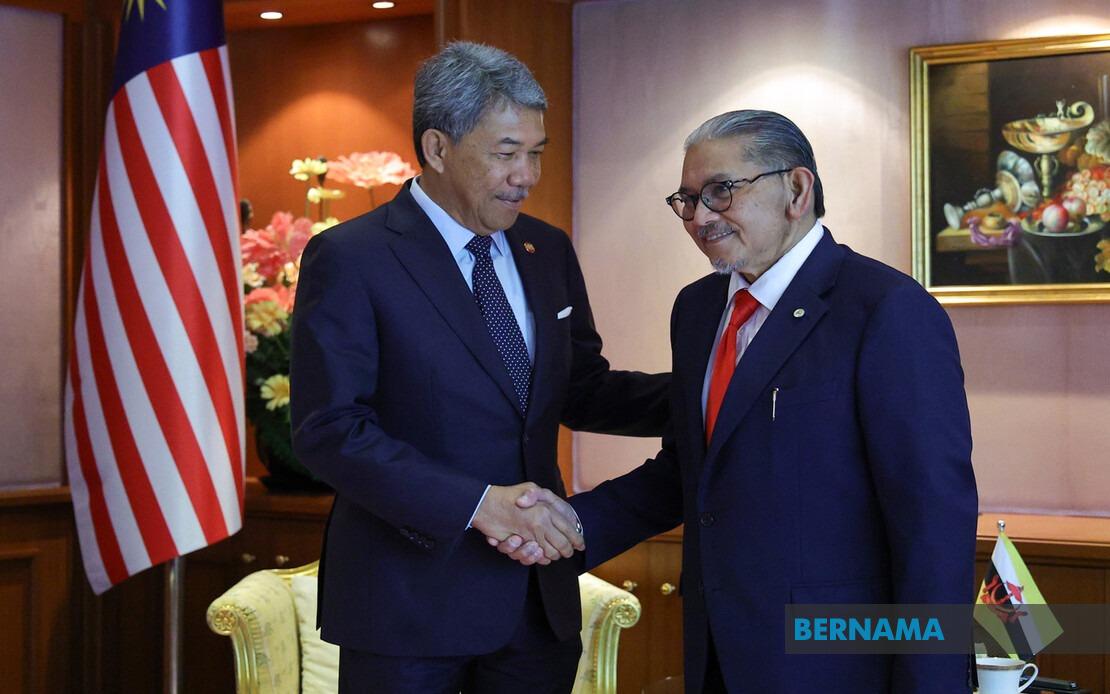
Malaysia and Brunei have taken a fresh step toward consolidating their longstanding partnership, with foreign minister Datuk Seri Mohamad Hasan reporting substantial headway on border issues and regional mechanisms following the 27th Meeting on the Implementation of the Exchange of Letters held in Bandar Seri Begawan. The high-level gathering, co-chaired by Mohamad and Brunei Second Minister of Foreign Affairs Datuk Seri Setia Erywan Mohd Yusof, underscores both nations' commitment to addressing practical bilateral challenges that have persisted despite their historical ties and geographic proximity.
The two countries have now completed approximately half of the land boundary demarcation work, a milestone that reflects years of technical coordination and diplomatic effort between capitals. Rather than simply recognising existing boundaries on paper, Malaysia and Brunei have opted for formal demarcation—a more rigorous process that accounts for the complexities of ground-level geography, settlement patterns, and environmental factors that may have shifted or been overlooked during earlier border agreements. This methodical approach, while lengthier than mere acknowledgment, ultimately reduces future ambiguity and potential disputes, providing both governments and their border communities with legal clarity.
The demarcation process is being executed according to the 2009 Terms of Reference, a foundational document that establishes the technical and procedural framework for how the two nations approach this sensitive issue. Mohamad emphasised that the work will proceed in strict adherence to this agreed protocol, with a designated technical committee on the ground responsible for gathering field data, consulting maps, and submitting detailed reports for final validation. This institutionalised mechanism ensures that demarcation remains depoliticised and grounded in objective geographical assessment rather than shifting political pressures.
Beyond land boundaries, the two countries examined their maritime border arrangements, a topic of growing importance for Southeast Asian nations as maritime commerce and resource management become increasingly contentious. The specifics of what was discussed regarding maritime boundaries were not detailed, but such conversations typically involve fisheries management, potential maritime claims, and navigational rights—matters that affect both commercial operators and ordinary citizens on both sides of the border. The inclusion of maritime issues in the bilateral agenda reflects a comprehensive approach to defining the complete territorial relationship between Malaysia and Brunei.
A significant new dimension to the partnership emerged with the agreement to establish a formal Search and Rescue mechanism and to formalise it through a memorandum of understanding. This SAR agreement carries practical implications for maritime safety in waters between the two nations and for coordinated responses to emergencies involving vessels or personnel from either country. The establishment of such protocols, while appearing routine to outsiders, represents a mature institutional arrangement that facilitates rapid, coordinated response during genuine crises without requiring protracted diplomatic negotiation at the moment of emergency.
The two nations also set their sights on facilitating people-to-people movement among Brunei, Sarawak, and Sabah—a tripartite arrangement that acknowledges the shared cultural, familial, and commercial networks spanning these territories. For residents in these border regions, practical improvements to movement—whether through streamlined visa processes, simplified documentation, or designated crossing points—carry significant everyday implications. Communities separated by border lines often have relatives, business interests, and historical connections on both sides, so facilitating legitimate movement strengthens social cohesion and economic opportunity for borderland populations.
From a broader Southeast Asian perspective, the Malaysia-Brunei partnership model offers lessons in how neighbouring nations can pragmatically address boundary questions without allowing them to fester into diplomatic crises. Both countries have avoided the inflammatory rhetoric or military posturing that sometimes characterises border disputes in the region. Instead, they have invested in technical committees, formal protocols, and incremental progress—an approach that, while less dramatic, tends to produce durable outcomes. The completion of half the demarcation work suggests this measured strategy is yielding results.
For Malaysia specifically, the consolidation of ties with Brunei holds strategic value beyond the bilateral relationship itself. Brunei, though small, sits in a pivotal location along major maritime trade routes and shares the island of Borneo with Sarawak and Sabah. Clear, formalised boundaries and robust cooperation mechanisms reduce friction that could otherwise metastasise into broader regional tensions. Additionally, the facilitation of movement among the three Bornean territories could stimulate economic activity and tourism, benefiting all parties involved.
The search and rescue agreement also positions both nations as responsible maritime actors capable of coordinating during humanitarian emergencies. In an era when regional security concerns sometimes dominate headlines, demonstrating functional cooperation on non-military matters reinforces the notion that ASEAN neighbours can work together constructively. Such tangible cooperation, repeated across multiple bilateral relationships, builds the kind of institutional trust that serves as a buffer against misunderstanding or miscalculation during tenser geopolitical moments.
The timeline for completing the remaining fifty per cent of boundary demarcation was not specified, suggesting the work will proceed methodically rather than under artificial deadline pressure. This unhurried approach is appropriate for tasks requiring precision and community consultation in remote border areas. Mohamad's public discussion of progress, meanwhile, serves to inform both the Malaysian and Brunei publics that their governments are actively managing sensitive border questions in their interests, reducing space for misinformation or unwarranted concern among border communities.

