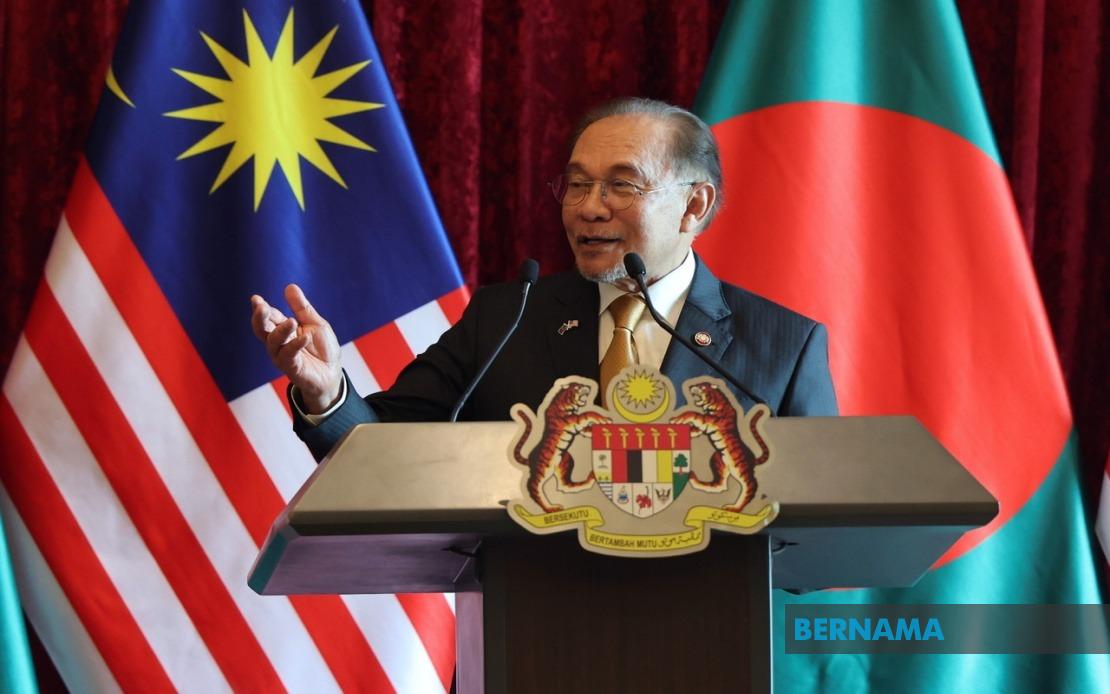
Prime Minister Datuk Seri Anwar Ibrahim and visiting Bangladesh Prime Minister Tarique Rahman have signalled a renewed push to activate institutional mechanisms that have languished between the two countries, underscoring both nations' desire to deepen political and economic ties. The commitment, articulated during Tarique's two-day official visit to Putrajaya, centres on restarting the Joint Commission Meeting and formal bilateral consultations that have remained suspended for an extended period. This revival represents a tangible effort to regularize high-level diplomatic engagement and create structured channels for addressing matters of shared concern.
The resumption of these dormant forums holds significance for Malaysia's relationship with a crucial South Asian neighbour. Bangladesh, home to one of the largest diaspora communities in Malaysia, represents both a labour supply source and an important regional partner in an era of evolving geopolitical dynamics across Asia. The emphasis placed on revitalizing these institutional structures reflects recognition that bilateral relationships require consistent, formalized dialogue to remain productive and responsive to changing circumstances.
Beyond the political symbolism of restarting meetings, both leaders acknowledged the critical role that regular exchanges—from ministerial visits to working-level consultations—have played in facilitating cooperation across multiple sectors. Labour mobility emerged as a particularly prominent topic during discussions, reflecting the practical importance of Bangladeshi workers to Malaysia's economy. The joint statement explicitly recognized how the expatriate community contributes not merely as a labour force but as a bridge fostering people-to-people connections and economic interdependence between the nations.
The treatment of worker migration issues reveals the nuanced approach both governments are adopting. While Bangladesh has advanced proposals regarding recruitment expansion, Malaysia has clarified that its current immigration policy requires strict, case-by-case evaluation of foreign worker quotas. This measured stance reflects Malaysia's desire to calibrate labour intake according to verified employer needs and sectoral capacity constraints rather than accommodate blanket increases. The position underscores how even close bilateral partners must balance labour demand with domestic labour market considerations and social cohesion objectives.
Tranparency and fairness in recruitment processes feature prominently in the bilateral consensus. Both nations have committed to ensuring that any approved worker quotas operate through transparent, non-discriminatory mechanisms utilizing only credible recruitment agencies. This emphasis on procedural integrity addresses longstanding concerns about exploitation and irregular migration that have occasionally strained Malaysia-Bangladesh relations. By grounding labour migration in explicit quality standards, both governments signal an intention to prevent the reputational damage and human rights concerns that can arise from unregulated or opaque recruitment practices.
A newly established Joint Working Group represents the institutional mechanism through which these commitments will be operationalized. Tasked with evaluating the existing Memorandum of Understanding governing labour migration, this working group will undertake the more substantial work of drafting an updated agreement reflecting contemporary realities. The decision to modernize the MoU is significant, as bilateral labour frameworks can become outdated as economies evolve, new sectors emerge, and both countries' migration policies shift. An updated agreement can address evolving challenges in worker protection, skills requirements, and quota administration that the original framework may not adequately cover.
For Malaysia, maintaining a stable and productive relationship with Bangladesh carries strategic weight beyond bilateral considerations. The two nations share interests in regional stability, maritime security, and economic cooperation within ASEAN and broader Asian frameworks. Bangladesh's growing economic importance and its role in regional supply chains mean that strengthening bilateral mechanisms serves Malaysia's wider economic and diplomatic interests. The renewal of formal dialogue platforms thus serves purposes extending beyond labour migration into broader strategic coordination.
The timing of this diplomatic renewal also reflects recognition that bilateral relationships require periodic recalibration. Extended dormancy in formal mechanisms can lead to miscommunication, delayed resolution of practical issues, and diminished coordination on matters requiring inter-governmental attention. By deliberately restarting these channels, both governments are signalling commitment to preventing institutional decay and ensuring that the relationship remains dynamic rather than drifting into neglect.
For Malaysian employers and workers alike, the outcomes of the Joint Working Group's negotiations carry tangible implications. A modernized labour agreement could clarify pathways for skills-based recruitment, address worker welfare protections more comprehensively, and establish clearer processes for resolving disputes between employers and migrant workers. These improvements benefit Malaysian enterprises seeking reliable recruitment channels while simultaneously protecting Bangladeshi workers from exploitation and establishing benchmarks for ethical labour practices.
The emphasis on people-to-people connectivity reflects understanding that bilateral relations extend beyond governmental interactions. Bangladeshi workers in Malaysia, numbering in the hundreds of thousands across construction, manufacturing, domestic service, and other sectors, represent a tangible human dimension to the relationship. Their integration, welfare, and remittance contributions to Bangladesh's economy create genuine interdependence between populations that government policies must acknowledge and facilitate.
Looking forward, the success of these bilateral mechanisms depends on consistent implementation and genuine commitment to regular engagement. Institutional revival serves little purpose if meetings convene infrequently or produce recommendations lacking follow-through. Both governments must demonstrate that the reactivated platforms represent substantive forums for problem-solving rather than merely ceremonial gatherings. The establishment of the Joint Working Group with a specific mandate to update labour frameworks provides a concrete deliverable against which progress can be measured.
Regionally, Malaysia's renewed engagement with Bangladesh also signals broader diplomatic attentiveness to South Asian partnerships. As Asian geopolitics grow more complex, with competing powers seeking influence across the region, bilateral relationships between ASEAN and South Asian nations warrant active cultivation. Malaysia's deliberate effort to strengthen institutional ties with Bangladesh contributes to broader regional stability and demonstrates commitment to relationships based on institutional depth rather than episodic high-level visits alone.