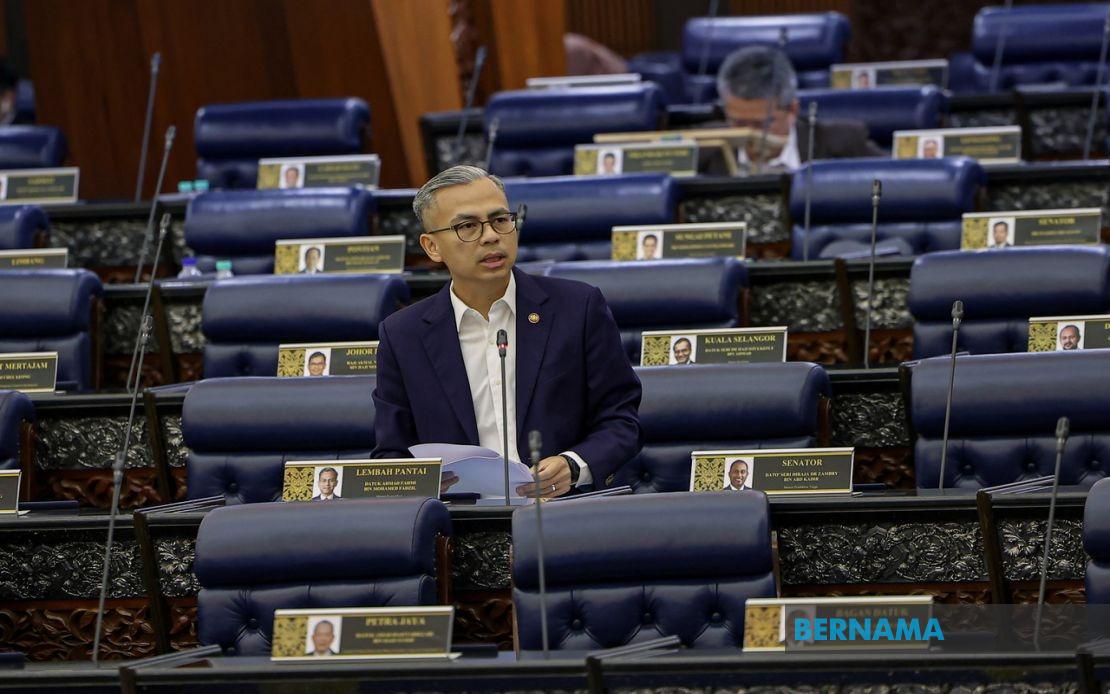
Malaysia's government has moved to fortify its telecommunications regulatory framework by introducing the Communications and Multimedia (Amendment) Bill 2026, which was tabled for first reading in the Dewan Rakyat on July 13. Communications Minister Datuk Seri Fahmi Fadzil presented the legislation with plans for second reading during the current parliamentary session, signalling the administration's commitment to modernising how the nation approaches universal service obligations in an increasingly complex communications landscape.
The amendment targets Section 202 of the Communications and Multimedia Act 1998, introducing two new subsections that would grant the Communications Minister expanded authority over universal service provision strategies. Specifically, the new subsections 202(1A) and 202(1B) would enable the Minister to direct the Malaysian Communications and Multimedia Commission (MCMC) to support and implement universal service initiatives centred on network and application services where national security interests are identified. This represents a significant shift in how universal service—traditionally focused on ensuring affordable, equitable access to telecommunications—is conceptualised within Malaysian regulatory doctrine.
The strategic dimension of this amendment becomes apparent when examining its national security clause. The Bill grants authority to the National Security Council, acting under the National Security Council Act 2016, to determine which universal service initiatives qualify as necessary for protecting national security. This delegation of authority to the NSC rather than the MCMC alone indicates that future telecommunications decisions will be filtered through a security-first lens, reflecting broader global trends of governments integrating security assessments into infrastructure policy. The provision would permit interventions ranging from encouraging installation of network facilities to mandating provision of specific services where deemed critical to national interests.
For Malaysia's technology and telecommunications sectors, this amendment carries substantial implications. The broadening of universal service obligations to encompass security-driven initiatives could affect how operators deploy infrastructure, particularly in geographically challenging areas or regions deemed strategically important. Companies may face directives to prioritise certain facilities or services over commercially optimal decisions, effectively conscripting the private sector into national security objectives. The language permitting both network and application services suggests the framework extends beyond traditional broadband provision into digital platforms and data services, potentially reshaping competitive dynamics in Malaysia's digital economy.
The amendment maintains internal consistency by requiring that any national universal service initiative remain aligned with the broader objects of the Communications and Multimedia Act 1998. This safeguard attempts to prevent the security framework from completely overriding consumer protection, competition, and innovation objectives embedded in existing law. However, the tension between security mandates and market principles remains unresolved—when security and competition priorities conflict, the new provisions appear weighted toward security determinations.
Regulatory capacity presents a practical challenge. The MCMC will require enhanced coordination mechanisms with the National Security Council and potentially other agencies to implement security-informed universal service strategies. The Bill authorises the Minister to establish regulations under Section 16 of the principal Act to govern these initiatives, suggesting detailed implementation rules will emerge through subsidiary legislation. This phased regulatory approach allows flexibility but also creates uncertainty for operators pending clarification of security criteria and implementation expectations.
From a Southeast Asian perspective, Malaysia's amendment reflects regionwide tensions between connectivity expansion and security concerns. Several ASEAN nations have similarly sought to embed security considerations into telecommunications regulation, though approaches vary significantly. Malaysia's explicit linkage of universal service to security objectives distinguishes it from some neighbours and aligns closer to approaches adopted in developed economies managing critical infrastructure. The precedent could influence how other regional governments conceptualise universal service obligations in coming years.
Financially, the government has committed that this amendment will impose no additional expenditure on public finances. This indicates that costs associated with security-driven universal service provision would be borne by telecommunications operators or absorbed within existing MCMC budgets. Whether operators can absorb such costs without service degradation or price increases remains unclear, potentially creating consumer impact downstream that current assessments do not fully address.
The amendment's timing reflects Malaysia's ongoing digital infrastructure modernisation efforts and heightened attention to cybersecurity governance. As the nation pursues 5G deployment, fibre-optic network expansion, and digital economy growth, embedding security considerations into fundamental regulatory frameworks represents an attempt to build protective mechanisms at foundational levels rather than retrofitting them later. This proactive stance acknowledges that modern telecommunications infrastructure carries critical dependency dimensions absent from previous generations of networks.
The legislative pathway forward involves second reading debate during the current parliamentary session, providing opportunity for detailed scrutiny of the security criteria and implementation mechanisms. Opposition and backbench parliamentarians may raise concerns about regulatory scope expansion or potential for executive overreach, while government supporters will likely emphasise necessity given evolving threat landscapes. Public sector agencies beyond the MCMC—including cybersecurity authorities and defence bodies—may also seek clarification on coordination protocols before final implementation.
For multinational telecommunications companies operating in Malaysia, this amendment creates new compliance dimensions requiring deeper integration with Malaysian security governance structures. International operators accustomed to commercially-driven universal service approaches will need to adapt to security-first decision-making frameworks that may differ substantially from their home-country regulatory environments. This adds complexity to business planning in the Malaysian market and could influence investment decisions, particularly for services involving sensitive infrastructure or cross-border data flows.
The amendment ultimately reflects a deliberate policy choice to leverage universal service frameworks as vehicles for embedding security objectives into telecommunications governance. Whether this integration succeeds in enhancing national security without compromising service quality, affordability, or innovation will depend heavily on how security criteria are defined in implementing regulations and how the MCMC and National Security Council coordinate in practice. The coming months will reveal whether parliamentary debate produces meaningful refinements to the proposal or accelerates its passage into law.

