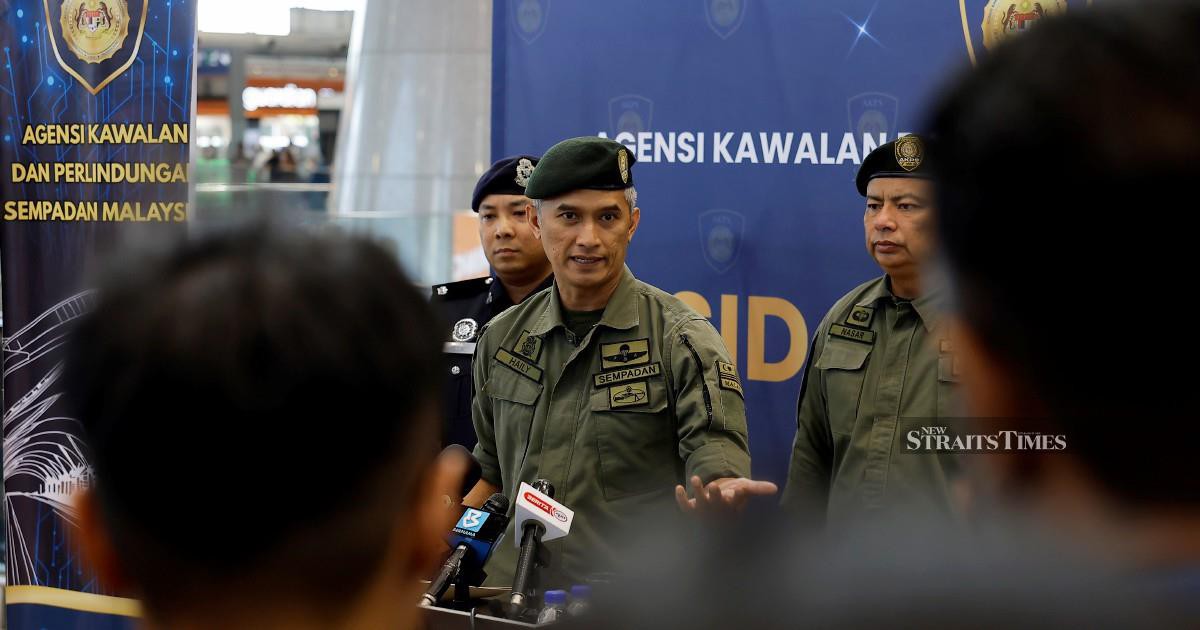
Malaysia's aviation security authority has clarified responsibility over the baggage screening that failed to detect prohibited substances on a Malaysia Airlines pilot arrested with a massive drug haul in Indonesia last week. The pilot's luggage passed through the system without triggering alarms, raising immediate questions about which agency bore accountability for the oversight. Airport authorities have now confirmed that the screening was conducted by AVSEC, the body responsible for aviation security operations, rather than the Malaysia Border Control and Protection Agency (MCBA).
The distinction between these two agencies carries significant implications for understanding how Malaysia's aviation security framework functions at international departure points. While the MCBA handles broader border control responsibilities including immigration and customs duties at ports of entry and exit, AVSEC operates specifically within the aviation sector, managing passenger and baggage screening under protocols established by the International Civil Aviation Organization. The clarification matters because it establishes which authority's procedures and training standards should come under scrutiny regarding the screening failure.
The Malaysia Airlines pilot was apprehended in Indonesia following the discovery of approximately 70,000 ecstasy pills in his possession, marking one of the largest drug seizures involving a commercial aviation employee in recent Southeast Asian history. The incident has sparked broader concern about security vulnerabilities within Malaysia's aviation infrastructure, particularly given that the individual held a valid position of trust within a major carrier. Questions immediately arose about how such a substantial quantity of controlled substances could transit through a major international airport without detection.
The involvement of AVSEC in the screening process places examination of security protocols directly on the organization's standard operating procedures and equipment effectiveness. Aviation security screening systems at major international airports like Kuala Lumpur International Airport typically employ multiple detection layers, including X-ray machines, metal detectors, and physical inspections. The failure to identify the contraband suggests either a procedural breakdown, equipment malfunction, or inadequate inspection depth. Understanding which mechanism failed is crucial for preventing similar incidents.
For Malaysian travelers and the broader aviation industry, this incident raises uncomfortable questions about passenger confidence in security measures. International flights departing Malaysia carry thousands of passengers daily, each relying on the assurance that baggage screening will identify dangerous or prohibited items. When an employee of the airline itself circumvents these systems, public perception of airport security effectiveness suffers significant damage. The reputational implications extend beyond Malaysia Airlines to encompass Malaysia's standing as a reliable aviation hub within Southeast Asia.
The timing of this incident is particularly sensitive given Malaysia's ongoing efforts to strengthen its aviation safety and security reputation following historical incidents that drew international scrutiny. Regional competitors including Singapore, Thailand, and Indonesia have invested heavily in modernizing their airport security infrastructure. Any perception that Malaysia's systems are less rigorous creates competitive disadvantage for Malaysian carriers and could influence international airlines' decisions regarding hub selection and operational bases.
The distinction drawn by aviation authorities between AVSEC and MCBA responsibility also highlights the compartmentalized nature of Malaysia's border security framework. This structure can sometimes create gray areas where responsibility diffuses between agencies, potentially slowing investigative and corrective responses. Coordinating effectively between multiple authorities becomes essential when systemic security failures occur, as clearly establishing which agency bears primary accountability ensures that remedial measures are implemented with appropriate urgency.
The investigation into how the pilot obtained and attempted to transport such substantial quantities of ecstasy across international borders raises additional questions about potential network involvement and whether airline employees may have been systematically exploited by trafficking organizations. The commercial viability of using aviation employees as drug couriers suggests this may not be an isolated incident but rather part of a larger pattern requiring coordinated enforcement responses across multiple countries in the region.
Moving forward, Malaysian aviation authorities will likely face pressure to implement enhanced screening procedures specifically targeting high-risk individuals, including airline employees, while maintaining operational efficiency at busy international airports. The balance between security rigor and passenger facilitation remains perpetually challenging in aviation, but incidents of this magnitude typically trigger comprehensive reviews of existing protocols. Training standards for AVSEC personnel may come under particular scrutiny, given that human factors often prove as significant as technological limitations in security systems.

