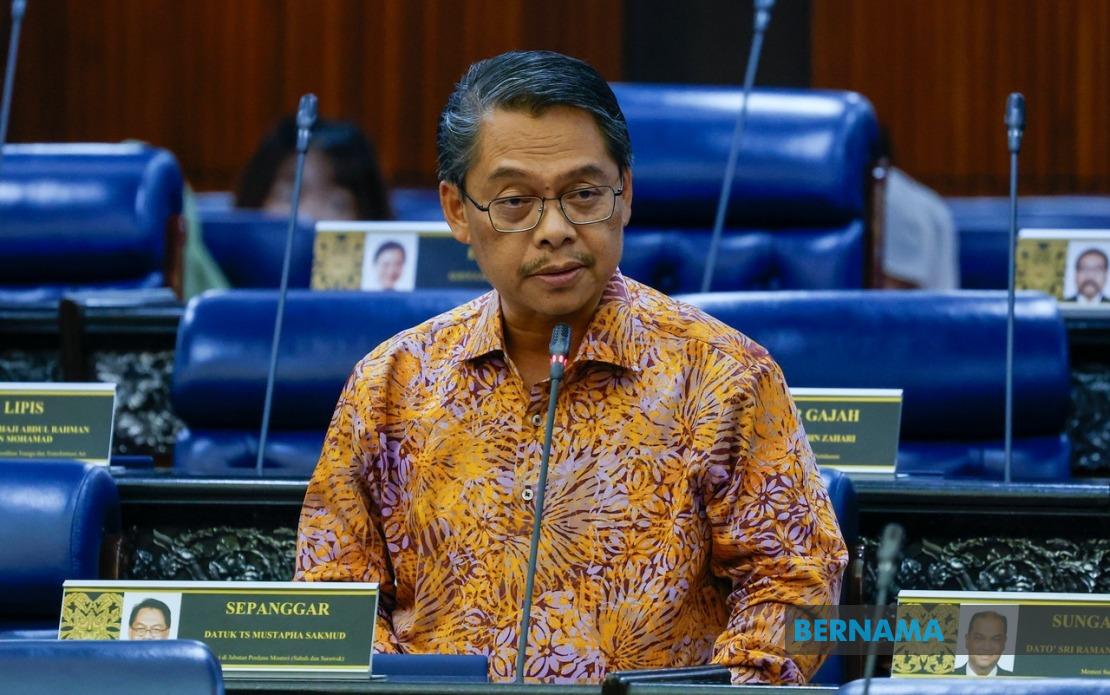
The Malaysia Agreement 1963 negotiations have reached a significant milestone, with 13 matters fully resolved out of the 29 initially tabled for discussion under the official platform, according to Minister in the Prime Minister's Department (Sabah and Sarawak Affairs) Datuk Mustapha Sakmud. Speaking in Parliament during question time on June 25, the minister revealed that progress on the longstanding compact between the Federal Government and the two East Malaysian states continues, albeit at a measured pace that reflects the complexity of federalism and inter-governmental coordination.
Beyond the 13 fully settled matters, Mustapha indicated that an additional five issues have achieved what might be characterised as partial or interim resolution, representing forward momentum on contentious topics that require phased implementation or further technical work. These interim resolutions emerged following a Malaysia Agreement 1963 Technical Committee meeting held on March 2, demonstrating that negotiators are finding middle ground on several fronts even when comprehensive agreement remains elusive. The distinction between "fully resolved" and "interim" categories suggests that while the broad frameworks for these five matters have been agreed, certain implementation details, timelines, or procedural mechanisms still require refinement before they can be considered complete.
Among the four interim matters specifically highlighted by Mustapha are the expansion of state public service positions under Article 112 of the Federal Constitution, a particularly sensitive issue given its implications for employment opportunities in Sabah and Sarawak. Equally significant are unresolved questions concerning health and education—two fundamental services that directly affect the quality of life for East Malaysian citizens and have long been sources of federal-state tension. The Borneonisation of the Federal public service in Sabah and Sarawak, another interim issue, addresses the historical imbalance in representation of Sabah and Sarawak personnel within federal institutions operating in their territories, a concern that has animated regional politics for decades.
The remaining 11 outstanding matters continue to occupy the attention of the Sabah and Sarawak Affairs Division (BHESS), which functions as the secretariat overseeing negotiations and coordination between federal and state governments. The presence of 11 unresolved items underscores that substantial disagreements persist on various matters, ranging from fiscal arrangements to constitutional interpretations. The fact that these are being "closely monitored" suggests that while progress has stalled on certain fronts, the mechanism for addressing them remains active, and stakeholders continue engagement rather than deadlock.
During the parliamentary exchange, member Isnaraissah Munirah Majilis from Warisan (representing Kota Belud) raised the particularly fraught question of parliamentary representation for Sabah and Sarawak, specifically the demand to increase their parliamentary seats to achieve a 35 per cent quota of the Dewan Rakyat. This issue, which has become emblematic of East Malaysian grievances about federal representation, remains unresolved and continues generating political debate. The question of parliamentary seats touches upon fundamental questions of power distribution within the Malaysian federation and whether East Malaysia, which accounts for a significant portion of the nation's territory and resources, possesses adequate representation at the federal level.
Mustapha's response to the parliamentary seats question revealed the procedural and constitutional obstacles that must be overcome before any such expansion can occur. Under the 13th Schedule and Article 113 of the Federal Constitution, any electoral redelineation exercise—the process of redrawing constituency boundaries and altering seat allocations—falls exclusively within the purview of the Election Commission. Critically, such exercises cannot be undertaken arbitrarily; they can only be conducted following the expiration of an eight-year cycle, a mechanism designed to provide electoral stability and prevent partisan manipulation through frequent boundary changes.
Beyond the technical requirement for an eight-year cycle, the parliamentary seats issue confronts an even more formidable barrier: it requires constitutional amendments to the composition of the Dewan Rakyat under Article 46 of the Federal Constitution. This is not a matter that can be resolved through administrative action or parliamentary procedure; it demands a two-thirds majority endorsement from the Dewan Rakyat itself. Such a threshold, while nominally achievable given current parliamentary mathematics, represents a high bar for constitutional change and necessitates broad consensus across political parties. In practice, this requirement means that any expansion of East Malaysian parliamentary representation requires not merely federal government agreement but substantial support from the opposition as well—a condition that complicates negotiations considerably.
The significance of the MA63 negotiations for Malaysia's political economy cannot be overstated. The Malaysia Agreement, which brought Sabah and Sarawak into the federation in 1963, established a constitutional framework that granted the two states certain powers and protections, including matters of education, health, and land. Over the succeeding decades, questions have persistently arisen regarding whether the Federal Government has adequately respected or implemented the terms of the agreement. The current technical committee framework represents an attempt to systematically address accumulated grievances and clarify the precise obligations of both parties.
For Malaysian readers, particularly those in Sabah and Sarawak, the resolution status of these 29 matters carries practical implications for governance, service delivery, and resource allocation. The expansion of state public service positions, for instance, affects employment opportunities for East Malaysians. The health and education issues relate directly to infrastructure development and educational quality. The Borneonisation of the Federal public service influences how federal agencies operate in the region and whether East Malaysians achieve proportionate representation within these institutions. Each resolved matter potentially unlocks implementation frameworks that could enhance regional governance.
Conversely, the outstanding 11 matters and the still-unresolved parliamentary seats question highlight persistent tensions within the Malaysian federation. The fact that negotiations on the Malaysia Agreement have required a formal technical committee framework suggests that goodwill and informal understanding proved insufficient to resolve accumulated disputes. The requirement for a two-thirds majority on parliamentary representation matters, meanwhile, indicates that this particular grievance will remain a source of political contention unless extraordinary consensus emerges.
The paced progress on MA63 matters—13 fully resolved, five interim, 11 outstanding—reflects both the complexity of federal negotiations and the reality that some issues command stronger consensus than others. Technical and administrative matters appear more tractable than those involving constitutional amendment and fundamental power distribution. As negotiations continue, the status of these 29 matters will remain a barometer of federal-state relations and the Federal Government's commitment to honouring the constitutional framework established in 1963.

