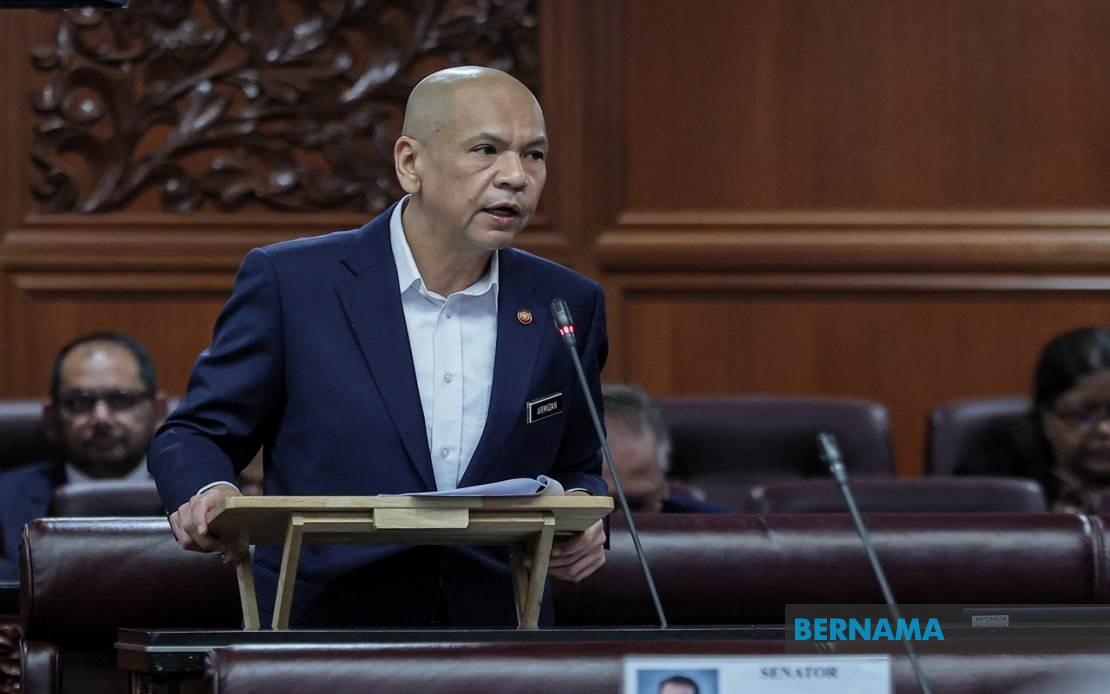
The Malaysian parliament took a significant step toward modernising competition law on June 23 when Minister Datuk Armizan Mohd Ali introduced the Competition (Amendment) Bill 2026 and the Competition Commission (Amendment) Bill 2026 for first reading. Both pieces of legislation, shepherded by the Domestic Trade and Cost of Living Ministry, represent a comprehensive overhaul of the competition regulatory framework that has governed Malaysia's business landscape since 2010. The minister indicated that Parliament would advance both bills to second reading during the current sitting, signalling the government's determination to progress the reform agenda swiftly.
At the core of these amendments lies a fundamental expansion of regulatory scope. The Competition (Amendment) Bill 2026 proposes broadening the reach of the Competition Act 2010 to encompass all economic activities rather than limiting oversight to purely commercial transactions. This shift carries profound implications for Malaysian businesses operating across diverse sectors, as it would bring previously unregulated areas of the economy under Malaysia Competition Commission (MyCC) purview. For enterprises engaged in service provision, professional activities, and other sectors that may have existed in a regulatory grey zone, this expansion signals a new era of heightened scrutiny and compliance obligations.
The bills substantially reinforce the investigative and enforcement machinery of MyCC, recognising that effective competition regulation requires robust tools. Under the proposed amendments, MyCC would gain expanded authority to compel disclosure of information and documentation from any individual or government entity when conducting market reviews. This power proves particularly consequential in an environment where market concentration concerns have periodically surfaced across Malaysian industries. The expanded scope acknowledges that meaningful competition enforcement demands access to comprehensive market data, a reality that enforcement agencies in developed economies have long understood as essential to their mandate.
A notable addition addresses a persistent challenge in competition investigations: the destruction or concealment of evidence. Clause 13 introduces specific criminal penalties for individuals who intentionally destroy, conceal, deface, or alter data or materials with the intent to obstruct MyCC's investigations. This provision reflects international best practice in competition law, where evidence tampering has occasionally hampered enforcement actions. By establishing explicit penalties, Malaysia joins other jurisdictions in making clear that obstruction carries serious consequences, thereby strengthening the integrity of investigative processes.
Beyond enforcement powers, the bills substantially reform MyCC's internal governance and decision-making architecture. The Competition Commission (Amendment) Bill 2026 seeks to clarify MyCC's advisory role in relation to government ministries, public authorities, and regulatory bodies on competition matters spanning policies, programmes, and procedures. This clarification proves important in Malaysia's multi-layered regulatory environment, where various sector regulators exercise significant influence over market conditions. By explicitly defining MyCC's advisory capacity, the legislation facilitates better coordination between competition authorities and sector-specific regulators, a structural improvement that can prevent regulatory conflicts and ensure coherent policy implementation.
Perhaps most significantly for governance, the amendments propose transforming MyCC's personnel appointment process. Currently, appointments of MyCC officers would be made by the commission itself upon recommendation from the chief executive officer, rather than through external appointment mechanisms. This structural change aims to enhance both transparency and accountability in staffing decisions, insulating the commission from potential political interference while maintaining clear internal accountability chains. For Malaysian businesses and civil society, this modification signals an effort to strengthen MyCC's institutional independence, a factor that ultimately affects the perceived fairness of competition enforcement.
The bills also expand MyCC's operational flexibility by authorising the commission to delegate functions and powers to its chairman, committees, officers, and employees. This delegation authority proves practical for an institution managing increasingly complex investigations across multiple economic sectors. By allowing functional devolution, the legislation enables MyCC to respond more nimbly to emerging competition concerns without requiring centralised decision-making at every stage.
The timing of these amendments reflects Malaysia's recognition that competition law must evolve with economic change. Since the Competition Act 2010 took effect, Malaysia's economy has undergone substantial transformation, particularly in digital commerce, e-services, and emerging sectors where traditional competition concerns manifest differently. The amendments represent an acknowledgment that static legislation cannot adequately address dynamic market realities. For multinational corporations operating in Malaysia and regional businesses eyeing expansion into the Malaysian market, these changes signal that competition regulation will become more sophisticated and comprehensive.
The implications extend beyond Malaysia's borders. As the region's third-largest economy and a critical node in ASEAN's economic networks, Malaysia's competition framework influences how companies structure regional operations. Strengthening MyCC positions Malaysia more favourably within the regional regulatory ecosystem, potentially attracting businesses seeking jurisdictions with credible, well-resourced competition authorities. Conversely, businesses previously benefiting from regulatory ambiguity will need to reassess compliance strategies and market behaviour.
For consumer welfare, these amendments carry potentially significant consequences. A more robust competition framework with expanded scope and enhanced enforcement capabilities can theoretically reduce anti-competitive practices that inflate prices or restrict consumer choice. Sectors where competition concerns have persisted, from telecommunications to fast-moving consumer goods, may experience increased scrutiny. However, the amendments' success ultimately depends on MyCC's capacity to implement them effectively and its willingness to deploy expanded powers judiciously.
The bills also reflect Malaysia's commitment to international best practices in competition regulation. Many provisions align with approaches adopted by mature competition authorities in developed economies, suggesting the government's aspiration to position Malaysia's regulatory framework as comparatively sophisticated. This alignment matters for foreign direct investment, as international corporations increasingly consider competition law quality when evaluating market entry decisions.
Looking forward, the passage of these amendments will mark a watershed moment for Malaysian competition law. The bills represent not incremental tweaking but rather fundamental restructuring of the regulatory relationship between the state and private economic actors. Stakeholders across Malaysian business, from large conglomerates to small enterprises, will need to adapt to a more expansive and assertive competition regulatory environment. The parliamentary second reading will likely generate substantive debate about the scope of MyCC's proposed powers and whether the expansion appropriately balances regulatory effectiveness with business certainty.