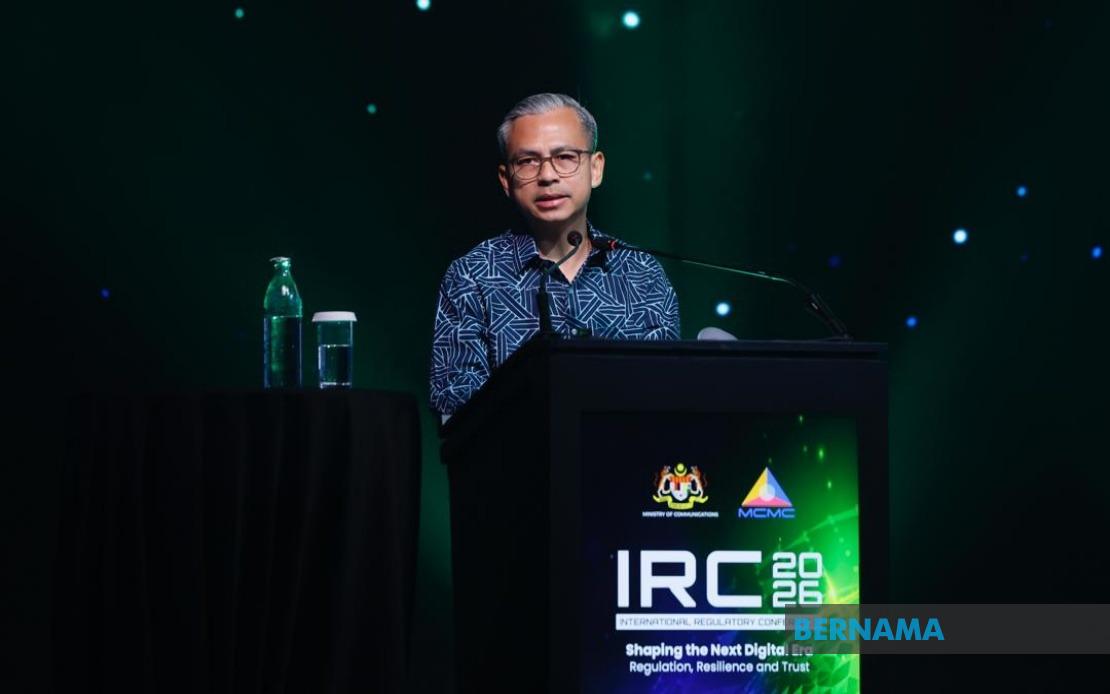
Communications Minister Datuk Seri Fahmi Fadzil has outlined Malaysia's comprehensive approach to fortifying digital governance structures, emphasizing the critical need to balance technological innovation with robust accountability mechanisms. Speaking at the International Regulators Conference 2026 in Kuala Lumpur, Fahmi stressed that as digital technologies become ever more embedded in daily life, the regulatory frameworks governing them must evolve in tandem to maintain public confidence in the systems Malaysians increasingly depend upon.
The minister articulated a fundamental tension defining the modern digital landscape: the pace at which technology advances has substantially outstripped the development of governance frameworks designed to oversee it. This temporal misalignment creates vulnerabilities not merely in security infrastructure but in the social fabric of trust that underpins the broader adoption of digital services. Fahmi posed critical questions that resonate across Southeast Asia, asking whether citizens can genuinely trust the platforms mediating their communications, whether the information they receive through digital channels is reliable, and whether the algorithmic systems shaping their choices operate with sufficient transparency and accountability.
Malaysia's contemporary policy response encompasses several interconnected initiatives that collectively represent a modernized approach to digital stewardship. The National Digital Network Plan, commonly known as Jendela, forms the foundational infrastructure investment, while the nation's 5G deployment program demonstrates commitment to technological advancement. These efforts are complemented by substantial investments in submarine cable infrastructure, positioning Malaysia as a regional digital hub with diverse connectivity pathways. The Online Safety Act 2025 represents a philosophical shift in regulatory approach, moving from reactive intervention following online harms toward preventative frameworks that embed safety considerations within platform design and operation from inception.
ONSA's implementation reflects growing sophistication in how governments conceptualize online safety. Rather than casting responsibility primarily upon individual users to navigate potential dangers, the legislation emphasizes platform accountability, positioning operators as responsible stewards with enforceable obligations to implement protective measures. This approach particularly strengthens safeguards for vulnerable populations, including children and individuals susceptible to targeted harm, establishing clearer expectations for platforms operating within Malaysian jurisdiction and potentially influencing how other Southeast Asian nations structure their own frameworks.
The International Regulators Conference itself functions as a crucial venue for Malaysia to position itself as a thoughtful voice within global digital governance conversations. Now in its third iteration, the IRC emerged from Malaysia's distinctive experience transitioning from a single wholesale 5G network to a dual network model, an arrangement that generated international curiosity about how regulatory frameworks could accommodate competing infrastructure operators while maintaining service quality and innovation incentives. This original context has evolved into something more expansive: a platform where regulators from different national contexts can systematically exchange insights on emerging challenges spanning online safety, data governance, artificial intelligence regulation, quantum communications, and autonomous systems.
For Malaysian policymakers, the comparative learning opportunities presented by IRC discussions hold particular significance. Fahmi emphasized that drawing upon experiences from neighbouring countries and distant regulatory jurisdictions helps identify gaps in domestic legislation and illuminate potential policy adjustments needed to address evolving threats. This acknowledgment reflects a pragmatic recognition that many digital challenges transcend national borders—malicious actors, data flows, platform algorithms, and disinformation campaigns operate across jurisdictional boundaries—and that unilateral regulatory approaches prove insufficient without coordinated international frameworks.
The conference outcomes carry implications extending beyond Malaysia's borders. Discussions and recommendations developed during the two-day event will be formally shared with the International Telecommunication Union, in which Malaysia holds a Council Member position. This institutional channel amplifies Malaysian contributions to global telecommunications policy development and ensures that insights from the Southeast Asian context influence emerging international standards and best practices. The mechanism demonstrates how mid-sized nations can leverage strategic participation in multilateral forums to shape the governance architectures that increasingly constrain and enable digital activities globally.
The regulatory approach articulated by Fahmi emphasizes dynamism and proportionality as guiding principles. Governance frameworks must possess sufficient agility to respond to genuine technological changes and emerging harms without becoming paralyzed by bureaucratic inertia or overthinking every incremental innovation. Simultaneously, regulations must remain proportionate—neither so stringent that they stifle beneficial innovation nor so permissive that they enable harm. This calibration proves particularly challenging in Malaysia's context, where the government seeks to position the country as a regional technology hub competitive with Singapore, Thailand, and Indonesia, while simultaneously addressing legitimate public concerns about data privacy, online misinformation, and platform power.
For Malaysian businesses and technology companies, the strengthening digital governance framework creates both opportunities and constraints. Clear, coherent regulations can provide competitive advantages by establishing predictability and reducing compliance uncertainty, potentially attracting foreign investment and encouraging local innovation. Conversely, evolving regulations require ongoing organizational adaptation and investment in compliance infrastructure. Regional companies must monitor not only Malaysia's framework but also emerging patterns across Southeast Asia, anticipating harmonization pressures as neighboring governments observe Malaysia's regulatory experiments.
The emphasis on child protection and vulnerable community safeguards reflects regional demographic realities. Malaysia's substantial youth population and rapidly expanding internet penetration among younger and less-digitally-literate cohorts make these populations particularly susceptible to exploitation, scams, and manipulative content. By establishing platform accountability for these harms, ONSA and associated initiatives establish precedent that may influence how other Southeast Asian nations conceptualize their responsibilities toward vulnerable digital users.
Looking forward, the success of Malaysia's digital governance framework will depend on rigorous implementation of existing legislation, genuine international cooperation that moves beyond dialogue toward practical harmonization, and sustained commitment to balancing innovation incentives against legitimate safety and accountability requirements. The IRC provides valuable venue for Malaysia to demonstrate sophisticated regulatory thinking, but translating conference discussions into concrete policy outcomes—both domestically and through international coordination—remains the genuine test of Malaysia's ambitions to lead digital governance conversations within the region and beyond.

