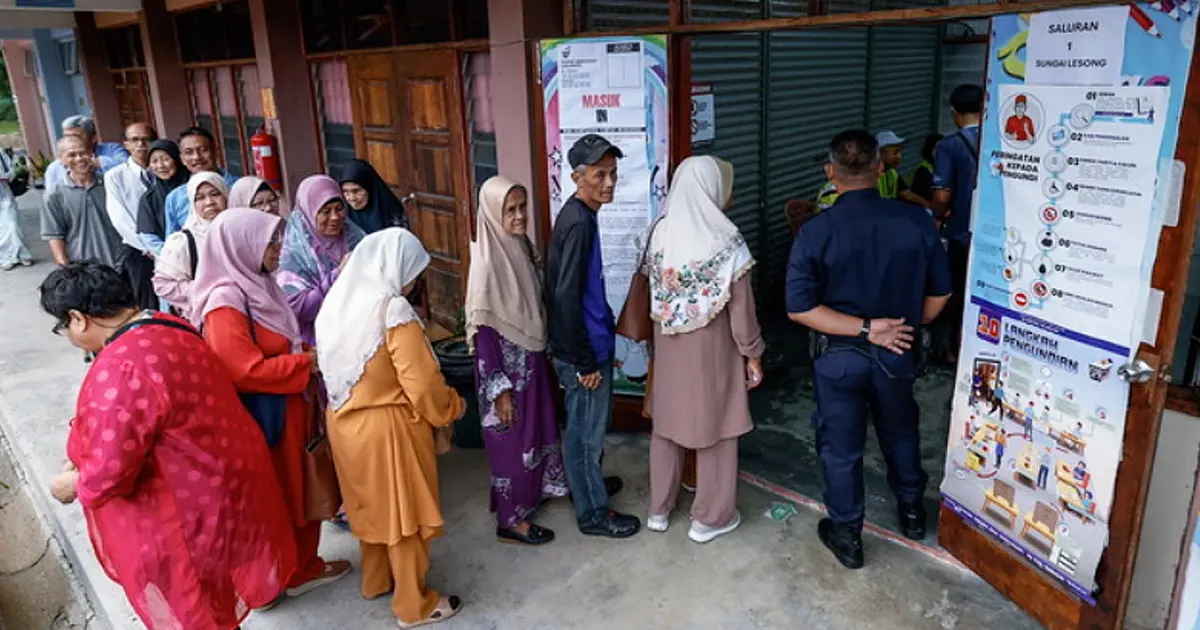
Political discourse surrounding 3R issues threatens to deplete the emotional reserves of Malaysia's Malay electorate, according to Awang Azman Pawi, a scholar at Universiti Malaya, raising concerns that sustained debate on these contentious matters may inadvertently shift voter attention away from bread-and-butter concerns that shape electoral outcomes.
The concept of 'emotional fatigue' in politics—where repeated exposure to divisive or sensitive topics exhausts public engagement—reflects a real phenomenon in Malaysian political behaviour. When voters experience continuous cycles of intense discourse on identity-sensitive issues, they may gradually withdraw from meaningful political participation or develop desensitisation to messaging on these subjects. For Malay voters specifically, who form the largest demographic bloc in the nation and hold considerable sway in electoral calculations, this fatigue could reshape how political parties calibrate their campaign strategies and policy emphases.
Awang Azman's analysis underscores a fundamental principle in electoral politics: voters ultimately judge political parties through the lens of tangible outcomes and their capacity to address everyday challenges. The pathway to electoral success, he suggests, lies not merely in rhetorical flourishes around identity questions but in demonstrable competence in tackling concrete problems that directly affect household welfare. A party's legitimacy and voter trust derive substantially from its track record in delivering solutions, whether reducing inflation, improving access to affordable housing, enhancing public transportation, or controlling essential commodity prices.
The cost of living crisis has emerged as a critical flashpoint for Malaysian households across all demographic segments. Since 2021, inflationary pressures have accumulated through multiple channels—fuel price volatility, food commodity increases, utility rate hikes, and transportation costs. For middle and lower-income Malay households, these pressures translate into monthly budgetary constraints, delayed educational investments, and deferred healthcare spending. When political discourse becomes saturated with polarising identity-based arguments, the political space contracts for substantive discussion of economic remedies that voters actively seek from their leaders.
This dynamic creates a strategic dilemma for political parties seeking to consolidate Malay voter support. While identity-centred messaging resonates with certain constituencies and serves important community-cohesion functions, an over-reliance on such positioning risks alienating voters whose primary electoral concern is securing their family's economic stability. The challenge intensifies when multiple parties simultaneously emphasise identity narratives, collectively raising the temperature of cultural and religious discourse while relatively downplaying economic management as a campaign differentiator.
Malaysia's political landscape has grown increasingly competitive at the grassroots level, with voters demonstrating greater volatility in electoral preferences than in previous cycles. This fluidity suggests that Malay voters are not a monolithic bloc but rather heterogeneous groups with varying priorities depending on their socioeconomic positioning, geographic location, and personal circumstances. Urban Malay professionals, suburban Malay middle-class families, and rural Malay communities experience economic pressures differently and may weight electoral considerations accordingly.
The Malaysian context also reflects broader regional trends where Southeast Asian voters are increasingly pragmatic in their electoral calculations. Across the region, parties that combine credible economic stewardship with cultural or nationalist positioning tend to perform more effectively than those emphasising identity concerns in isolation. This pattern suggests that Malaysian political parties achieving sustained electoral dominance will likely be those capable of balancing cultural resonance with concrete economic delivery.
Awang Azman's intervention arrives at a moment when Malaysia faces persistent economic headwinds. While inflation has moderated from 2022 peaks, core price pressures remain elevated for essential items. Employment remains precarious for certain workforce segments, real wage growth has stagnated relative to cost-of-living increases, and household debt levels constrain consumer spending flexibility. Against this backdrop, political parties' responsiveness to these economic challenges becomes a critical measure by which voters will ultimately assess their fitness for governance.
The problem of emotional fatigue in political discourse extends beyond individual voters to affect broader national conversations. When public attention becomes fragmented across multiple polarising debates simultaneously, the deliberative capacity for substantive policy discussion diminishes. This fragmentation makes it harder for constructive debate about economic reform, social safety-net adequacy, or industrial development strategy—precisely the areas where Malaysia requires robust public discussion to maintain long-term competitiveness.
Looking forward, political strategy for parties seeking to expand their electoral coalition among Malays should prioritise demonstrating concrete economic competence. This approach does not require abandoning identity-based messaging entirely but rather achieving equilibrium between cultural positioning and economic results-oriented communication. Parties that can articulate compelling narratives about creating jobs, managing inflation, improving fiscal prudence, and expanding opportunities for Malay economic advancement will likely find more responsive audiences than those relying predominantly on identity appeals alone.
The analyst's warning ultimately reflects a mature insight into democratic politics: elections are fundamentally mechanisms through which voters hold leaders accountable for their stewardship of collective resources and resolution of shared challenges. Malay voters, like all demographic groups, will eventually judge parties by their capacity to improve living standards and create pathways to prosperity for their families. Political parties that recognise this foundational reality and calibrate their messaging and policy focus accordingly are likely to maintain electoral relevance across successive cycles.