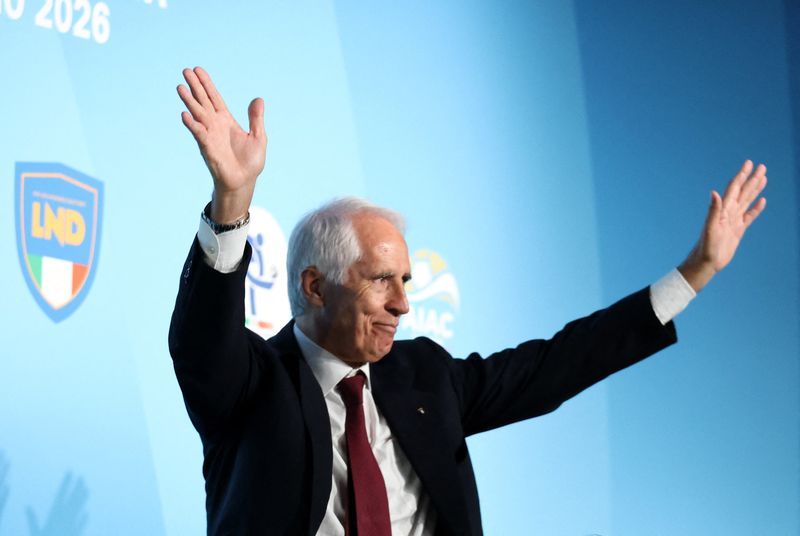
Giovanni Malago, a 67-year-old businessman with deep Olympic connections, has assumed control of Italian football at one of its darkest hours. His election as president of the Italian Football Federation (FIGC) on Monday represents a significant leadership change for a footballing nation in profound crisis. Malago secured 68.58 per cent of the vote at the federation assembly in Rome, defeating rival candidate Giancarlo Abete in a decisive mandate that underscores the scale of reform expected. He steps into the role following the resignation of Gabriele Gravina, whose tenure ended acrimoniously after Italy's shocking playoff elimination by Bosnia & Herzegovina in April, marking the country's third successive failure to qualify for the World Cup.
The shock of missing this World Cup cycle has reverberated far beyond the pitch. The elimination sparked outrage among supporters, political figures, and football officials alike, exposing deep structural problems within Italian football that have accumulated over years of neglect. The fallout extended beyond the national team when Serie A clubs subsequently crashed out of European competitions, creating what observers are describing as the worst period for Italian football in four decades. This compounding of failures—both at international and club level—created an urgent imperative for fresh leadership capable of implementing sweeping changes rather than managing decline.
Malago arrives at the FIGC with a track record of organisational competence that appealed to federation voters. His most recent high-profile role involved leading the organising committee for the Milano Cortina Winter Olympics in February, which delivered logistical success and positive international reviews despite the enormous complexity inherent in hosting a Winter Games. That experience demonstrated his ability to manage complex sporting institutions under pressure and deliver outcomes that satisfy stakeholders. His background as former head of the Italian National Olympic Committee provides additional expertise in federation governance and sports administration at the highest levels. Notably, Malago himself played futsal at a competitive level, giving him firsthand understanding of athletic culture beyond mere administrative knowledge.
The magnitude of the challenge confronting Malago cannot be understated. His immediate priorities include appointing a new men's national team coach following Gennaro Gattuso's resignation after the Bosnia & Herzegovina debacle, alongside recruiting a replacement for Gianluigi Buffon, who stepped down as head of the national team delegation. Beyond these urgent personnel decisions, Malago has indicated that youth development infrastructure requires fundamental overhaul. Warning signals about the inadequacy of Italy's talent development system had been growing increasingly loud, with prominent former players including Roberto Baggio publicly criticising the absence of a modern, coherent pathway for young footballers to develop within a structured framework.
Preparing for the 2032 European Championship, which Italy will co-host alongside Turkey, adds both opportunity and pressure to Malago's agenda. The championship provides a medium-term focus for rebuilding efforts and offers an opportunity to demonstrate progress before a home audience. However, it also represents a fixed deadline for showing tangible improvement in both the national team's competitive performance and the federation's administrative effectiveness. This dual hosting arrangement requires coordination between Italian and Turkish governing bodies, adding diplomatic complexity to Malago's responsibilities.
In his first public comments following election, Malago articulated an ambitious vision that transcends conventional football administration. He characterised the Football Federation not merely as an administrative body but as a social institution with responsibility to inspire the nation. This framing acknowledges Italy's profound historical relationship with football and the cultural weight that the sport carries within Italian society. His statement that "the Football Federation must not just administer; it must be a source of inspiration" signals intention to restore football to a position of national pride rather than collective disappointment. Malago's emphasis on the federation being "the largest social institution in the country" reflects understanding that Italian football's crisis represents something beyond sporting failure—it touches on national identity and collective morale.
Malago has explicitly rejected the notion that Italy's glorious footballing past should become an anchor dragging the nation backward into nostalgia. Instead, he argues that the federation's deep roots in European and global football history should serve as motivation for ambitious reconstruction rather than source of melancholy. This psychological reframing—transforming historical achievement from a burden of expectation into fuel for renewal—suggests Malago understands that rebuilding Italian football requires more than tactical adjustments or administrative efficiency. The nation's footballing culture must undergo genuine psychological realignment to process the shock of missing three consecutive World Cups and emerge with renewed purpose.
Gravina's departure, while necessary, carried sobering reflections on leadership failure. The outgoing president, who had steered the federation since 2018, acknowledged in his final statement that he should have resigned earlier. This admission underscores how the Bosnia & Herzegovina defeat crystallised accumulated frustrations with federation direction and represented not an isolated crisis but the inevitable reckoning of failed long-term strategy. Gravina's tenure had overseen the missed qualifications for Russia 2018 and Qatar 2022 before the Bosnia & Herzegovina defeat, indicating systemic problems that accumulated across multiple cycles without sufficient corrective action.
Malago has explicitly called for unity and collaboration within the federation structure, recognising that fractionalised leadership would be counterproductive given the magnitude of required changes. His statement that "alone I can do nothing, together we can do everything" acknowledges both the limits of individual authority in complex organisations and the necessity of building consensus among competing interests within Italian football. The federation comprises club representatives, regional bodies, technical staff, and administrative officials with sometimes conflicting priorities. Successfully coordinating these interests toward common objectives of national team revival and youth development improvement represents a substantial governance challenge distinct from the sporting improvements required on the pitch.
For Malaysian readers and Southeast Asian football observers, the Italian federation crisis offers important lessons about the consequences of allowing structural problems in youth development systems to persist uncorrected across multiple competitive cycles. Just as Italy's inability to nurture a pipeline of competitive young talent contributed to its World Cup failures, developing nations must prioritise coherent, long-term talent development frameworks. The Italian situation demonstrates that historical footballing status provides no insulation against competitive decline when foundational systems atrophy. Malaysia's own football development initiatives can benefit from studying how Malago's federation attempts to rebuild systematic talent pathways and whether his emphasis on institutional renewal rather than merely technical coaching produces sustainable competitive improvements.
The path forward for Italian football remains uncertain despite Malago's mandate and evident organisational capability. Rebuilding a talent development system requires years of investment in youth academies, coaching education, and competitive pathways before results manifest at senior international level. Furthermore, appointing a successful national team coach capable of extracting improved performances from existing squad resources represents a separate challenge from developing future generations. The federation must simultaneously manage immediate expectations for improved competitive performance while laying groundwork for longer-term structural recovery. Malago's success will ultimately be measured by whether Italy returns to World Cup qualifying automatically rather than through playoff rounds within the next four-year cycle, and whether youth players developed under the reformed system begin reaching senior international standards.