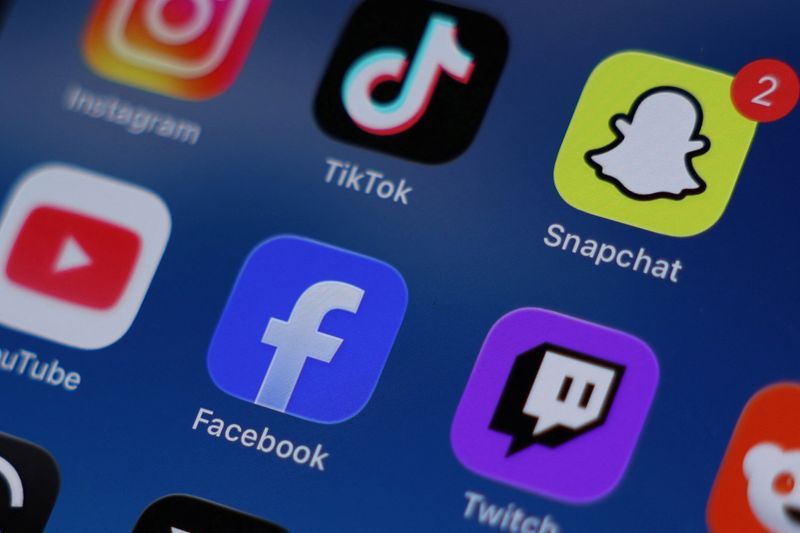
Three in five Americans believe social media companies warrant substantially tighter government supervision, reflecting mounting frustration across the political spectrum with how platforms treat younger users. The finding emerges from a Reuters/Ipsos survey conducted in early August, capturing sentiment at a moment when Meta Platforms and Google's YouTube face intensifying pressure from courts and regulators over their impact on child wellbeing and development.
The polling data reveals striking bipartisan consensus on the matter. Among Democrats, 71 percent favour enhanced regulatory oversight, while 62 percent of Republicans—typically sceptical of government intervention—similarly endorse stronger rules. Independents showed weaker alignment, with many expressing uncertainty about their positions. This cross-party agreement underscores how social media governance has transcended conventional ideological boundaries, becoming instead a shared concern rooted in child protection and public health anxieties.
Age-verification mandates emerged as a particularly popular regulatory tool in the survey results. Two-thirds of respondents backed requiring social media companies to implement age-verification systems preventing access for children under sixteen. Republicans proved especially receptive to this approach, with 74 percent supporting it, compared to 69 percent of Democrats. The breadth of this support reflects growing recognition that existing parental controls and self-regulation mechanisms have proven inadequate against tech-savvy younger users and platform design patterns that encourage prolonged engagement.
The timing of these findings matters considerably. Meta faces a trial commencing this week in which state prosecutors allege the company deliberately structured its products to create dependency in young users. The corporation has stated it could face penalties reaching $1.4 trillion if states succeed. Separately, a New Mexico court recently ordered Meta to transfer $567 million into a teen mental health fund and restructure how its platforms operate for young users, concluding the company bears responsibility for damaging children's psychological wellbeing. These developments reflect judicial and prosecutorial determination to hold platforms accountable through existing legal channels.
Lawmakers across numerous American states have already responded to public concerns by enacting legislation restricting minors' social media access. More than a dozen jurisdictions have passed such laws, explicitly framing them as essential protective measures. The industry's response has been aggressive litigation: NetChoice, a trade association representing Meta, TikTok, Snap, and other major platforms, has filed lawsuits opposing age-verification requirements, contending they violate constitutional free speech protections and invade user privacy. This legal battle will significantly shape the regulatory landscape regardless of public opinion.
One Tennessee respondent, a 60-year-old mechanical engineer who voted for Donald Trump in 2024, articulated a tension many Americans experience. While preferring minimal government involvement in most areas, he acknowledged social media regulation as a necessary exception, suggesting ambivalence rather than enthusiasm for state intervention. His perspective captures how genuine public health concerns can override ideological commitments to limited government, particularly when the vulnerable population consists of children unable to consent to the terms shaping their online experiences.
The psychological impact of social media on youth dominates public perception. An overwhelming 85 percent of survey respondents believe these platforms can become addictive for children, while a comparable proportion thinks their use damages mental health. These concerns have intensified as researchers document correlations between social media consumption and rising rates of adolescent anxiety, depression, and self-harm. Christopher Chen, a 34-year-old Washington resident who voted for Kamala Harris, emphasized that tech companies wield disproportionate influence over teenage users, controlling algorithmic feeds and engagement mechanisms. He articulated the common refrain that something requires government action, though specifics remained vague.
Grandparents represent particularly affected stakeholders in this ecosystem. A 73-year-old Kansas woman noted her difficulty preventing grandchildren from accessing YouTube despite implementing parental blocks. She observed that young people possess sufficient technical sophistication to circumvent restrictions, undermining family-level safeguards. Her experience reflects a widespread parental frustration that individual responsibility cannot counteract platform incentive structures designed to maximize engagement time. This generational dimension adds urgency to regulatory discussions, as extended family members feel powerless against technology they did not design and cannot fully understand.
Paradoxically, Americans simultaneously report deriving genuine pleasure from social media engagement. Seventy percent described their time on these platforms as fun, whilst only 35 percent said usage caused stress. Regarding overuse, opinion divided almost evenly, with 52 percent believing they spend excessive daily time on social media and 43 percent disagreeing. This ambivalence—wherein people simultaneously enjoy these services whilst acknowledging their potential harms—complicates straightforward regulatory solutions and explains why polling support for restrictions does not automatically translate into legislative action.
For Southeast Asian policymakers observing American developments, several implications warrant consideration. Regulatory frameworks emerging from American litigation and legislation may establish precedents influencing approaches across the region. Malaysia, Indonesia, Singapore, and other nations grapple with identical challenges: protecting minors from inappropriate content, addressing social media's mental health effects, and balancing free expression with protective governance. The American experience demonstrates both that broad public support for regulation exists and that implementation remains contested, with tech companies aggressively defending against restrictions through legal and political channels.
The absence of federal legislation despite clear public backing reveals structural obstacles to converting popular sentiment into concrete policy. Congressional gridlock, industry lobbying power, and constitutional interpretation questions have prevented comprehensive child-protection legislation despite years of debate. This pattern suggests that regional governments cannot assume swift legislative resolution to social media governance challenges, even where constituent demand appears compelling. Building resilient frameworks requires sustained political commitment transcending electoral cycles and withstanding sophisticated industry opposition campaigns.
The Reuters/Ipsos survey, conducted online among 4,505 American adults with a 2 percentage point margin of error, captures a population broadly convinced that current arrangements inadequately protect children and adolescents from potentially harmful platform practices. Whether this conviction translates into legislative action and meaningful platform behavioural change remains uncertain, particularly as the industry mobilizes constitutional challenges to proposed restrictions. The coming months will reveal whether American democracy can produce regulations addressing acknowledged public harms or whether commercial interests maintain their predominance in shaping digital environments where millions of young people spend formative hours.

