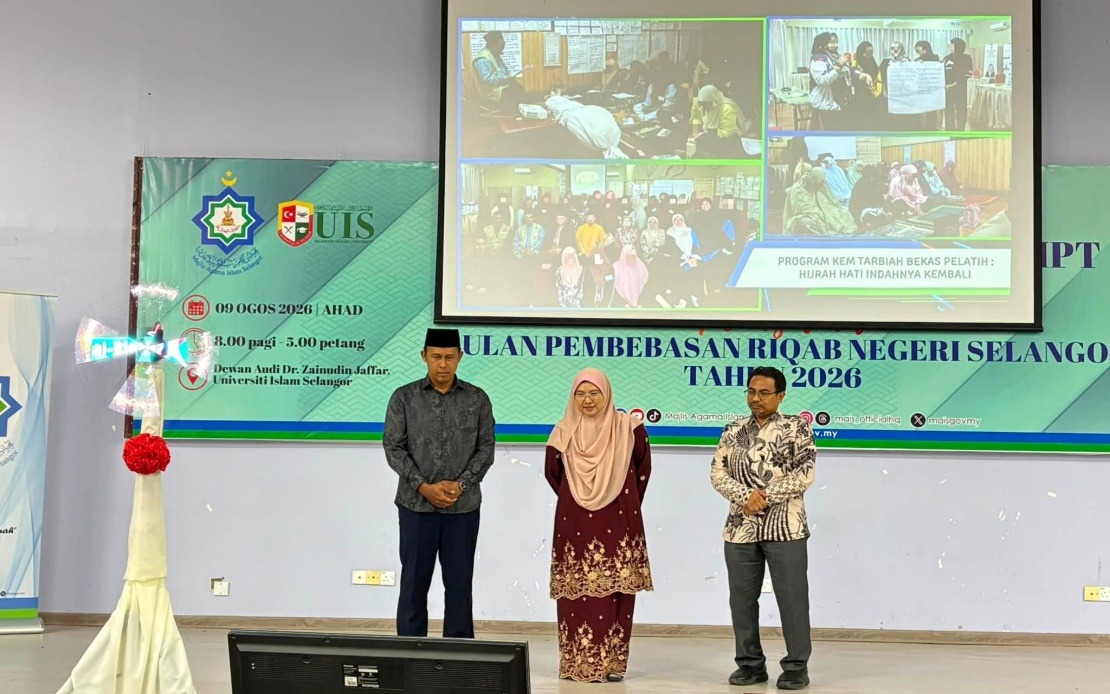
The Selangor Islamic Religious Council (MAIS) has committed substantial resources towards addressing complex social welfare challenges within Muslim communities, distributing over RM17 million in zakat allocations during the previous financial year to support 13,945 individuals classified as asnaf riqab. This category encompasses persons grappling with multifaceted difficulties ranging from substance dependency to religious disengagement, representing a growing concern among Islamic authorities across Malaysia seeking holistic intervention strategies.
Zakat distribution constitutes a core pillar of Islamic social responsibility, obligating Muslim-majority institutions to channel a portion of collected religious taxes towards vulnerable populations. MAIS's substantial investment demonstrates the council's recognition that traditional welfare mechanisms alone cannot adequately address the intersection of addiction, psychological distress, and spiritual disconnection affecting significant numbers within Selangor's Muslim demographic. The allocation reflects both the scale of underlying problems and the council's institutional commitment to preventative and rehabilitative approaches rather than purely punitive frameworks.
The financial support has been strategically deployed across a tiered infrastructure comprising three dedicated rehabilitation homes and twenty-four satellite facilities throughout Selangor, creating a distributed network capable of serving diverse geographic areas and population densities. Beyond infrastructure, MAIS has invested in human capital through the appointment of two hundred and thirteen trained Al Riqab guides tasked with providing personalised mentorship and counselling. This comprehensive approach acknowledges that sustained behavioural change requires ongoing relationship-based support rather than episodic intervention, positioning guides as continuity anchors throughout individuals' recovery trajectories.
Programmatic diversification remains central to MAIS's strategy. The allocation supports rehabilitation grants channelled towards residential recovery facilities, professional training and skills development courses, structured counselling services, and targeted welfare assistance. This multidimensional approach recognises that individuals within the asnaf riqab category typically require simultaneous support across economic, psychological, spiritual, and social dimensions. By bundling services rather than treating them separately, MAIS attempts to address root causation rather than symptomatic manifestations of distress.
The halfway point of 2024 revealed continued momentum, with MAIS extending assistance to 1,656 individuals utilising RM4.1 million in zakat allocations during the January to June period alone. This trajectory suggests the council is on track to exceed previous year distributions, indicating either increasing identification of qualifying individuals or expanded programme capacity, or both. The consistent flow of beneficiaries underscores that social challenges among Muslim populations remain persistent rather than temporary, necessitating sustained rather than sporadic funding commitments.
August's announcement of the Riqab Liberation Month Campaign 2026 represents an escalation beyond direct service provision into public consciousness-raising and institutional coordination activities. By designating an awareness campaign spanning the full month, MAIS signals determination to reframe societal perceptions regarding asnaf riqab individuals, potentially reducing stigma that typically deters help-seeking behaviour. Public campaigns simultaneously create accountability expectations for broader institutional actors including government agencies, civil society organisations, and community leaders to engage substantively with these populations.
The campaign's programming reveals sophisticated understanding of behavioural change mechanics. Forums and informational talks create educational foundations and community dialogue platforms. Guidance programmes offer structured intervention pathways. Information counters ensure accessibility for individuals uncertain how to access services. The Ihtifal Amal Islami and Selangor Riqab Seminar represent higher-touch engagement mechanisms likely attracting committed stakeholders willing to dedicate extended time to understanding complex issues. This graduated approach accommodates varying engagement capacities across populations.
The asnaf riqab classification itself merits contextual examination. The 2012 fatwa establishing this category formally recognised drug addiction, LGBTQ+ identity, and religious deviation as interconnected social phenomena requiring unified institutional responses. This categorisation reflects Islamic authorities' assessment that conventional welfare mechanisms treating addiction, sexual orientation, and religious disengagement as separate problem domains failed to capture the lived experiences of individuals confronting multiple overlapping challenges. By creating an integrated classification, MAIS implicitly acknowledges that effective support requires coherent rather than fragmented intervention philosophies.
For Malaysian policymakers and regional observers, MAIS's approach offers instructive insights regarding faith-based institutional capacity for social service delivery. At a moment when secular and religious perspectives on social welfare frequently diverge, particularly regarding LGBTQ+ populations, MAIS's inclusive categorisation demonstrates that religious institutions can simultaneously maintain theological positions while extending material support to individuals whose lifestyles conflict with those positions. This pragmatic distinction between spiritual judgment and welfare provision merits consideration across other institutional contexts navigating similar tensions.
Sustainability considerations merit scrutiny. While RM17 million represents substantial commitment, coverage across Selangor's multi-million Muslim population suggests resource limitations necessarily constrain reach. Expanding capacity requires either increased zakat collection, enhanced donor contributions, or government co-financing arrangements. MAIS's public campaign likely aims partly at stimulating enhanced community donations beyond obligatory zakat contributions, recognising that contemporary social challenges outpace historically-traditional funding levels.
The appointment of 213 guides represents significant human resource investment but raises questions regarding training standardisation, supervision mechanisms, and workload distribution. If distributed across the 13,945 beneficiaries served last year, each guide manages approximately 65 individuals, exceeding typical caseloads in professional social work contexts. This gap suggests guides operate partly as community connectors rather than intensive therapists, requiring complementary professional services that may or may not exist within the ecosystem.
Regional relevance extends beyond Selangor's boundaries. Other Malaysian states, Singapore, and Brunei maintain similar Islamic councils addressing comparable populations. MAIS's model potentially informs approaches elsewhere, particularly its synthesis of spiritual guidance with practical welfare support. The framework also demonstrates how Islamic principles interpreted through contemporary social science perspectives can address conditions—particularly LGBTQ+ issues and addiction—traditionally considered intractable within conservative religious frameworks.
Moving forward, sustained institutional commitment appears probable given MAIS's established infrastructure and stated continuation of initiatives. Success metrics remain implicit rather than explicit in public communications, raising questions about evidence-based evaluation of intervention effectiveness. Whether beneficiaries achieve sustainable socioeconomic independence, sustained recovery, or strengthened religious practice remains unclear from available information, but likely occupies significant position in MAIS's internal assessment frameworks.

