The Perak Islamic Religious and Malay Customs Council (MAIPk) has moved to counter allegations circulating on social media that it issued directives forcing traders to abandon their commercial operations along Jalan Panglima Bukit Gantang Wahab in Ipoh. The clarification came as the council confronts a complex infrastructure crisis stemming from a deteriorating water supply system and substantial outstanding arrears that predate its involvement with the premises.
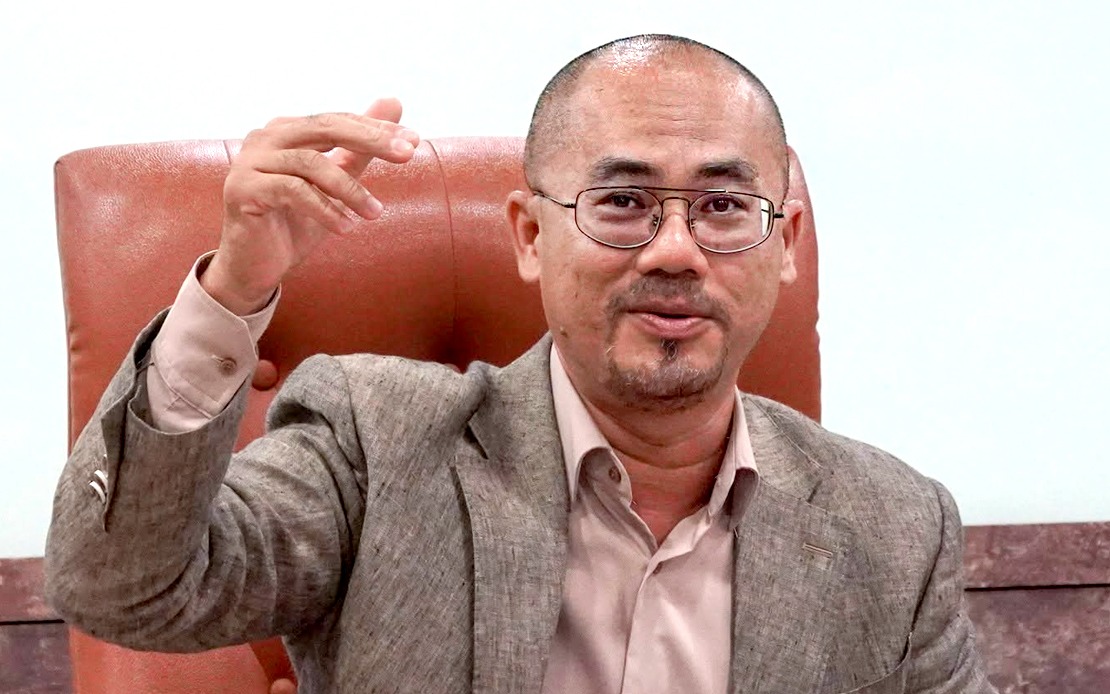
Syamsul Hazeman Md Salleh, serving as the council's chief executive officer, explained that a formal notice had been distributed not as an eviction order but as a communication tool to establish clarity regarding the council's institutional position and responsibilities. He stated this action became necessary following the emergence of systemic issues centred on a defective main water pipeline and cumulative unpaid bills totalling approximately RM100,000. The notice followed a productive dialogue session convened on July 14 wherein MAIPk officials engaged directly with affected traders to explain the situation and outline the reasoning behind necessary interventions.
During this engagement with traders, MAIPk representatives detailed the temporary disconnection requirement for water supplies, framing the measure as an essential prerequisite to enable repair operations and tackle the longstanding debt burden. The council emphasised that no formal instruction mandating business cessation or premises vacation had been issued. According to Syamsul Hazeman's remarks during media interactions following the conclusion of the 2026 Perak State Mosque Committee Convention at the Casuarina Convention Centre, the communication strategy aimed exclusively at preventing erroneous public perception and shielding the institution from potentially baseless institutional claims.
The roots of the current predicament trace back to MAIPk's acquisition of property ownership in 2024, a transition that revealed pre-existing complications previously obscured from the council's knowledge. The inherited challenges encompassed a long-standing structural defect affecting the main water distribution pipeline serving the site and accumulated payment obligations that had accumulated substantially over preceding years. Importantly, Syamsul Hazeman clarified that individual traders operating from the premises bore no responsibility for generating these arrears, as their own water consumption charges remained current and properly settled according to their respective usage levels.
The outstanding debt originated instead from fundamental problems inherent within the primary pipeline infrastructure itself, a distinction that carries significant implications for apportioning accountability. The council's leadership acknowledged the extraordinary nature of the challenge, noting that resolving the financial obligation exceeded the institution's ordinary operational capacity. Specifically, Syamsul Hazeman emphasised that neither zakat funds nor waqf resources—the primary revenue streams supporting Islamic religious institutions in Malaysia—could legally or ethically be deployed towards liquidating arrears of this nature, a constraint that severely limited MAIPk's autonomous problem-solving capacity.
Consequently, MAIPk has initiated collaborative engagement with both the Perak Water Board and state government authorities to devise workable resolution strategies. The council is actively pursuing formal assistance channels and soliciting governmental perspective on addressing the accumulated debt, approaching the matter as a collaborative challenge requiring multi-stakeholder involvement rather than a problem the council alone could resolve. Syamsul Hazeman expressed cautious optimism regarding eventual resolution, though he tempered expectations by acknowledging that achieving a satisfactory outcome would necessarily require extended timeframes and sustained cooperative effort.
The council's forward-looking strategy comprises sequential phases contingent upon successful debt resolution. Once outstanding payment obligations have been addressed through collaborative efforts, MAIPk intends to commission comprehensive repair operations to restore the water infrastructure to functional condition. Subsequently, the institution plans to formalise fresh contractual arrangements with traders through updated rental agreements, establishing clearer mutual obligations and expectations for all parties undertaking commercial activities at the premises.
A separate development complicates the already-intricate situation: MAIPk is cognisant of proposed construction plans for a Perak Islamic Religious Department Complex potentially located at the same site. Should state authorities proceed with implementing this development initiative, traders would necessarily be required to relocate to accommodate the institutional project. However, the timing and concrete advancement of this proposed complex remains uncertain, falling entirely within the purview of state government planning and budgetary deliberations. Syamsul Hazeman acknowledged traders' legitimate stake in these plans whilst clarifying that when development activity eventually commences, commercial operators would require providing cooperation through relocation.
The situation reflects broader tensions faced by religious institutions across Malaysia when inheriting properties encumbered by infrastructure liabilities and financial obligations. The distinction MAIPk draws between infrastructure-related debt and traders' individual water consumption represents a critical clarification for understanding the dispute's underlying dynamics. For Malaysian traders and business operators generally, the incident underscores the importance of investigating historical property conditions and outstanding obligations before entering into commercial leases at new locations, particularly when landlords are religious institutions potentially constrained in their debt servicing flexibility by legal and religious restrictions on fund utilisation.
The unfolding situation carries implications extending beyond immediate parties involved, touching upon institutional governance practices within religious bodies managing commercial property portfolios and the mechanisms available for resolving infrastructure crises when ownership transitions occur. MAIPk's transparent acknowledgment of inherited difficulties and collaborative approach toward resolution may establish precedent for how similar challenges could be addressed institutionally elsewhere in Malaysia.

